
The Rotary Table is capable of machining round parts easily. A shaft comes off the lathe looking perfect. Round, straight, dimensions right where they need to be. Then the print calls for one more thing: a flat milled onto one side, or a cross-hole drilled straight through the diameter. Suddenly that same part that was so easy to hold in a three-jaw chuck becomes a genuine headache the moment it needs to go on a mill.
Round stock and standard mill vises were never really designed for each other. A vise is built to grip flat, parallel surfaces. A turned shaft or round pin offers exactly none of that. Clamp it directly, and the part wants to roll, shift, or get marked up by the jaws pressing on a curved surface instead of a flat one. Add a V-block, and the part sits more securely — but now the operator is guessing at rotational position by eye, which is exactly the wrong place to guess when a cross-hole needs to land at a specific angle relative to a keyway or flat that isn’t there yet.
Why This Trips Up More Shops Than You’d Expect
It’s easy to assume this is a minor inconvenience, solved with a V-block and a steady hand. In practice, it’s one of the more common sources of scrapped turned parts. A cross-hole drilled a few degrees off its intended angle might still function on a low-tolerance part. On anything that mates precisely with another component — a dowel pin location, a set screw flat that has to line up with an internal feature, a drive pin hole on a shaft — a few degrees of rotational error is enough to make the part unusable.
The core problem isn’t the drilling or milling itself. It’s that once a part comes off the lathe, there’s often no reliable, repeatable way to control exactly how far it’s rotated before the next feature gets cut — especially if that feature needs to sit at a precise angular relationship to something already machined into the part. A rotary table turns out to be the most direct fix for exactly this gap, because it replaces guesswork with a controlled, repeatable index.
What a Rotary Table Actually Fixes Here
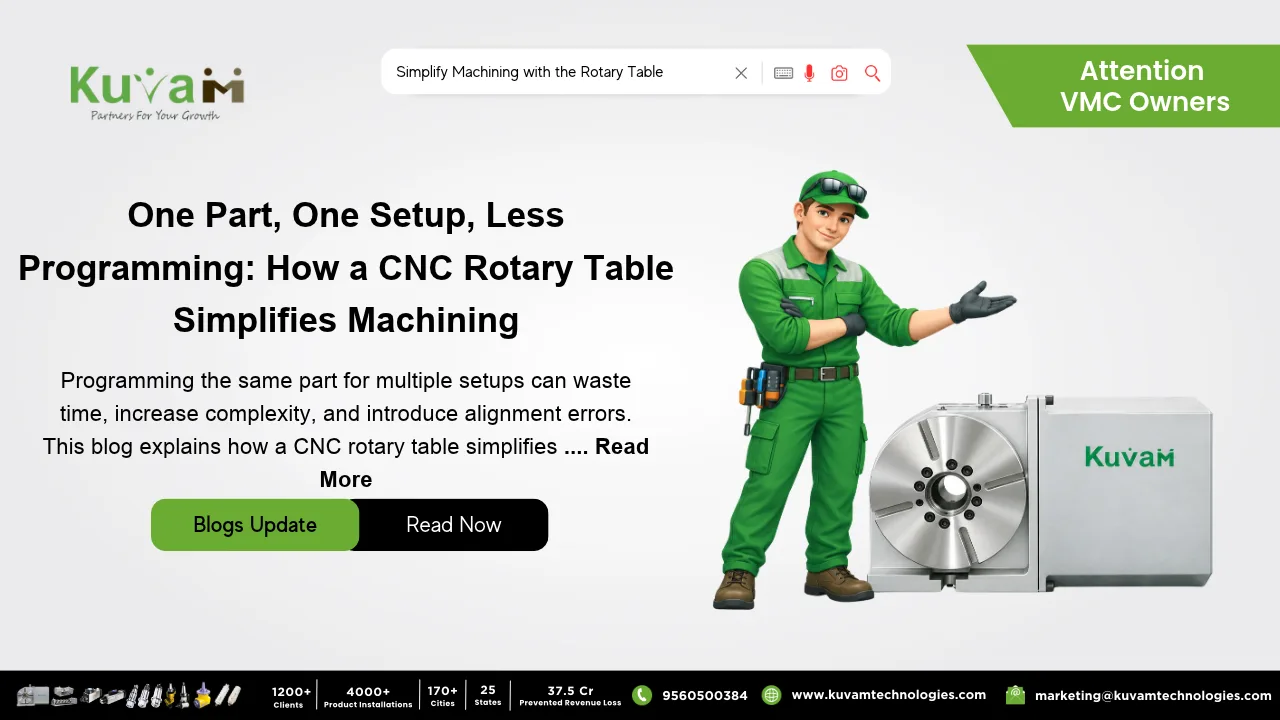
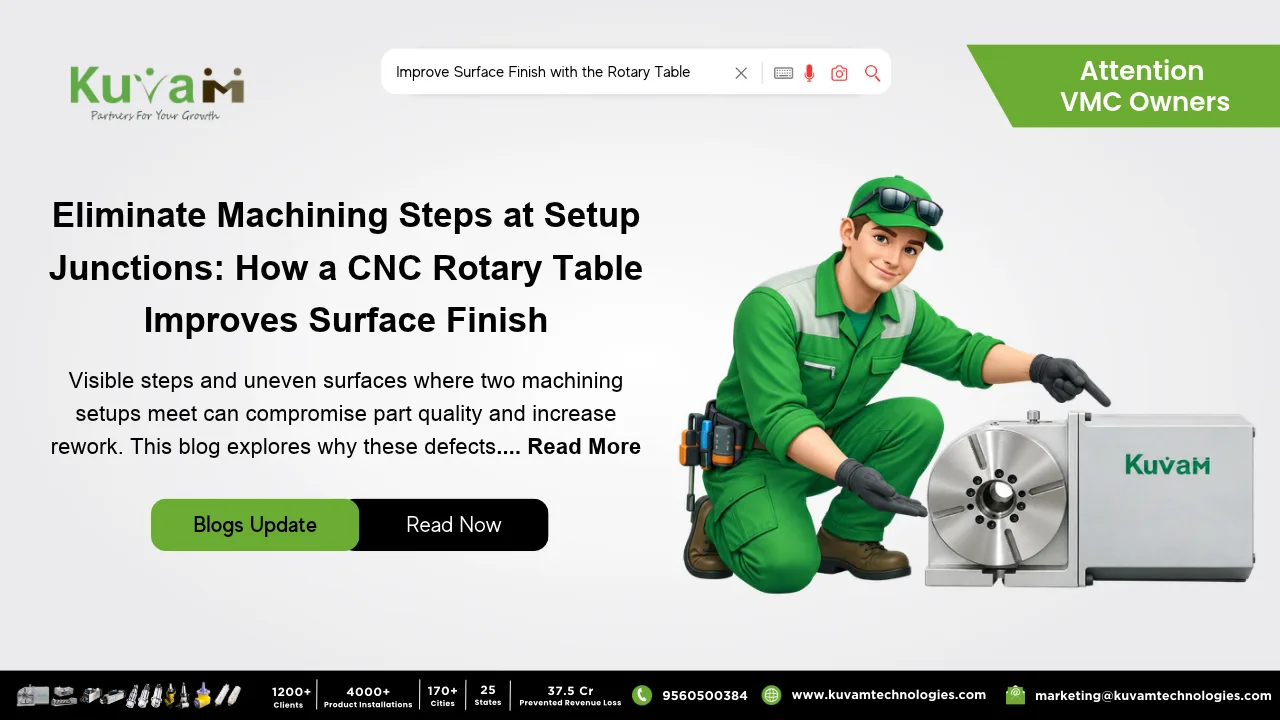
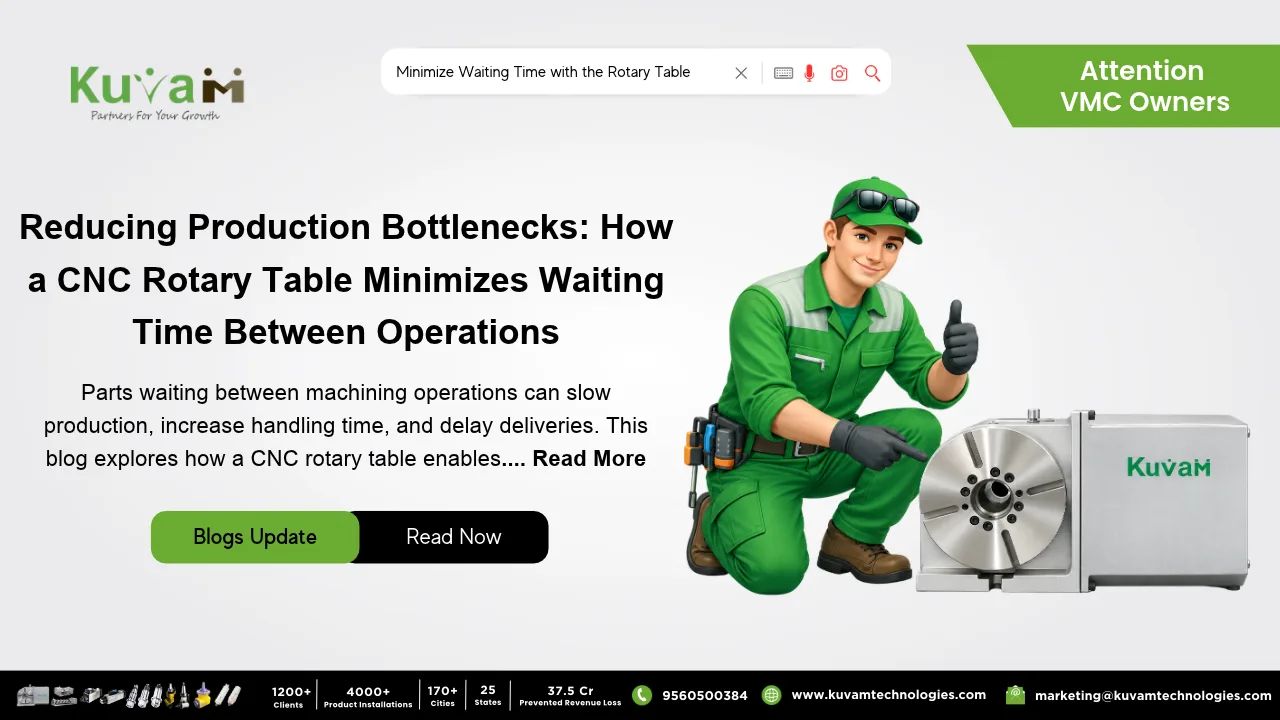
A Rotary Table, especially one fitted with a three-jaw or collet chuck instead of a flat vise, was built almost exactly for this situation. Round stock chucks into it the same natural way it would on a lathe, so there’s no fighting a curved surface into a flat-jawed vise or guessing at position with a V-block. Once the part is chucked, the table controls exactly how far it rotates before the next cut, in precise, repeatable degree increments rather than an operator’s best visual estimate.
That single change solves the angular guesswork completely. If a cross-hole needs to sit at exactly 90 degrees from a keyway, or three flats need to land at even 120-degree intervals around a shaft, the rotary table delivers that rotation directly — dialed in on a graduated scale for a manual table, or driven automatically through the program on a CNC version. The part goes from an awkward, hard-to-secure round object to something held as confidently and positioned as precisely as a squared-off block ever was.
Where This Shows Up Most
This isn’t limited to one type of part. Shafts needing cross-drilled holes for pins or set screws, round housings needing flats milled for wrench access, cylindrical fittings needing ports machined at specific angles around their circumference, and any turned component that needs a secondary milling operation all run into the same round-stock-on-a-mill problem. In every one of these cases, a Rotary Table with the right chuck turns a fixturing headache into a straightforward, repeatable setup. Shops that machine a steady stream of turned parts often find that a single rotary table ends up handling more of this secondary work than any other single piece of tooling on the floor.
What This Looks Like on an Actual Part
Take a stainless steel shaft that needs a flat milled for a set screw and a cross-hole drilled through the diameter, positioned 45 degrees off that flat. Fixtured in a V-block, hitting that 45-degree relationship accurately depends entirely on how carefully the part was indexed by eye — and small errors here are easy to make and hard to catch until final inspection. Chucked into a rotary table, the flat gets milled first, the table then rotates the part exactly 45 degrees, and the cross-hole gets drilled precisely where the print calls for it, with the angular relationship coming directly from the table’s index rather than an operator’s estimate.
Worth a Look If Round Parts Keep Causing Problems
If your shop regularly turns parts that need a secondary milling operation, and V-blocks or awkward vise setups have become the default way to hold them, it’s worth looking at a rotary table with a proper chuck instead. It won’t change anything about how the part gets turned in the first place, but for the angular features that come after, it turns a process built on careful guesswork into one built on a number dialed straight off the print.