
Losing Precision? Here’s What’s Happening
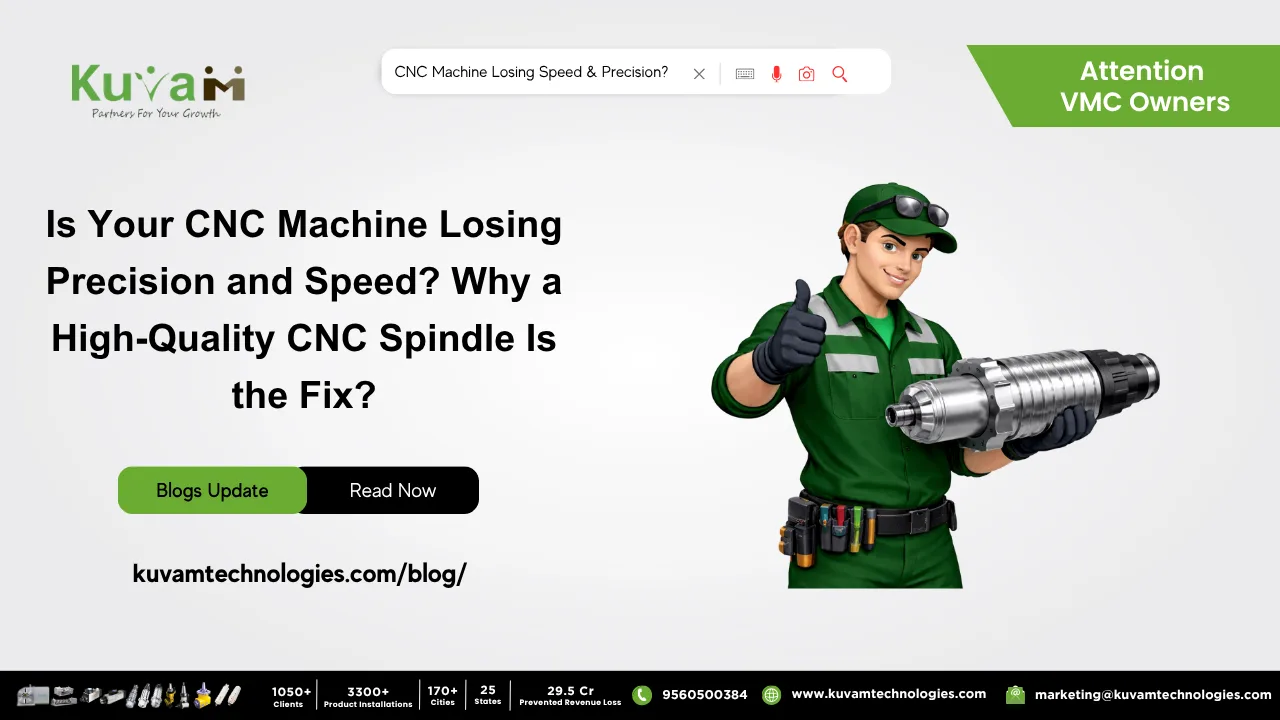
A CNC machine’s performance is directly connected to its CNC Spindle’s performance. If your CNC machine isn’t cutting like it used to—maybe your finishes look rough, your parts don’t hold tolerances, or things just feel off—you’re not alone. A drop in performance is one of the most frustrating problems out there, and it sneaks up on people. You might tinker with calibration, chase down measurement errors, but the real culprit often sits right at the heart of your machine: the spindle.
Spindles do the heavy lifting. They spin the cutting tool at crazy high speeds, and even a tiny wobble or hitch throws everything off. Over time, heat, cheap parts, and just plain wear and tear start to chip away at spindle performance. It’s like driving with balding tyres—you can do it, but it’s risky, unpredictable, and usually ends badly.
Now, if you’re in industries where precision is king—like aerospace or automotive—losing accuracy isn’t just an inconvenience. It means scrapped parts, wasted hours, and unhappy customers. The worst bit? These problems creep up so gradually that you usually spot them only after they’ve cost you real money.
Downtime and Lost Productivity
Bad spindles don’t usually quit out of nowhere. Instead, they start to vibrate, heat up, or slow down, which means you have to stop your whole machine to check or fix things. Downtime eats money. In busy factories, even a few hours offline can blow delivery schedules and rack up losses fast. Some estimates put downtime at thousands of dollars per hour, depending on your setup. And when shops keep on patching things instead of fixing the root problem, it turns into a cycle—more breakdowns, more band-aids, more cash out the door.
So, What Exactly Is a CNC Spindle—and Why Should You Care?
The CNC spindle is the powerhouse of any CNC machine. It holds and spins your cutting tool, whether you’re milling, drilling, or engraving. Without a solid spindle, even the fanciest CNC won’t do much good. Think of it like the engine in your car: you can have the nicest paint job and the most tech-savvy dashboard, but if the engine sputters, none of that matters. The CNC Spindle calls the shots on cutting speed, precision, and the smoothness of your finish.
Different Kinds for Different Needs
There’s no one-size-fits-all spindle. Some are belt-driven, some are direct, and others have the motor built right in. High-speed options tackle precision jobs; heavier ones chew through tough materials. The key is choosing what fits your work—not just the specs, but what will actually boost your workflow. Companies like us build spindles for all sorts of tasks, so matching the right model to your job matters a lot.
How CNC Spindles Turn Things Around?
Sharper Accuracy, Smoother Cuts
Good CNC Spindles are all about quality parts and fine engineering. They cut down on vibration, even when you’re running fast, which means you’ll see smoother surfaces and tighter tolerances. That takes some real stress out of ops. Instead of chasing problems or babysitting the machine, you get consistent results, run after run. It’s like moving from a shaky ladder to solid ground—you trust each step.
Less Unexpected Repair, More Cutting Time
Kuvam spindles are built to last, with strong materials and smart cooling systems. They shrug off long shifts, resist overheating, and rarely need emergency repairs. That durability keeps your machines running and frees you up to meet deadlines, not battle downtime.
What Makes a Good Spindle Stand Out?
Speed That Doesn’t Sacrifice Control
You want fast, but you also want accurate. High-performance spindles deliver on both, so your jobs wrap up quicker, but the quality never dips. That’s how you stay ahead in a competitive market.
Tough Construction for the Long Haul
A rock-solid build means fewer breakdowns. Precision parts and good materials help these spindles handle tough environments and heavy use, so you don’t have to swap them out every year.
Why Should You Choose CNC Spindles?
Much Better Efficiency
A top-notch spindle means faster, cleaner jobs with less waste and fewer headaches. Your cut times drop and your output climbs. Simple as that.
Save Costs for a Long Time
Sure, a quality CNC spindle costs more upfront, but it pays off with less downtime, fewer fixes, and higher productivity. Over time, you end up saving far more than what you spent.
How to Pick the Right Spindle?
Start with your needs—what materials are you cutting? How fast? Which machines do you use? Go for proven reliability and solid engineering, not just the lowest price. The right spindle transforms your machine shop, whereas the wrong one just keeps you stuck.
Bottom Line
If your CNC machine’s struggling with accuracy, speed, or downtime, don’t ignore the CNC spindle—it’s almost always the heart of your problem. Upgrading your spindle isn’t just patching a leak; it’s unlocking what your machine can really do. In this business, small upgrades make a world of difference.