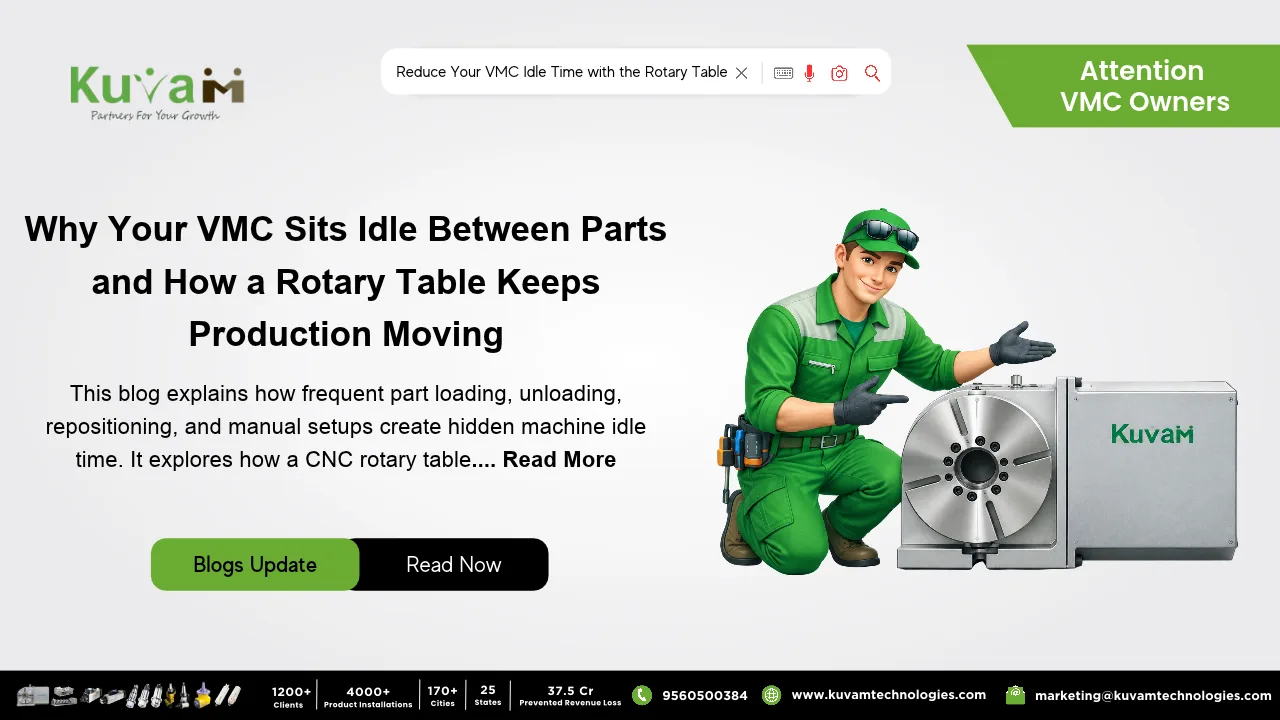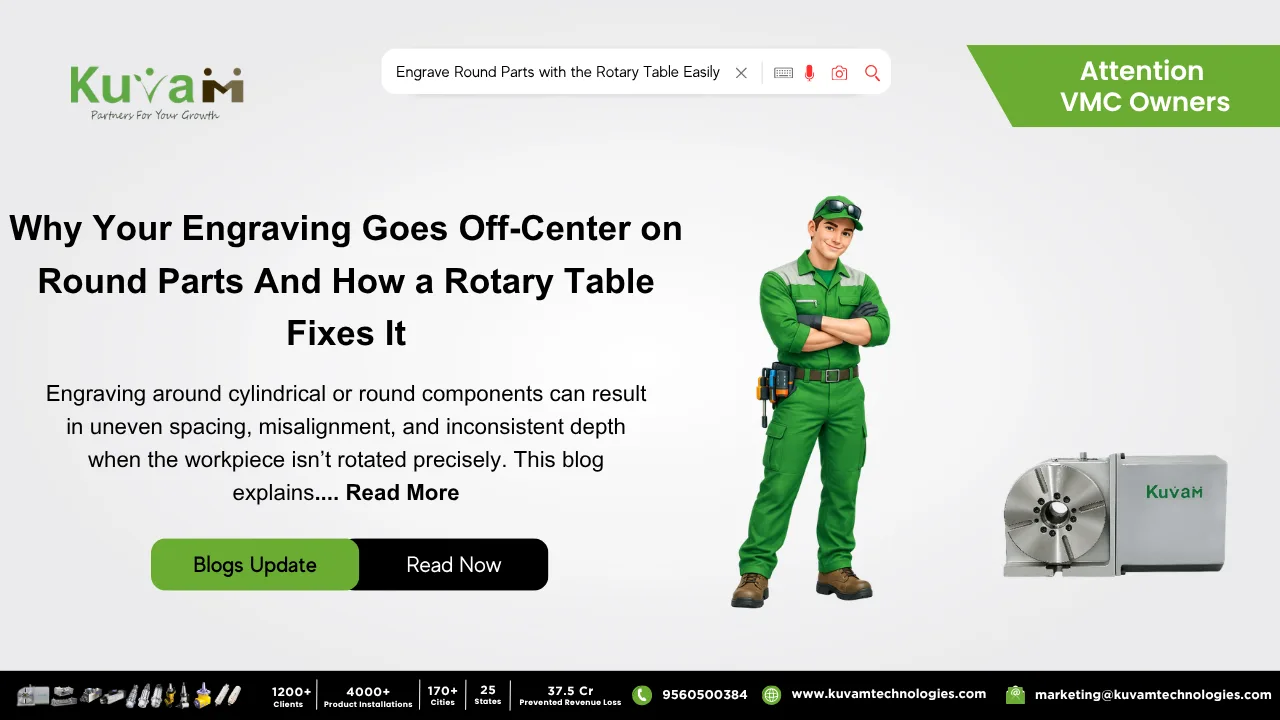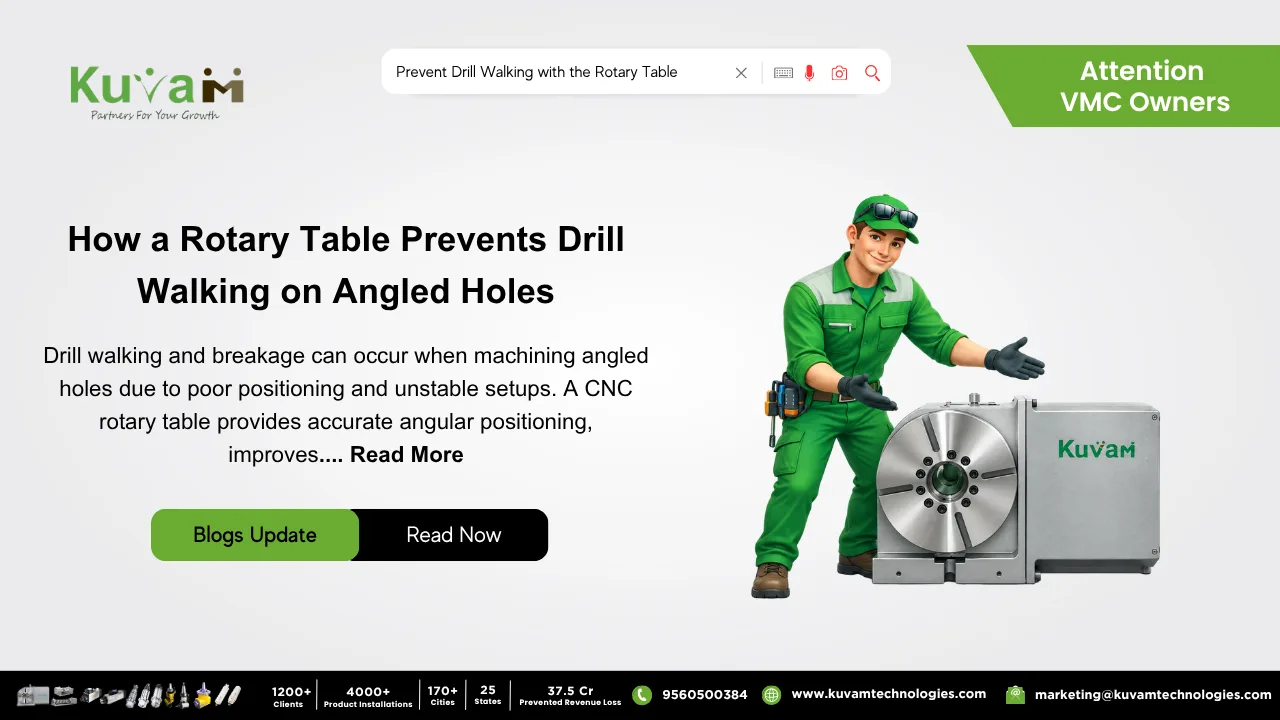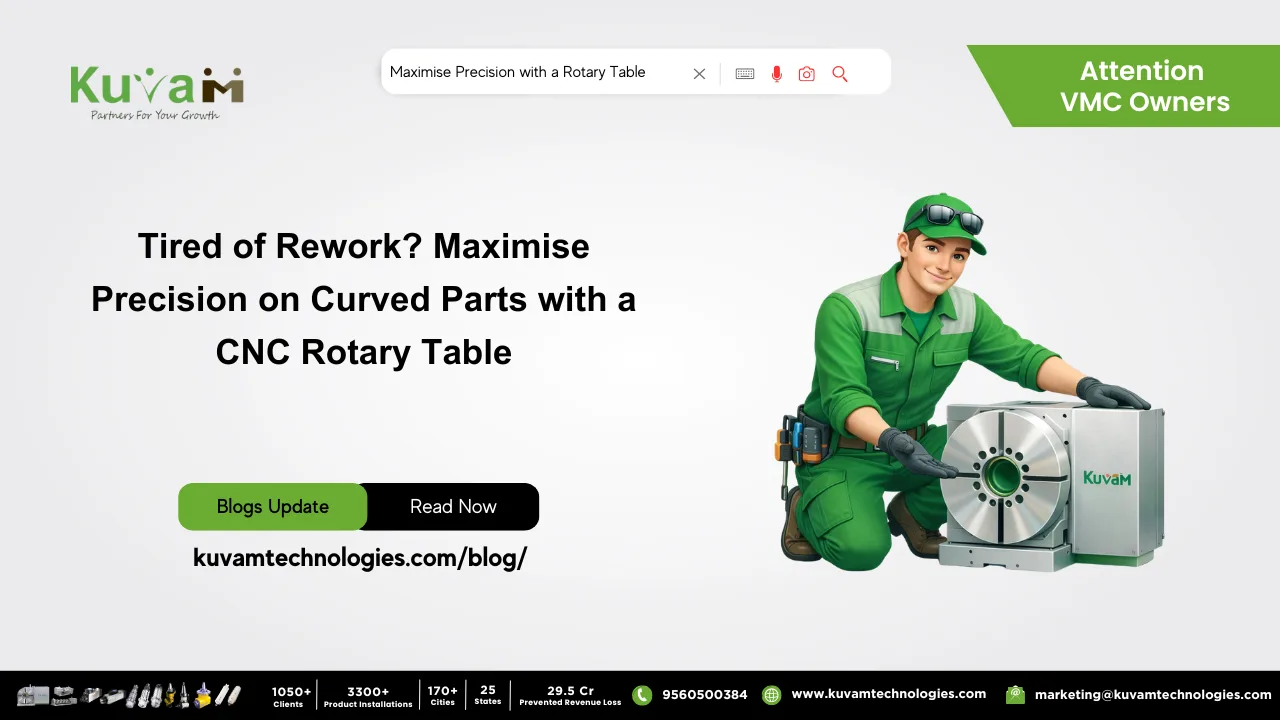

Rotary Tables are easily able to get rid of rework. Nobody plans for rework. It just appears usually at the worst possible moment, when a delivery is due, when the customer is already waiting, and when the last thing anyone on the floor has time for is pulling a finished component back to the machine because the arc profile drifted, or the radial features didn’t land where the drawing said they should.
The frustrating part is that these failures rarely come from poor workmanship. The machinist knows what they’re doing. The machine is running well. The material is right. But somewhere between the drawing and the finished part, curved geometry has a way of exposing a gap, a gap between what the production setup can reliably deliver and what the design actually demands. That gap has a name, even if it rarely gets one in production meetings. It’s the absence of controlled rotational positioning. And until it’s addressed directly, every curved or radially-featured component carries a hidden rework risk that no amount of operator skill can fully eliminate.
The overlooked cost of curved-part production
Curved components parts with arcs, radii, contoured profiles, or features arranged around a central axis represent some of the most common geometry in industrial manufacturing. Flanges, bearing housings, pump casings, impellers, valve bodies, sprockets, rotors. These are not exotic parts. They appear in almost every sector, on almost every production schedule. And yet they consistently account for a disproportionate share of rework, extended setup times, and tolerance failures.
The reason is structural. Most machine tools move linearly X, Y, and Z. When the geometry of a part follows a curve or requires features arranged at precise angular intervals around a center, the machine’s native motion doesn’t naturally produce that geometry. The machinist must compensate: calculating coordinates, manually advancing the part in small increments, or relying on fixture arrangements that introduce their own sources of error.
Each workaround is an approximation. And in precision manufacturing, approximations accumulate across setups, across operators, across shifts until they become rejections.
“You cannot hold a circular tolerance with a linear tool and a workaround. Eventually, the workaround fails and it always chooses the worst possible moment to do it.”
What is a Rotary Table and what makes it different?
A Rotary Table is a precision workholding device that mounts on the bed of a milling machine, machining center, or grinding machine and adds a controlled axis of rotation to the existing linear axes. The workpiece is clamped to the table’s circular face, centered on the table’s rotational axis, and then rotated to any required angular position before each cut. Every position is mechanically defined not estimated, not calculated on a notepad, not dependent on how carefully an operator moves a handwheel by feel.
At the heart of the mechanism is a precision worm and worm gear pair. The worm gear ratio typically 40:1 or 90:1 provides fine, controlled angular movement per handwheel revolution. Graduated dials and vernier scales on the table body allow positioning to arc-minute precision on standard manual models. The table locks firmly at each position before the cut is made, eliminating movement under cutting forces.
| Configurations worth knowing |
| Rotary Tables are available for horizontal, vertical, and tilting orientations — allowing the rotational axis to align with the workpiece geometry rather than forcing the workpiece to conform to a fixed setup. Manual models suit varied job-shop work where flexibility matters more than speed. Motorized models integrate with machine controls for repeatable automated positioning. CNC-ready versions function as a true programmable fourth axis — enabling continuous contouring, helical cuts, and complex surface generation that would otherwise require dedicated multi-axis machinery. |
Where the difference shows up on the floor
The change that a Rotary Table brings to curved-component production is most visible in three places that production managers actually track.
±30″
Arc-second angular accuracy achievable on precision manual models
3×
Faster angular feature setup versus manual coordinate calculation methods
360°
Continuous rotational range — no fixed divisions, no mechanical limits
Rework rates on curved and radially-featured parts fall immediately because the source of positional variation manual estimation and incremental repositioning is replaced by a mechanical reference that behaves identically every cycle. A bolt circle that once required careful trigonometric calculation and four separate coordinate moves now requires rotating the table to the correct dial reading four times. The math doesn’t disappear; it just moves from the machine operator’s head into the table’s geometry, where it stays fixed and reliable.
Delivery reliability improves because setups become predictable. A job that runs consistently the fifth time it runs is a job you can quote with confidence, schedule without buffers, and produce without the background anxiety of wondering whether today’s batch will match yesterday’s quality. That predictability compounds over time into something shops genuinely value: a reputation for getting curved work right.
| Real scenarios where the Rotary Table earns its place |
| Scenario A — Bolt hole circles |
| A flange requires 12 evenly spaced holes on a 200mm pitch circle. With a Rotary Table, each hole is drilled after rotating exactly 30°. No trigonometry. No coordinate list. No drift across holes 7 through 12. |
| Scenario B — Curved slot milling |
| A cam plate needs an arc-shaped slot spanning 45°. The Rotary Table feeds the part through the arc while the spindle stays fixed — producing a geometrically perfect curve in a single continuous pass. |
| Scenario C — Angular face milling |
| A valve body needs six flat faces milled at precise 60° intervals. The table indexes to each position, locks, and holds rigidly while the cutter works eliminating the angular drift that manual repositioning introduces. |
| Scenario D — Gear tooth relief |
| A gear blank needs relief cuts between each tooth at exact angular spacing. The Rotary Table handles the division precisely what would take hours of manual indexing becomes a clean, repeatable sequence. |
Is the Rotary Table the answer your rework rate is pointing toward?
Rework on curved components is one of those costs that feels inevitable until it isn’t. The moment a Rotary Table becomes part of the setup for that class of work, it becomes obvious how much of the previous difficulty was not inherent to the geometry it was inherent to producing that geometry without the right tool.
Shops that run curved and angular work regularly, and still rely on manual coordinate methods or improvised fixturing to produce those features, are not dealing with a skill gap or a machine limitation. They are dealing with a tooling gap. And it’s one of the most straightforward gaps in precision machining to close.
Missed deadlines on curved parts tend to stop being a pattern the week after the Rotary Table arrives. That’s not a coincidence. It’s the geometry finally getting the positioning system it always deserved.
In manufacturing, the tools that quietly eliminate entire categories of error are the ones worth investing in earliest. The Rotary Table has been doing exactly that one precise rotation at a time for generations of machinists who stopped guessing and started knowing.