
The Rotary Table is known for reducing production bottlenecks. Walk through almost any machine shop and you’ll spot it: crates of half-finished parts sitting beside a machine, waiting their turn. The first operation is done. The second hasn’t started. Somewhere between the two, the parts are just sitting there, taking up floor space and doing nothing.
Shops call it work-in-progress, and it’s one of the quieter ways productions slow down. Nobody is working on those parts, yet they’re the reason a job that took two hours of actual machining still takes three days to ship.
Why Parts End Up Waiting
Most complex parts need more than one operation. A bracket might need a face milled on one machine, then holes drilled on another, then an angled feature cut on a third. Each handoff means the part leaves one machine, joins a queue at the next, and waits until that machine is free and set up for the job.
The machining itself is rarely the slow part. The waiting is. A batch can sit for a full shift because the second machine is busy with something else, or because the operator is changing a fixture, or because nobody has gotten to that crate yet. Every stop adds hours, and sometimes days, to the time between order and delivery.
What It Quietly Costs
Work-in-progress ties up more than floor space. The material and labour already invested in those parts are sitting idle, and until the order ships, none of it turns into revenue.
It also creates risk. Parts that sit around get bumped, scratched, mixed up with other jobs, or misplaced. When a batch finally reaches the next machine, someone has to check what state it’s in, re-identify it, and sometimes sort out which parts belong to which order. Each extra move is another chance for something to go wrong.
How a Rotary Table Changes the Route
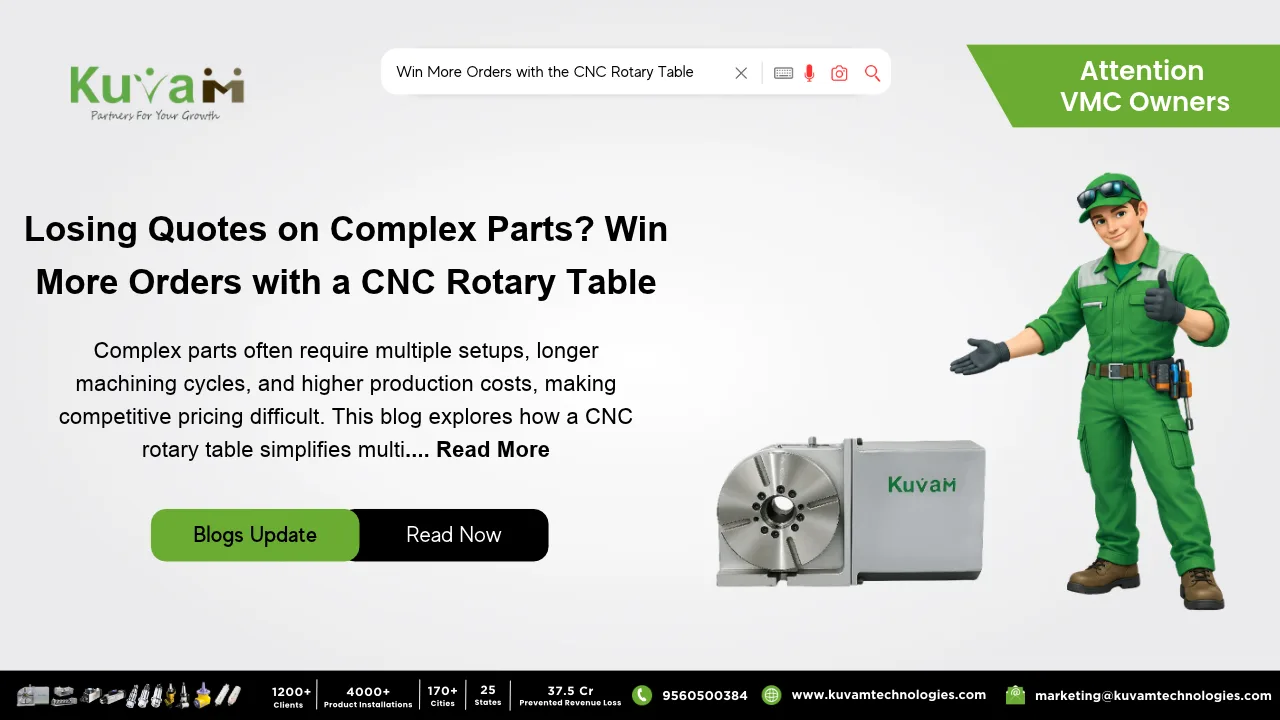
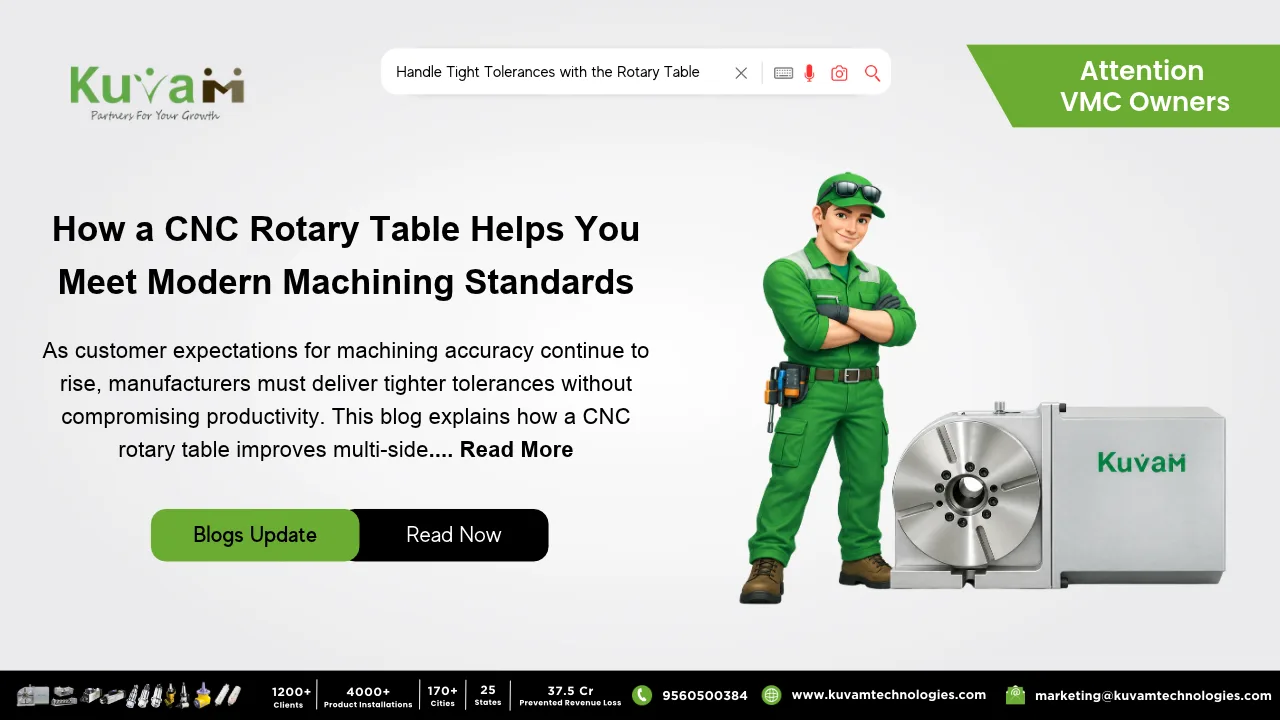
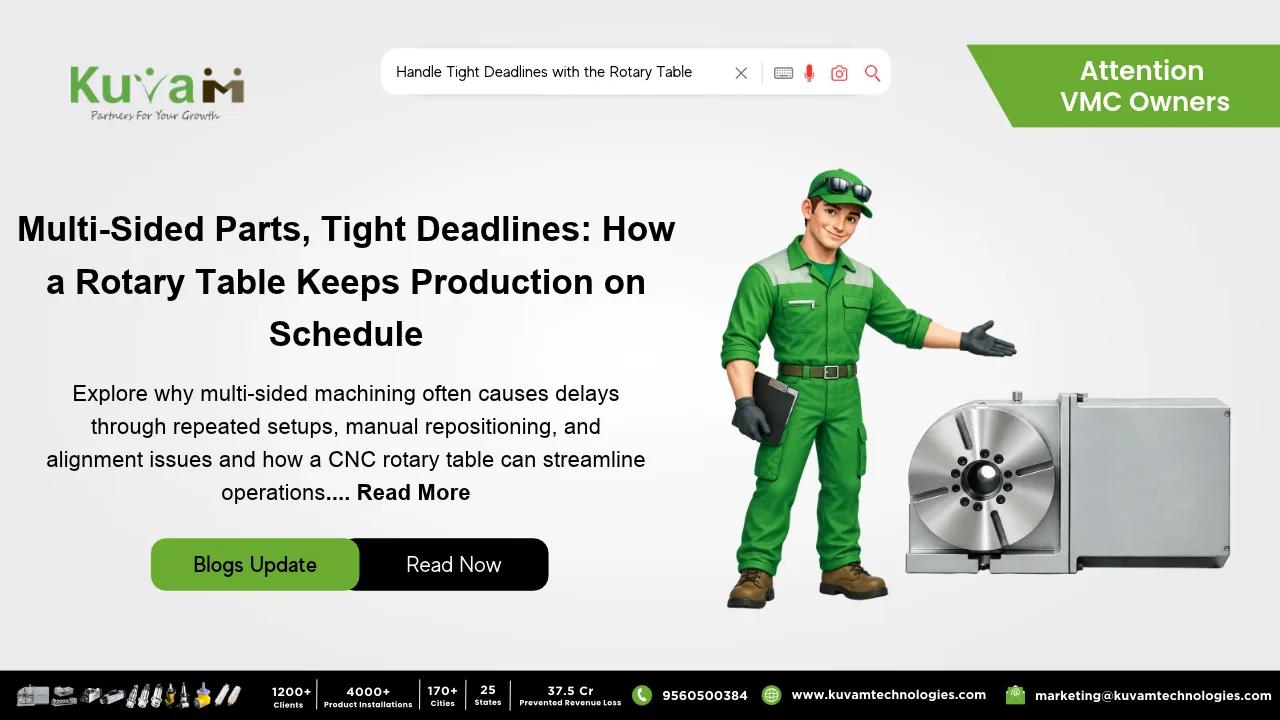
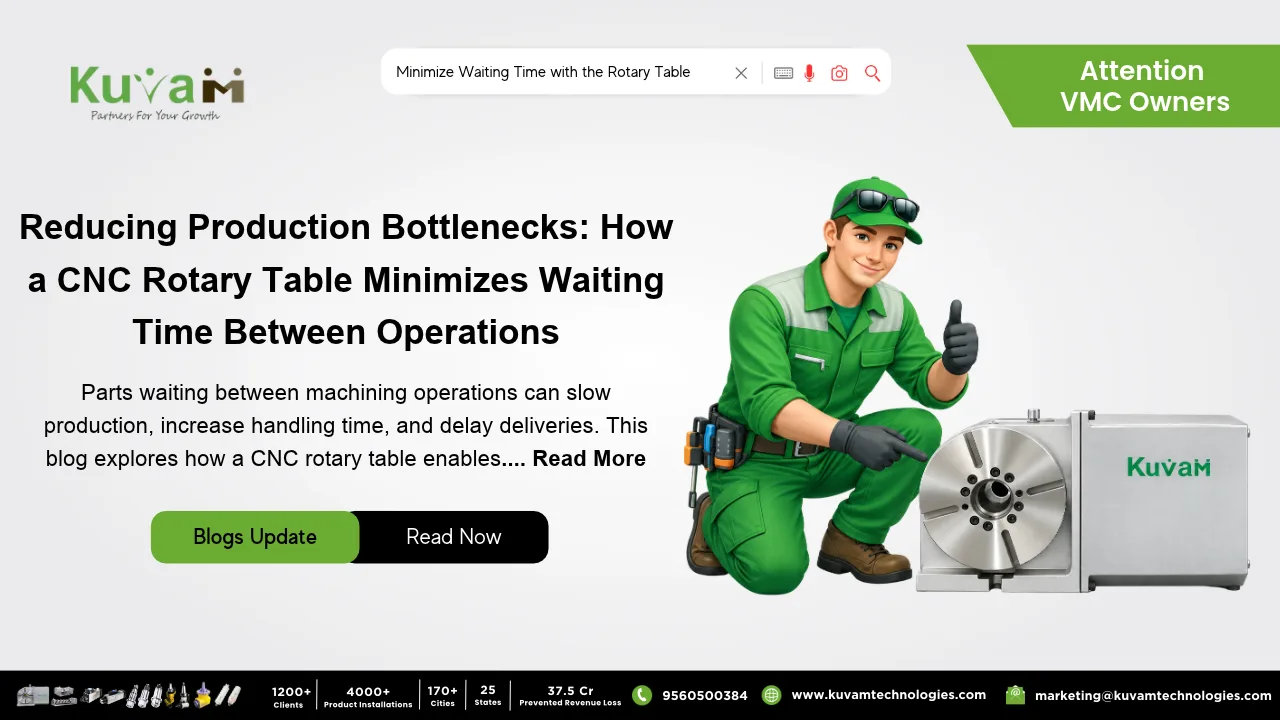
A Rotary Table is a work holding device that mounts on a mill or machining centre and rotates the part around a fixed point. Instead of moving a part to a second machine to reach another face or angle, the part stays clamped while the table turns it to the next position. A manual version uses a handwheel and a marked dial, and a CNC version rotates automatically as part of the program.
The big effect is on the route the part takes through the shop. Operations that used to be spread across two or three machines can often be done on one, in a single setup. The part gets loaded, machined on several faces, and unloaded, without ever joining a queue.
Fewer Handoffs, Shorter Lead Times
Every operation that moves onto the same machine removes a handoff, and every handoff removed removes a wait. A job that used to pass through three stations and sit in line at each can now finish in one place, which can shrink the total lead time far more than shaving seconds off a cutting program ever could.
That makes delivery dates easier to promise and easier to keep. When a part isn’t depending on three different machines being free at the right moment, there are fewer ways for a schedule to slip, and a rotary table is often the simplest way to get there.
A Simple Example
Picture a housing that needs a face milled, side holes drilled, and an angled port cut. The traditional route sends it to the mill, then the drill press, then a second setup for the angled port. Each stop means a queue, so the batch might take three days to finish even though the actual machining adds up to a couple of hours.
With a Rotary Table on the mill, the housing is clamped once. The table turns it to each position, and all three operations happen in one go. The batch finishes the same day it starts, with no crates waiting between stations and no risk of parts getting lost along the way.
Freeing Up the Floor and the Schedule
There’s a knock-on benefit for everything else in the shop. With a rotary table folding secondary operations into the main setup, fewer parts sit in queues, there’s less clutter to work around, and machines that used to be tied up with extra operations are free for other jobs. The schedule gets simpler, because a job that finishes in one place is easier to plan than one spread across several. Even a modest rotary table can change how a whole floor flows.
Things Worth Checking First
Not every part suits a single setup, and a rotary table won’t replace a machine that’s genuinely needed for a specialized process. It’s worth matching the table’s size and load rating to your parts, and confirming your machine’s control can drive an extra axis. Start with the jobs that bounce between stations most often, since those usually show the biggest gains.
Worth a Look If Crates Keep Piling Up
If your shop has parts sitting between operations more than they’re being cut, it’s worth tracing one job from start to finish and counting the waits. For many shops, a rotary table is a simple way to fold several operations into one and bring that waiting time down, which shortens lead times without asking anyone to work faster.