
Getting a Rotary Table is one of the best options for shop owners looking to increase productivity. One of the most frustrating problems right now for any shop owner is the manual repositioning of a component. Manual repositioning causes problems like increased cycle time, extra operator cost, and idle machine time. All these problems end up killing all the profit that a production is capable of.
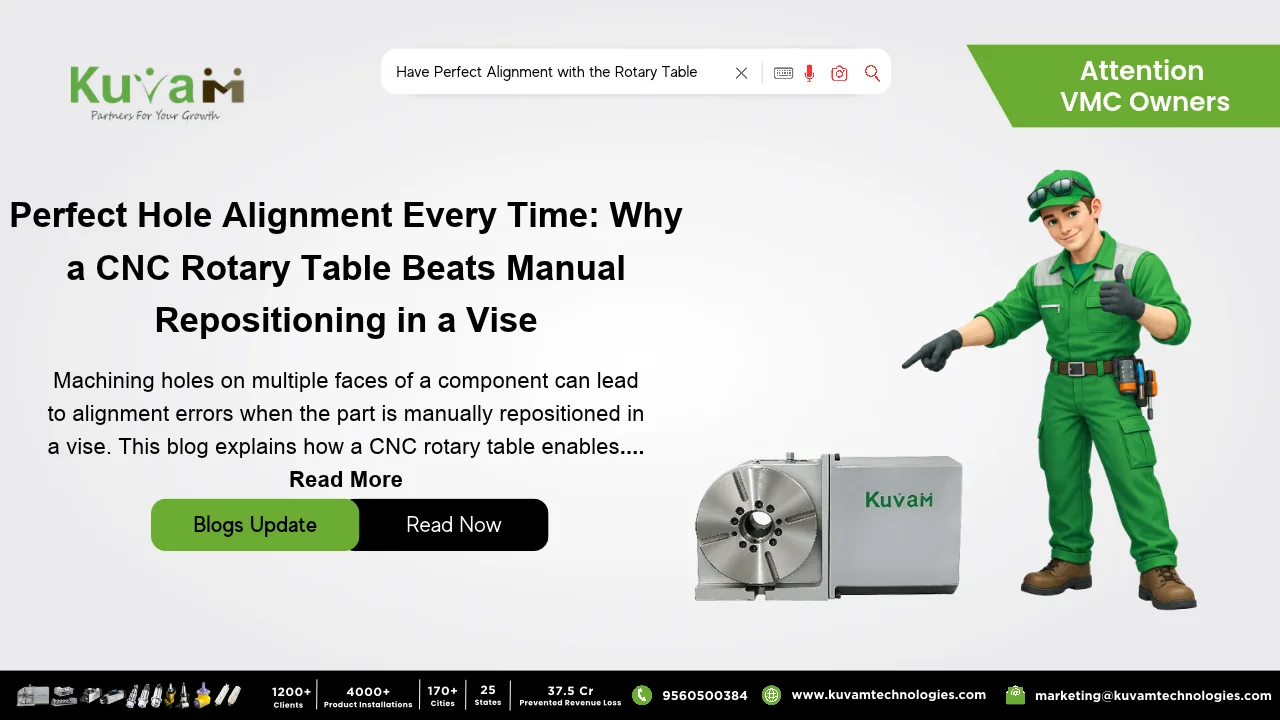
If your team makes difficult parts with features on multiple sides, you already know this pain. Every time there is a human intervention mid-process, two things happen. First, your spindle sits idle, burning overhead without working on metal. Second, you introduce tolerance stack-up. Even the best machinist on your floor will eventually misalign a second or third setup by a few thousandths of an inch, turning an expensive billet into a paperweight.
Upgrading to a full 5-axis machining centre solves this, sure—but not every shop has capital lying around for new capital equipment. Fortunately, there is a much smarter way to stop the bleeding: integrating a precision rotary table.
What Exactly Is a Rotary Table?
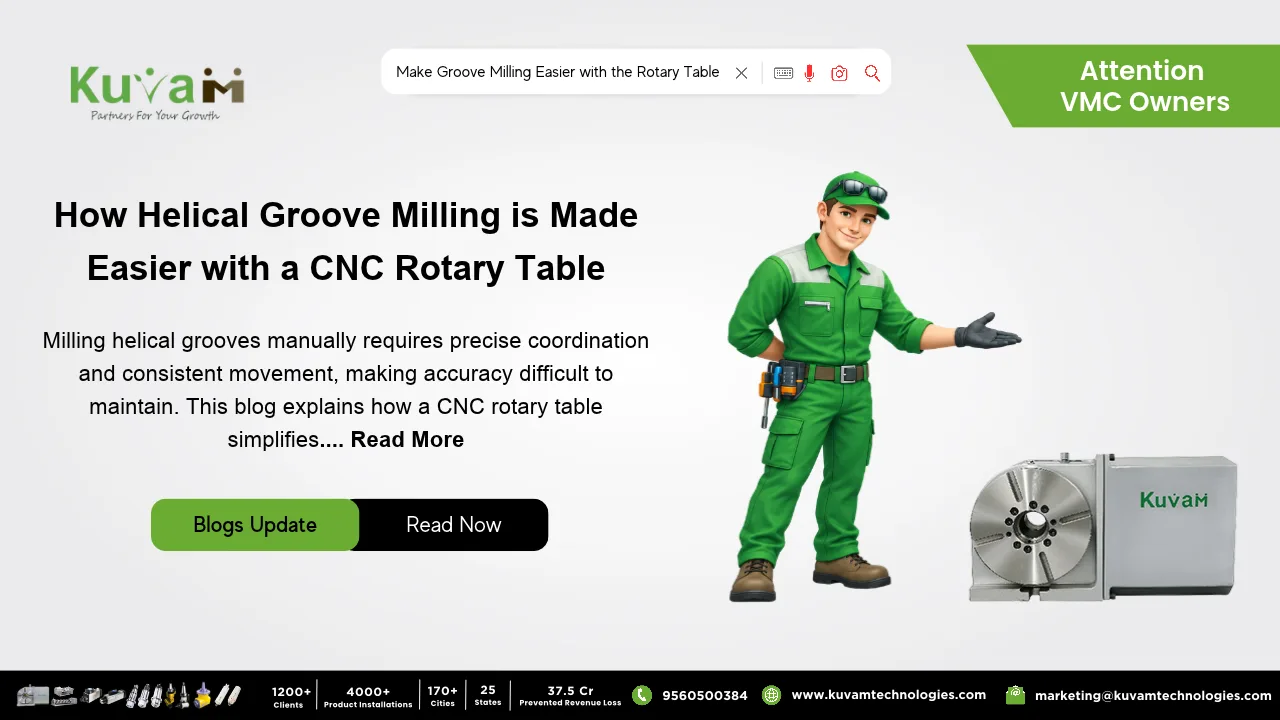
At its core, a Rotary Table is a precision positioning device that mounts directly onto the bed of a standard milling machine, machining centre, or assembly station. Think of it as an extra rotational axis (commonly called a 4th or 5th axis) that holds your workpiece and rotates it to exact angular positions under computer control or manual indexing.
Unlike a simple spinning platter, an industrial unit is built for heavy cutting forces and microscopic accuracy. Inside the cast-iron housing, you will typically find one of two drive mechanisms:
- Worm Gear Drives: These use a hardened worm screw meshing with a bronze wheel to deliver massive torque and self-locking rigidity, making them ideal for heavy hogging cuts on steel or titanium.
- Direct-Drive (Torque) Motors: Built with zero gears, these units eliminate mechanical backlash completely. They spin at blazing speeds and rely on high-resolution optical encoders to lock onto angles within arc-seconds.
Whether mounted horizontally, vertically, or in a dual-axis trunnion style that both tilts and spins, this attachment lets your cutting tool reach five sides of a part without anyone ever opening the machine doors.
How Adding Rotational Motion Solves the Multi-Setup Bottleneck
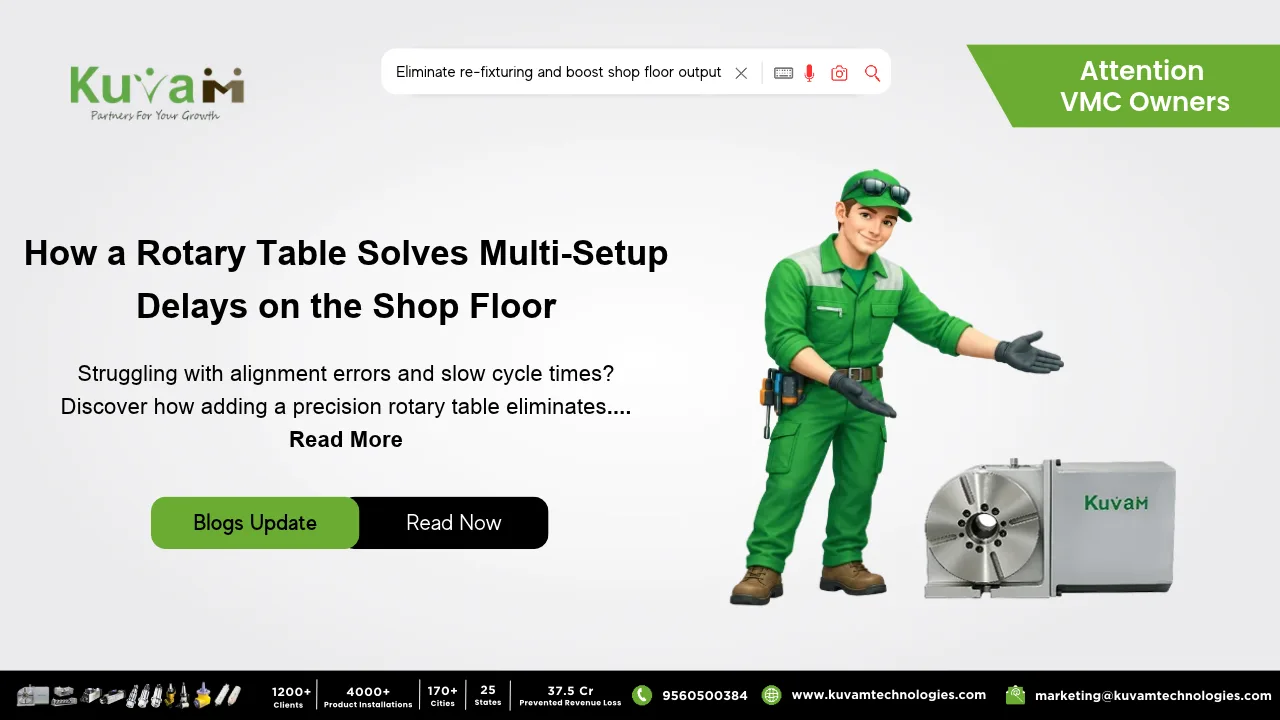
Bringing a Rotary Table onto an existing vertical machining center changes the way your production schedule works drastically. Instead of treating complex geometries as a relay race of separate operations, you consolidate them into a single, continuous workflow.
- Done-in-One Machining Eliminates Human Error
When a workpiece stays clamped in a single fixture from raw stock to finished component, your datum never shifts a single centimeter. The controller rotates the part to 90 degrees, drills a cross-hole, tilts to 45 degrees, mills an angled pocket, and returns to home. Because the part never leaves the chuck, features on opposite sides line up effortlessly. Scrap rates drop immediately because operator re-clamping mistakes vanish.
- Dramatic Cuts in Non-Cutting Time
Think about how many hours a week your spindles spend waiting on setups. By automating part orientation, a rotary table decreases non-cutting downtime. Even better, you can mount multi-sided tombstones onto the platter. Load four, eight, or twelve parts onto a tombstone fixture, hit cycle start, and walk away. Your operator can deburr finished parts or run a second machine while the spindle stays buried in metal for an hour straight.
- Better Surface Finishes and Longer Tool Life
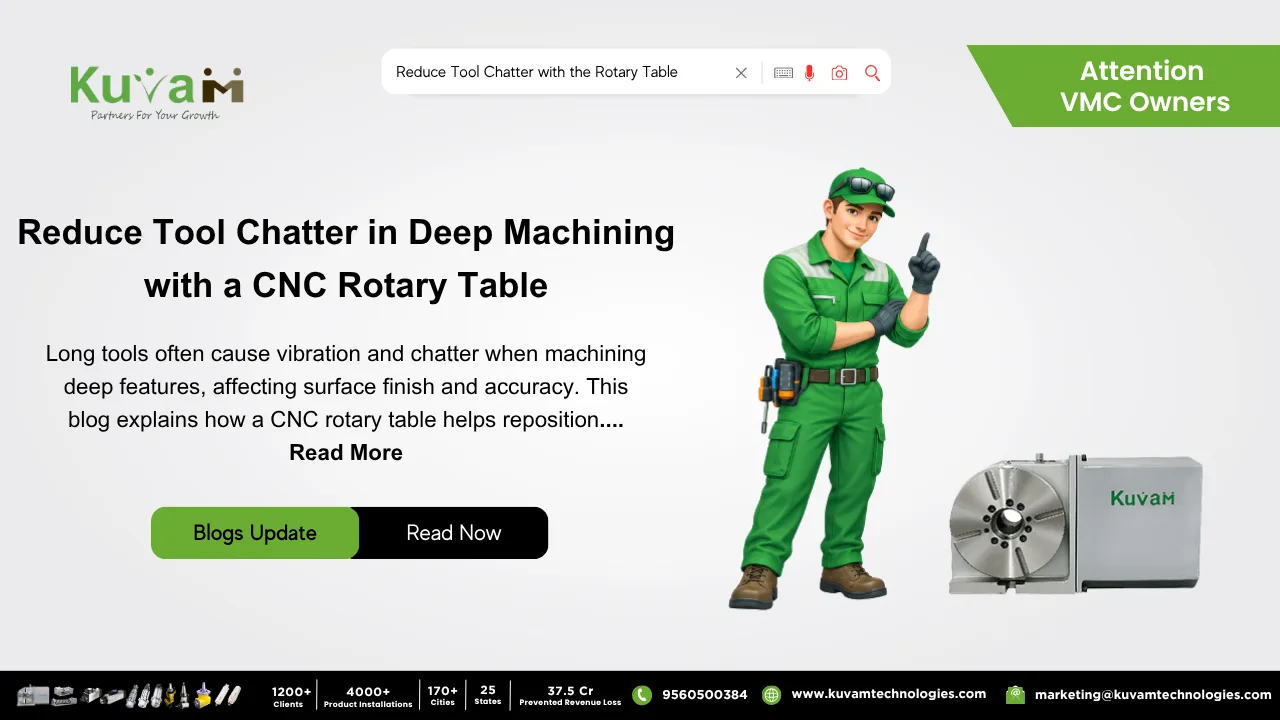
When you try to reach deep pockets on a standard 3-axis setup, you have to use long, skinny end mills that chatter and deflect. Chatter ruins surface finishes and snaps expensive carbide tools. A tilting rotary table lets you angle the workpiece toward the spindle, allowing you to use short, rigid cutting tools. You get cleaner finishes, faster feed rates, and noticeably lower tooling bills at the end of the month.
- High-Volume Indexing Beyond the Machine Shop
This technology isn’t limited to chip-making. On automated assembly lines, a rotary table (often called a rotary indexer) acts as the heartbeat of continuous production. Parts sit on fixed nests around a circular dial. With every sharp index, station one loads a housing, station two presses a bearing, station three dispenses adhesive, and station four runs a vision inspection—all at the exact same time. You get massive throughput in a compact footprint without sprawling conveyor belts.
Choosing the Right Setup for Your Floor
Not every shop needs the same hardware or equipment. Before ordering a Rotary Table, look closely at three practical factors:
- Clamping Torque vs. Speed: If you machine heavy aerospace alloys or large castings, prioritize hydraulic or pneumatic clamping brakes that lock the platter rock-solid during heavy milling. If you do high-speed aluminum contouring or light assembly, prioritize indexing speed.
- Platter Diameter and Swing: Measure the clearance inside your machine enclosure carefully. Make sure your largest fixture and workpiece can rotate a full 360 degrees without colliding with the spindle head or sheet metal walls.
- Controller Integration: Check whether your CNC machine is already wired for a full 4th-axis drive card, or if you need a standalone indexer box that triggers via simple M-code signals from your existing control.
Stop Paying for Idle Spindles
You do not need to buy a brand-new factory full of exotic machines to stay competitive on lead times and tight tolerances. Sometimes the highest-ROI upgrade is simply letting your existing equipment work smarter. By eliminating manual flips and keeping your tools engaged, a rotary table turns your biggest production bottleneck into your sharpest competitive edge.