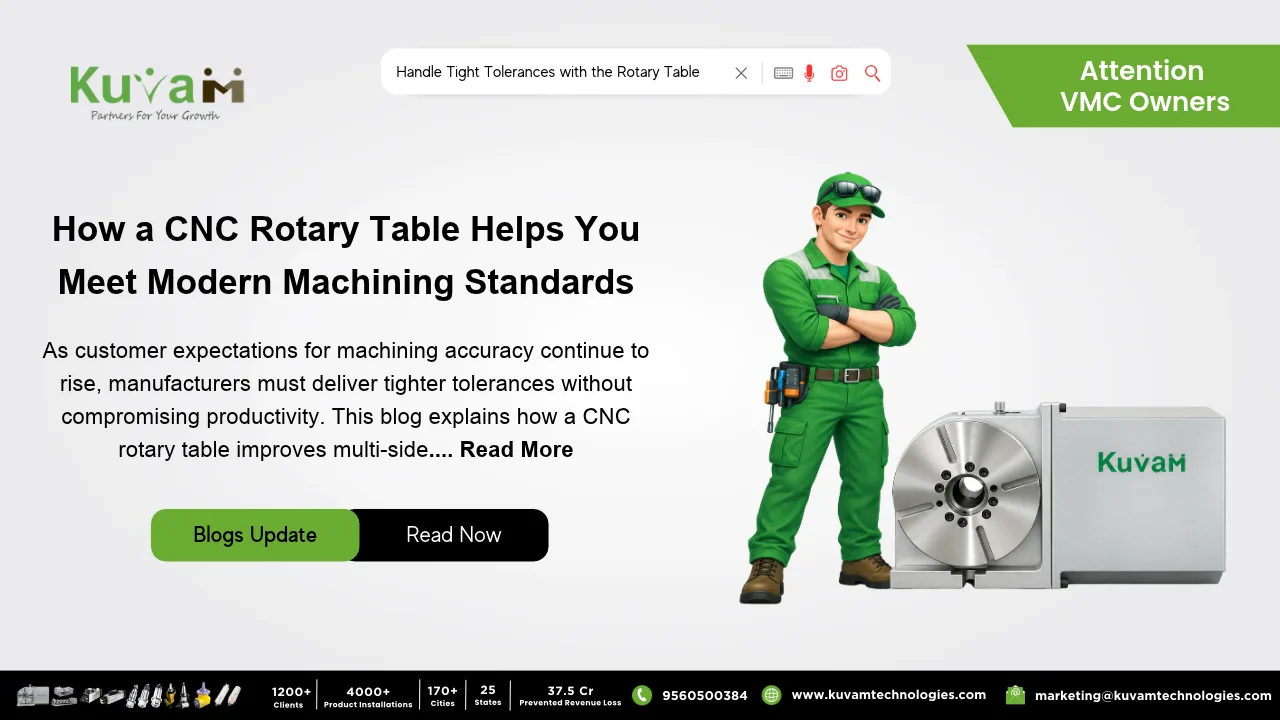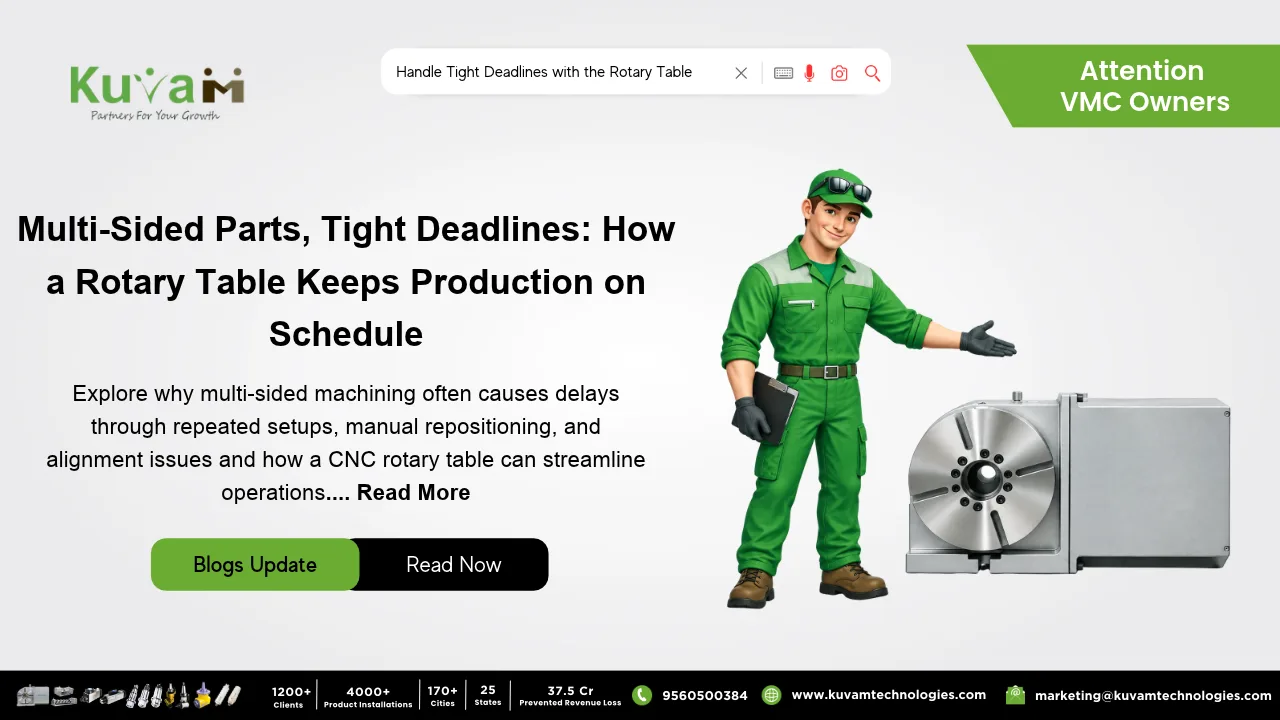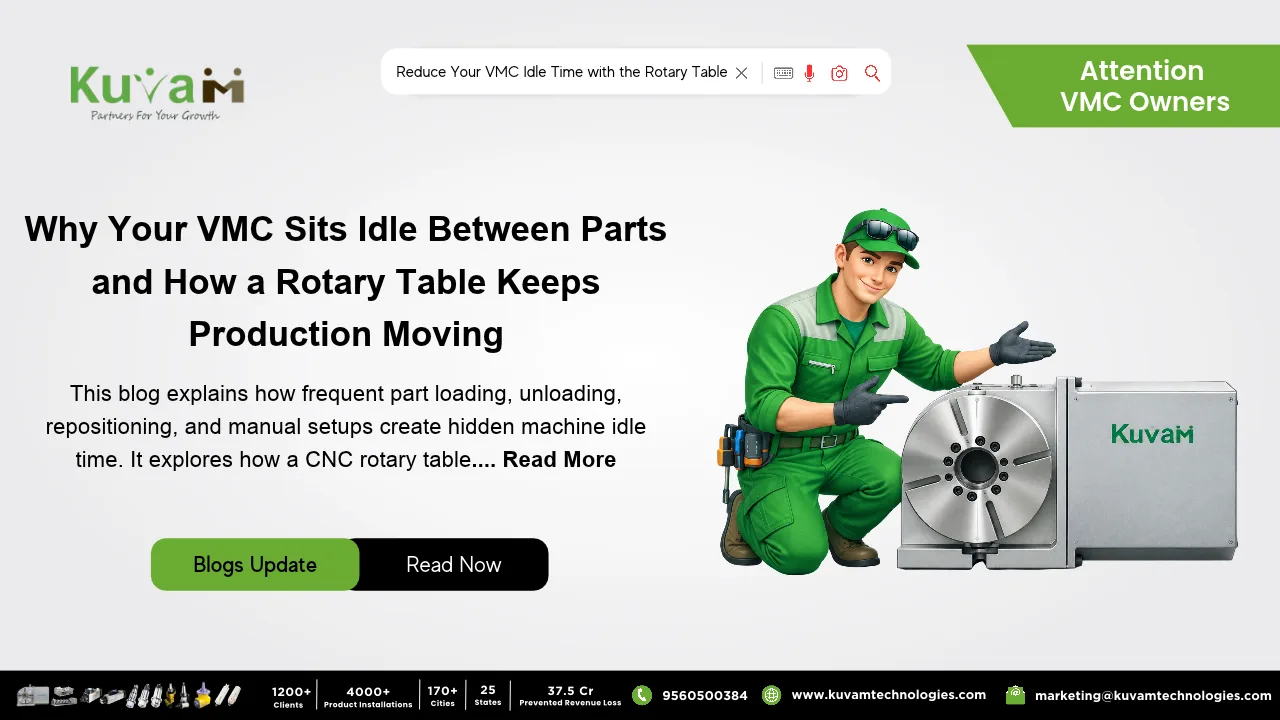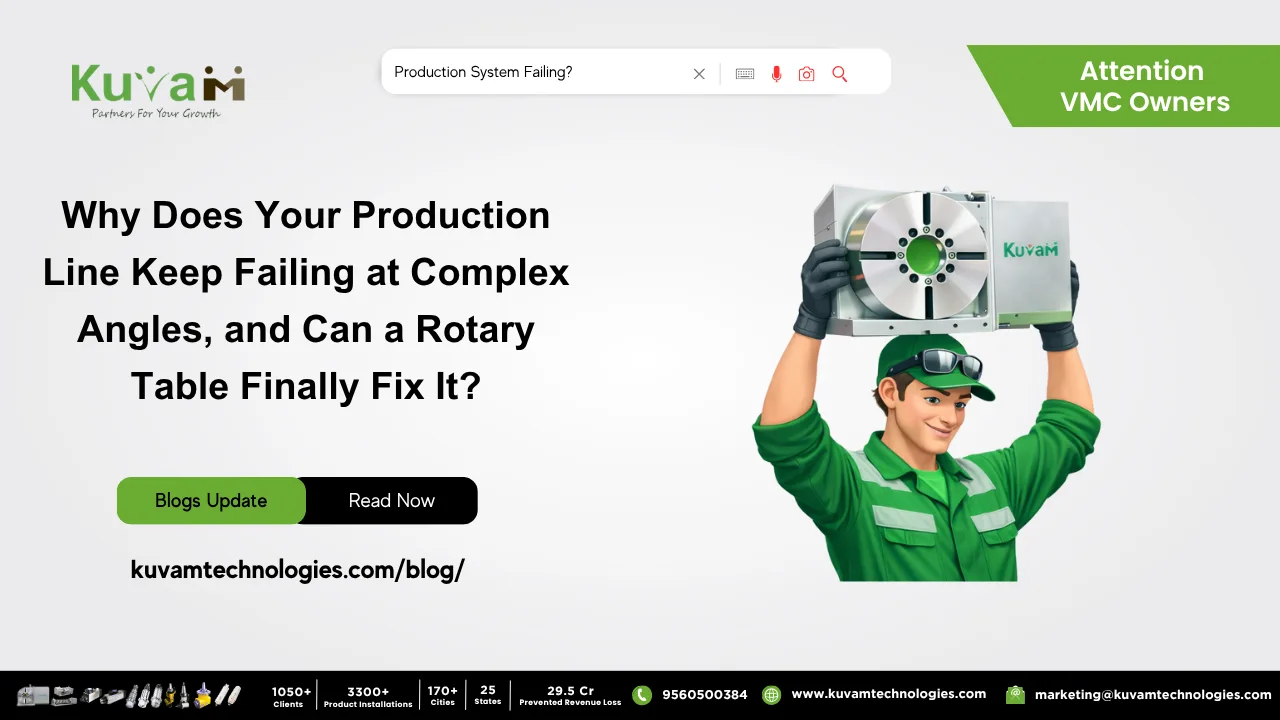

For manufacturers dealing with multi-face machining nightmares, the CNC Rotary Table might have been the answer all along.
Let’s be honest if you’ve spent any time on a busy shop floor, you already know the feeling. A batch of precision components comes back from the machining station, and at least a handful of them just aren’t right. The angles are off by a fraction. The holes don’t align. And somewhere upstream, a machine was repositioned by hand twice, maybe three times because that’s just “how it’s always been done.”
This isn’t a rare story. It’s a daily reality for thousands of manufacturers working with complex geometries, multi-sided parts, and tight tolerances. The culprit? Manual repositioning that quietly expensive habit of stopping a machine, adjusting a workpiece, re-clamping it, and praying the next pass lines up the way it should.
The Hidden Cost Nobody Talks About
When a machinist repositions a part manually between cuts, time stops being your friend. Every resetting cycle adds idle minutes. Every re-clamping introduces micro-errors the kind that don’t show up until quality inspection. And every rejected part chips away at your margins more than most manufacturers want to calculate.
There’s also the human factor. Even experienced operators have off days. Fatigue, distraction, or just the sheer repetition of a long shift can introduce inconsistencies that no amount of skill fully prevents. For high-volume production or aerospace-grade tolerances, “close enough” simply isn’t good enough.
So, What Exactly Is a CNC Rotary Table?
Think of a CNC Rotary Table as a precision turntable one that’s controlled entirely by your CNC system rather than a human hand. It sits on your machining center and rotates the workpiece to any angle, around any axis, with degree-level or even arc-second accuracy. No manual intervention. No re-clamping. Just continuous, programmed motion that becomes part of the machining cycle itself.
These tables are built with high-quality worm gear drives or direct-drive servo motors, allowing smooth, repeatable rotation across 360 degrees. They can be oriented horizontally or vertically, integrated as a fourth or fifth axis, and programmed directly through your existing G-code or CAM software.
Some models accommodate workpieces weighing hundreds of kilograms. Others are compact enough to fit on small vertical machining centres. Most modern versions include a pneumatic clamping system that locks the table in place between rotations ensuring zero drift during cutting operations.
How It Solves the Repositioning Problem?
Here’s where it gets genuinely exciting for production teams. With a CNC rotary table integrated into your setup, a component that once required three separate clamping operations can now be fully machined in a single setup. The table rotates the part under the spindle rather than the other way around.
60%
Reduction in setup time for multi-face parts
±0.001°
Positional accuracy on premium rotary models
1
Setup needed where three were required before
This matters enormously in production. Fewer setups mean fewer opportunities for cumulative error. It also means your operators aren’t spending half their shift wrestling parts into position they’re monitoring, adjusting, and supervising, which is where skilled labour genuinely belongs.
For components with helical grooves, curved cam surfaces, or radially drilled features the kind of geometry that makes conventional setups groan the rotary table is simply irreplaceable. It turns what used to be a multi-machine journey into a single-station solution.
Is It Really Worth the Investment?
The short answer: if complex geometries are even a moderate part of your work, yes significantly. The longer answer involves your scrap rate, your rework hours, and how many parts you’re losing to positioning errors each week. For many mid-size manufacturers, the payback period on a quality CNC Rotary Table lands between 12 and 18 months. For high-volume shops, it can be considerably shorter.
There’s also a competitive angle worth considering. Customers specifying tighter tolerances aren’t going away. If anything, the trend runs toward more complex parts, not fewer. Shops equipped to handle that complexity without bleeding time and material are simply better positioned to win and keep that business.
The Bottom Line
Manufacturing is unforgiving when it comes to accumulated small errors. Each manual repositioning, each re-clamping, each human judgment call under a deadline they all compound. A CNC rotary table doesn’t just add an axis to your machine. It removes an entire category of production risk.
If your team is still fighting multi-face parts with manual setups and hoping for the best on tolerance, the question isn’t really whether a CNC rotary table would help. The question is how much the current approach is already costing you and whether it’s time to stop guessing.
The shop floor rewards precision. Fortunately, so do the right tools when you finally put them to work.