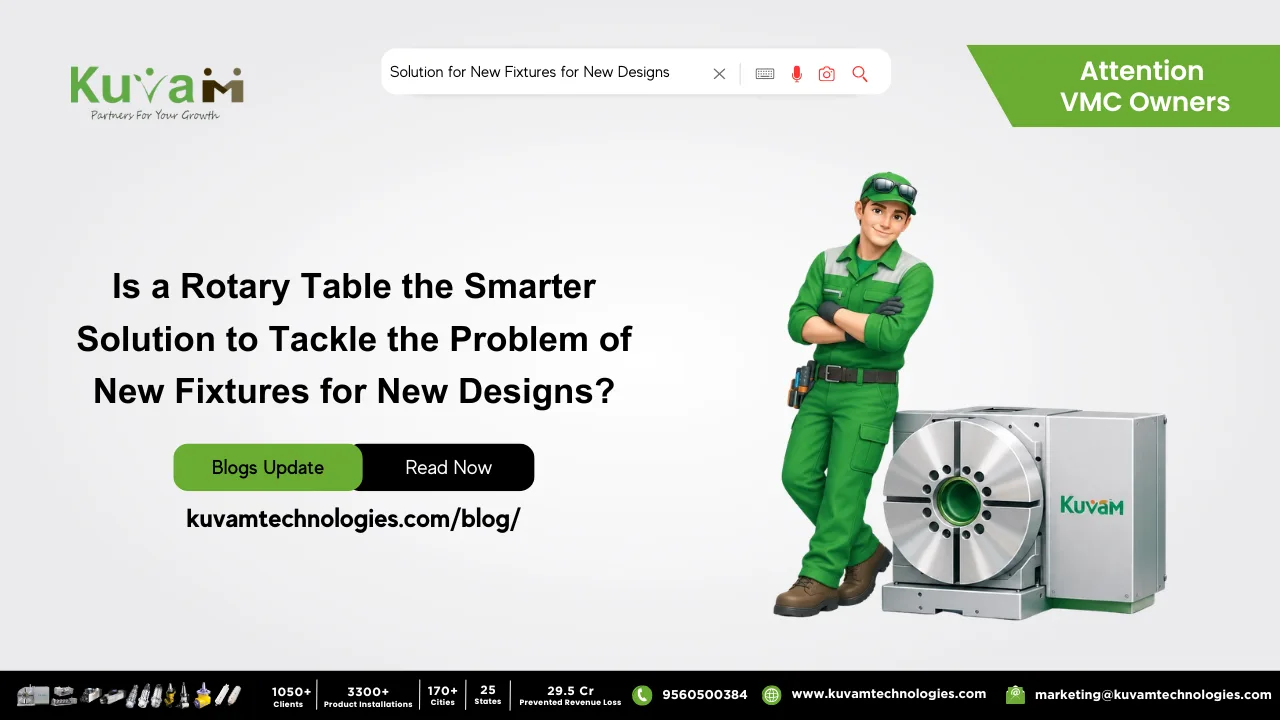

A Rotary Table solves the whole category of problems for every job that comes after, without a new fixture each time.
There is a cost in manufacturing that most shops accept so completely that they have stopped questioning it. Every time a new component arrives — one with angular features, circular bolt patterns, or radially spaced geometry — the first conversation on the floor is about fixturing. How do we hold it? How do we orient it for the second operation? Do we need a custom plate? A dedicated angle block? A new tombstone face?
The fixture gets designed. It gets made or sourced. It gets stored somewhere. And then the next component arrives, with slightly different geometry, and the conversation starts again. Over the course of a year, a job shop accumulates a graveyard of single-use fixtures — each one representing hours of design time, machining time, and storage space, all dedicated to solving a positioning problem for a part that may never run again.
This is not a materials cost problem. It is a strategy problem. And it is one that a well-chosen Rotary Table addresses more elegantly than any fixture ever could — because a Rotary Table does not solve one part’s positioning challenge. It solves the positioning challenge for every angular and circular component the shop will ever run.
The Fixture Trap and Why Shops Keep Falling Into It
Custom fixturing feels like good engineering. You study the part, you design something purpose-built, and you produce a setup that holds the component exactly as needed. There is craftsmanship in it. And for some components — high-volume runs with years of repeat business — the investment pays back many times over.
But for the majority of job shop work, where component variety is high, batch sizes are moderate, and customer designs change with every revision cycle, the fixture-per-component approach is quietly irrational. Each custom fixture is a sunk cost that serves one geometry. If the design changes — and designs always change — the fixture becomes obsolete. If the customer moves on, the fixture becomes clutter. And while the fixture is being designed and made, production is waiting.
The underlying problem with custom angular fixturing is that it treats each positioning challenge as unique, when in reality they all belong to the same family. A component needing six features at 60-degree intervals and a component needing eight features at 45-degree intervals are different parts — but they share the same class of positioning requirement. A Rotary Table handles both with a dial setting change. No new fixture. No design time. No wait.
“Every custom fixture is a single-use answer to a repeating question. The Rotary Table is the permanent answer — one that works for the component on the floor today, the one arriving next week, and every angular job the shop will ever see after that.”
What a Rotary Table is and Why it Replaces the Fixture Logic Entirely?
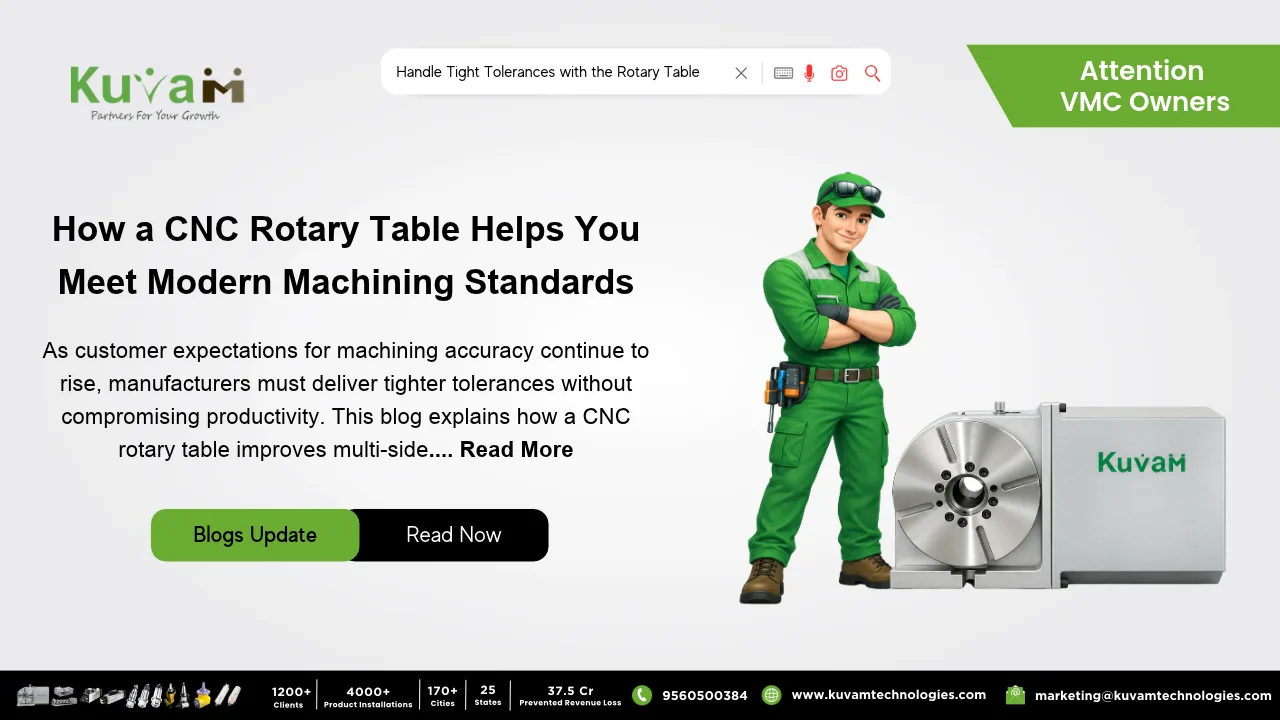
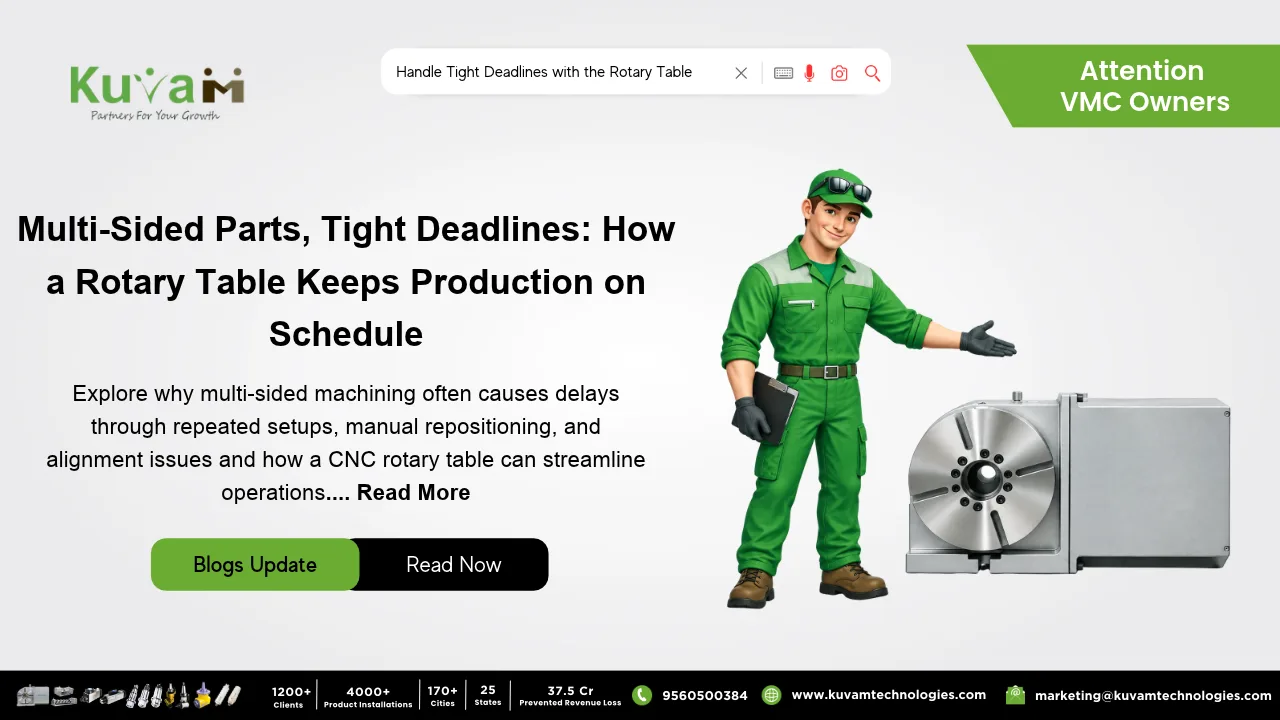
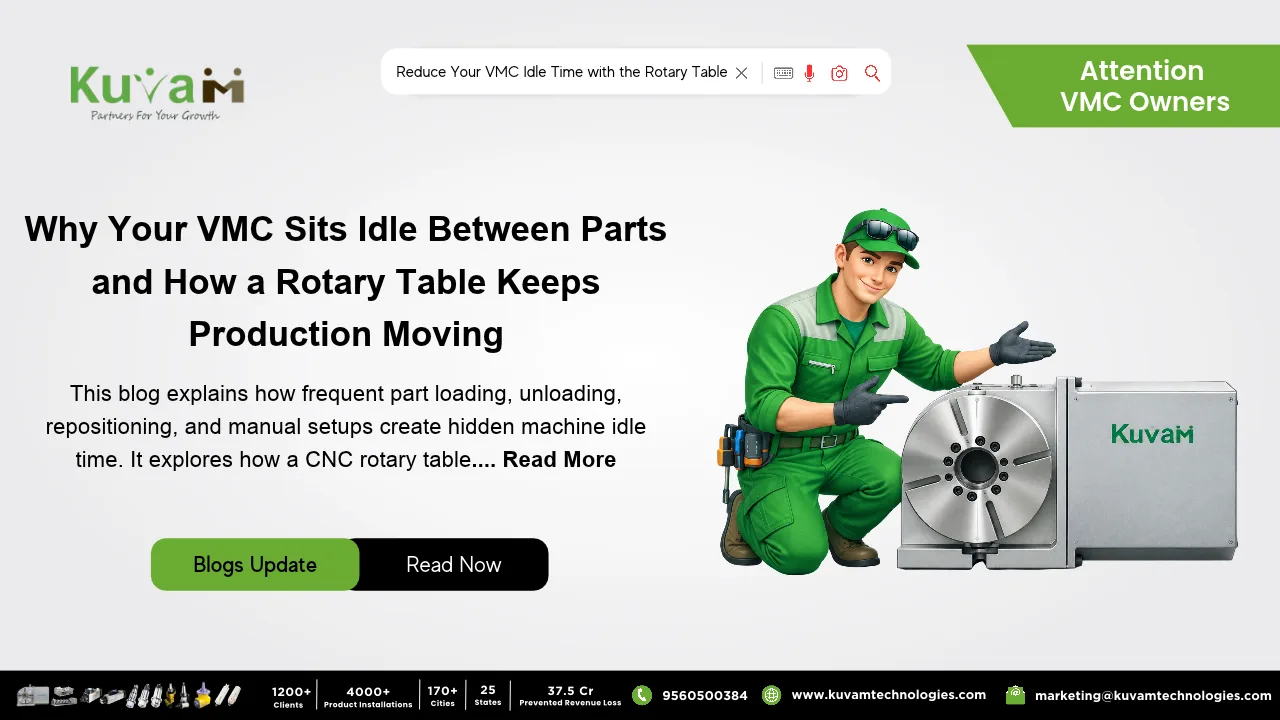
A Rotary Table is a precision workholding device that mounts on the bed of a milling machine or machining centre and provides a mechanically controlled rotational axis for the workpiece. The part is clamped to the table’s circular surface — using standard clamps, chucks, or vee-blocks rather than dedicated fixtures — centred on the rotational axis, and rotated to any required angular position by turning a handwheel connected to a precision worm and worm gear drive.
The worm gear ratio — commonly 40:1 or 90:1 — converts each handwheel revolution into a small, precise angular increment. A graduated dial and vernier scale on the table body allow positioning to arc-minute accuracy without calculation or custom tooling. At each position, a locking mechanism clamps the table absolutely rigid before cutting. The workpiece geometry dictates nothing about the setup except the angular values entered on the dial. Any part. Any angle. The same table.
| CONFIGURATIONS TO MATCH YOUR WORKFLOW Manual Rotary Tables offer the broadest flexibility — ideal for varied job shop work where component types change frequently and no two setups are the same. Motorized models add servo-driven repeatability for production batches where the same angular cycle repeats across many parts. CNC-integrated models extend a three-axis machining centre to genuine four-axis capability, enabling arc interpolation, helical milling, and programmable multi-angle cycles. Tilting models introduce a compound angular axis for components that require positioning across more than one rotational plane simultaneously. |
The Real Comparison: Fixture-Per-Job Versus Rotary Table
| FIXTURE-PER-JOB APPROACH | ROTARY TABLE APPROACH |
| ✗ Design and build time per new angular component delays production start | ✓ Table already on the machine — setup begins immediately with dial settings |
| ✗ Each fixture becomes obsolete when the design changes or the job ends | ✓ Same table serves every future angular job regardless of geometry changes |
| ✗ Fixture storage accumulates cost, space, and management overhead | ✓ Single device on the machine replaces an entire library of angular fixtures |
| ✗ Each new fixture introduces its own positioning uncertainties and error sources | ✓ Mechanical dial reference produces the same positional accuracy on every component |
| 40:1 Worm gear ratio delivering precise arc-minute angular control per handwheel turn | ∞ Angular positions available — any angle, any component, one table | 4th Effective axis added to a 3-axis mill with a CNC-integrated Rotary Table |
What Changes When the Rotary Table Replaces the Fixture Habit?
The most immediate change is speed-to-first-cut. A job that previously waited two or three days for a custom fixture to be designed and produced — or sourced and delivered — can now start the moment the part drawing arrives. The setup is a matter of mounting the workpiece on the table and dialling in the required angular positions. The fixture design conversation never happens, because it is never needed.
The second change is in how the shop responds to design revisions. When a customer changes the bolt hole count from eight to ten, or shifts the angular spacing to accommodate a new assembly requirement, the response from the floor is a dial setting change, not a fixture replacement. The production implication of a design change drops from days to minutes. That responsiveness is not a minor convenience — in a competitive manufacturing market, it is the kind of service that keeps customers from looking elsewhere.
The third change is financial. The capital tied up in custom angular fixtures — in design time, machining time, and storage — starts to come back. Not in a single dramatic moment, but steadily, as fewer fixtures are commissioned and the Rotary Table handles the work they would have done. The shop’s investment in the table pays back not once, but continuously, across every angular component that runs across it for the rest of its working life.
The fixture graveyard at the back of the shop is not a sign of good engineering. It is the accumulated cost of solving the same problem in a new way every time. The Rotary Table is what stops that from happening — and starts solving it once, for good.