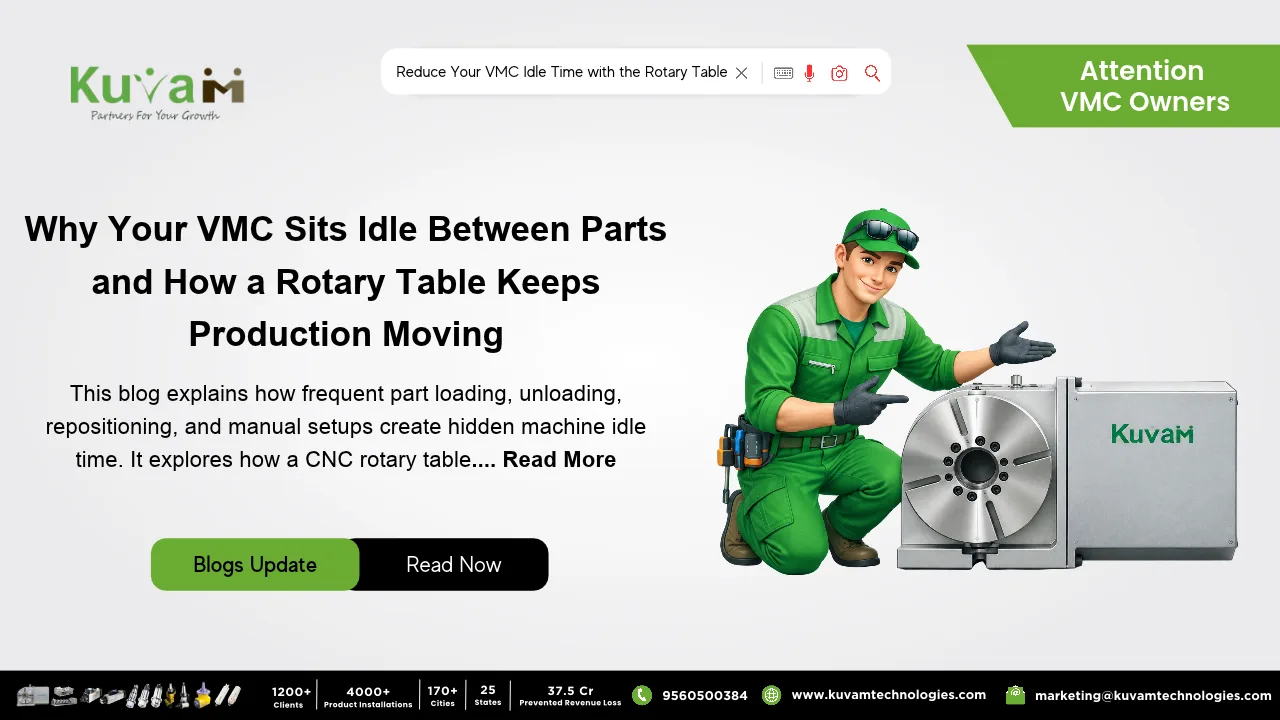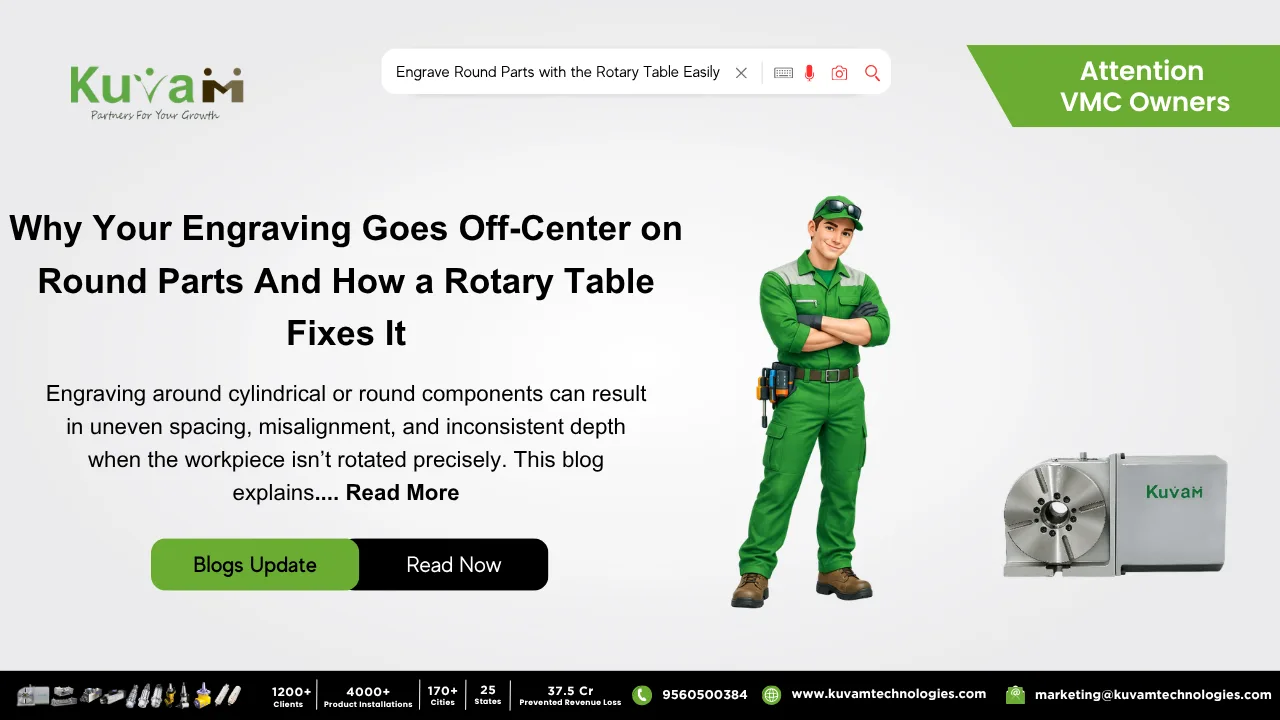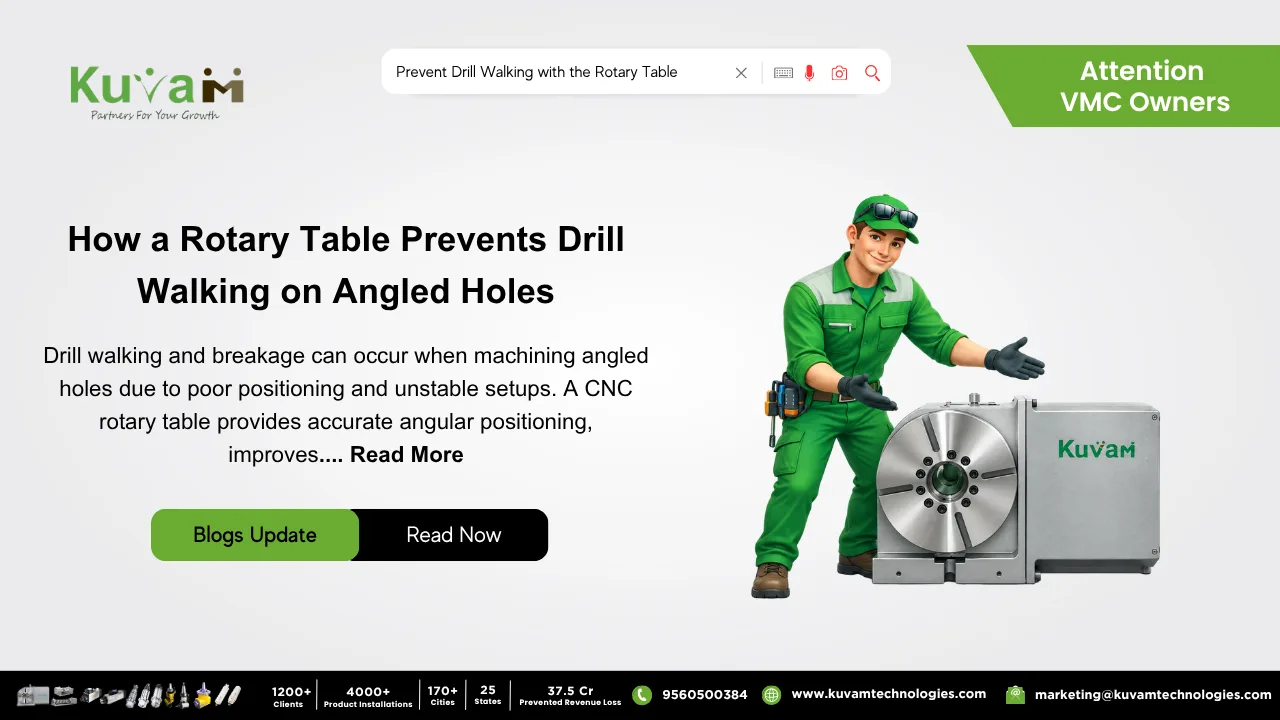

A Rotary Table is known for precision and accuracy. When holes, slots, and features keep landing in the wrong spot, the problem is often not the machine or the operator. It’s the lack of one tool that controls where the part is pointing.
Picture this. You need to drill six holes evenly spaced around a metal disc. Simple enough on paper. But without the right tool, you’re measuring by hand, marking positions, and hoping the spacing comes out even. It rarely does. One hole is slightly off. The part fails inspection. You start again.
This happens every day in workshops around the world. And it’s one of the most frustrating problems in machining not because it’s complicated, but because it feels like it should be easy. The math is simple. The machine is capable. And yet the result keeps coming out wrong.
The reason is simple: there’s no tool controlling the rotation of the part between each cut. And that’s exactly what a Rotary Table does.
What is a Rotary Table?
A Rotary Table is a round, flat platform that sits on your machine’s worktable. You clamp your part on top of it. Then, instead of trying to reposition your part by hand between each cut, you simply turn the Rotary Table’s handwheel to rotate the part to the next position. A numbered dial on the side tells you exactly how far you’ve turned down to a fraction of a degree. Every position is precise. Every time.
Think of it like the dial on a safe. Each click moves to an exact position. No guessing. No measuring. No getting it slightly wrong on hole number four.
When you reach the position you need, a locking mechanism holds the table completely still while you make the cut. Then you unlock, rotate to the next position, lock again, and cut again. It’s that straightforward.
What does it actually fix?
The Rotary Table solves the one thing manual methods never quite could: consistent, repeatable angular positioning. Whether you need 4 holes, 6 holes, 12 holes, or any other evenly spaced feature around a circle, the Rotary Table handles the spacing for you with zero calculation and zero guesswork on the shop floor.
| Evenly spaced holes Every hole lands exactly where it should — first time, every time. | Circular slots & grooves Arc-shaped features machined cleanly without repositioning by hand. |
| Flat faces at set angles Milled surfaces at precise intervals around a component. | Any circular geometry If it sits on a circle, a Rotary Table can position it accurately. |
It works on any milling machine you already own. No upgrades. No new equipment. Just a tool that clips onto your existing worktable and immediately makes an entire category of work more accurate, more repeatable, and genuinely less stressful to do.
If wrong hole positions, uneven spacing, and re-run parts are a regular part of your week and a Rotary Table is probably the most straightforward fix available to you right now.
| The part should land right the first time. A Rotary Table makes sure it does — without adding complexity, cost, or a learning curve your team doesn’t have time for. |