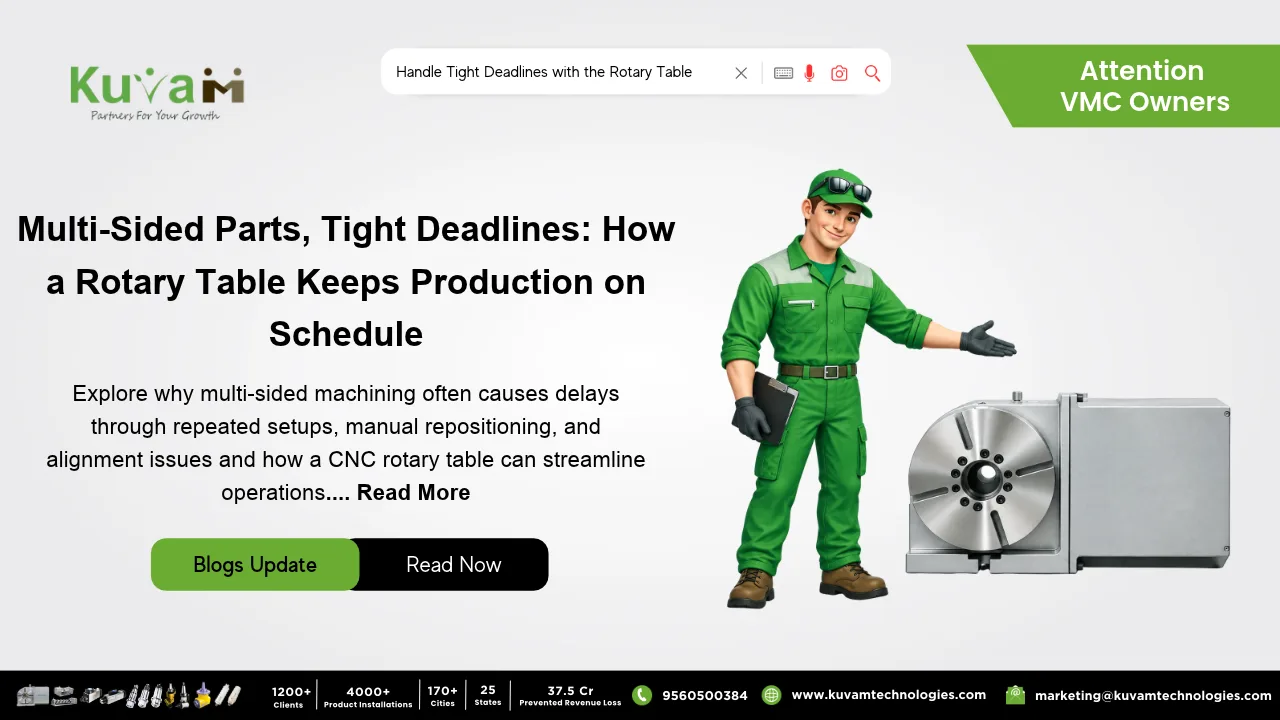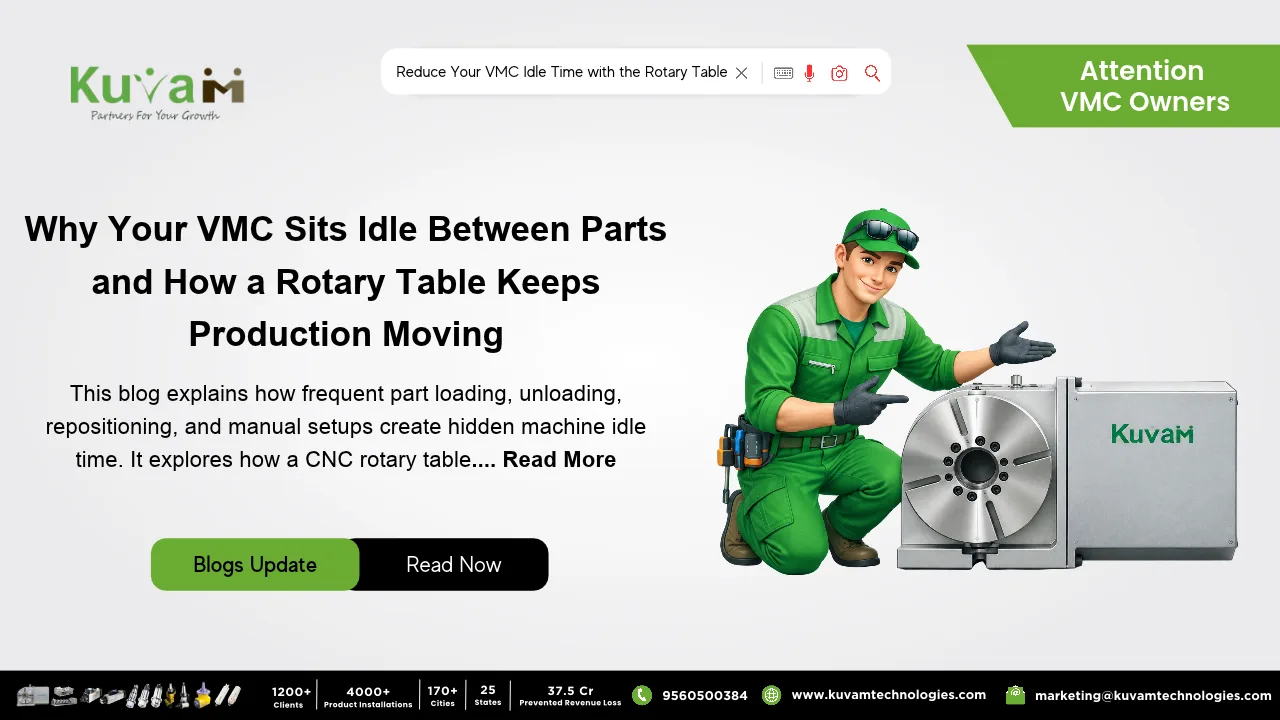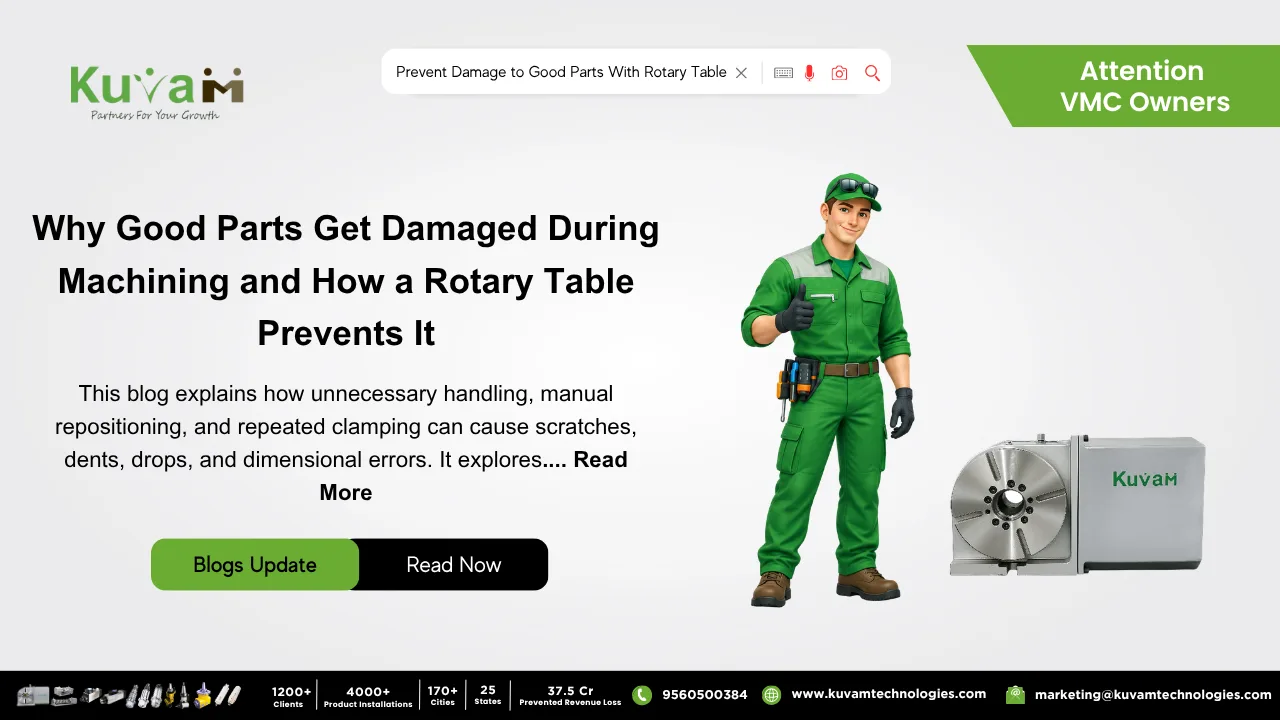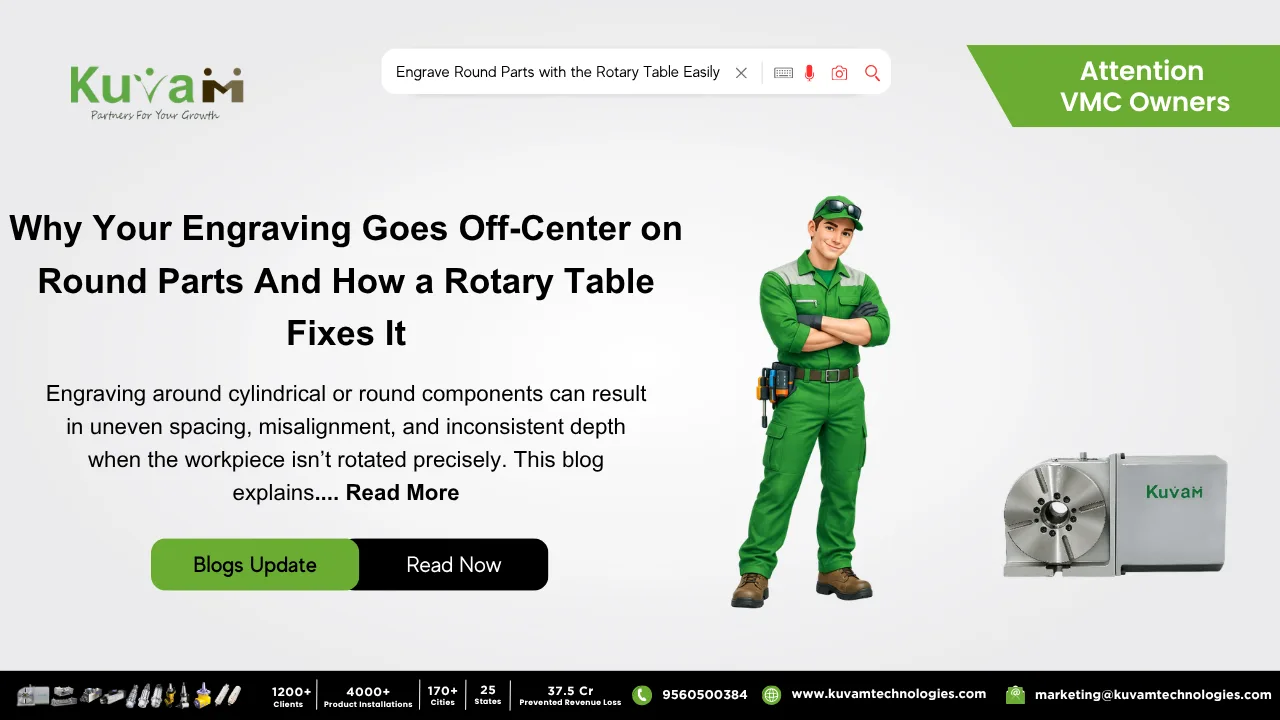

The Rotary Table is known for reducing scrap costs. Every shop tracks scrap rate. Fewer shops actually sit down and work out what that number costs in real dollars. A part that gets scrapped isn’t just a wasted piece of material but it’s wasted machine time, wasted labor, and often a wasted slot in the schedule that now has to be filled by running the job again. Add it all up across a year, and scrap is usually a bigger line item than most shop owners expect when they finally do the math.
A lot of that scrap traces back to one specific moment in the process: the point where a part gets unclamped to reach a second or third side. That single step, where you flip the part, line it up again, clamp it down, is where a surprising share of good parts quietly turn into bad ones. It’s also the exact step a rotary table is built to take out of the process.
Where the Money Actually Goes
A scrapped part costs more than just the raw material, even though that’s usually the first number people think of. There’s the machine time already spent cutting the first side, which is now wasted. There’s the labour time the operator spent running that part, which is also gone. There’s the replacement blank that has to get loaded and run again, taking up a machine slot that could have gone to a new part instead. And if the mistake isn’t caught until final inspection, there’s the time spent finding it in the first place. But, this time can be easily saved with the help of a Rotary Table.
None of this shows up as one big number on a report. It shows up as a slightly lower output per shift, a slightly higher material order than expected, and a scrap bin that always seems fuller than anyone remembers filling it.
Why Flipping a Part Is Such a Common Scrap Source
Every time a part comes out of its fixture to reach a new face, there’s a chance it doesn’t go back in exactly the same way. A little debris under the part, a slightly different clamping pressure, a part that wasn’t indicated quite as carefully the second time around and any of these can throw a hole or a feature off by just enough to fail inspection. This is where the Rotary Table comes in.
It doesn’t take a dramatic mistake. A few thousandths of an inch is often enough to turn a good part into scrap, and that kind of small shift is exactly what happens when a part gets physically removed and put back by hand, especially on the fifth or sixth part of an hour when the process has become routine.
How a Rotary Table Reduces This
A Rotary Table cuts down on scrap by removing the step where most of this risk lives. Instead of unclamping a part to reach its next face, the part stays locked in one fixture, and the table rotates it into position instead. Since the part never actually leaves its original clamping, there’s no repeated chance for it to settle slightly differently each time.
That means fewer features coming out slightly off from a part that didn’t seat quite the same way twice, and fewer parts ending up in the scrap bin for a reason that had nothing to do with the tool, the program, or the material but simply because it got picked up and put back one too many times.
Why This Adds Up More Than It Seems
Picture a shop running five hundred parts a month, each needing two flips to reach every feature. Even a small two percent scrap rate tied to repositioning works out to ten scrapped parts a month from that one cause alone. Multiply the cost of material, machine time, and labour across those ten parts, and it’s a real number and one that often goes unnoticed because it’s spread across the month instead of showing up all at once.
A Rotary Table doesn’t promise zero scrap. It removes one of the most common and preventable causes of it, which for a lot of shops turns out to be a bigger piece of the scrap total than anyone expected until they actually looked for it.
It’s Not Just Brackets and Housings
This same scrap pattern shows up across almost any part that needs more than one face machined, including flanges, mounting plates, valve bodies, small castings, anything where a second or third operation depends on the part sitting exactly where it sat the first time. A rotary table addresses the problem the same way regardless of what the part is actually called, because the underlying cause is identical: a part that gets physically removed and replaced carries risk that one which stays put simply doesn’t.
What This Looks Like in Practice
Take a batch of five hundred brackets, each needing a hole on a second face. Run with manual flipping, a small percentage of those parts come back from inspection with that second hole slightly off, traced back to the part settling differently the second time it was clamped. Run on a rotary table, the part never leaves its fixture between the first hole and the second, and that specific source of scrap disappears from the count almost entirely.
Worth a Look If Scrap Keeps Eating Into Your Margins
If your shop has never actually worked out what a year of scrap costs in material, labour, and lost machine time, it’s worth doing that math before deciding whether a rotary table is worth the investment. For a lot of shops, the number that comes back is bigger than expected and a meaningful share of it traces back to the simple, repeated act of flipping a part by hand one more time than it needed to be.