
The Rotary Table is one of the best machine tools for increasing productivity. Most manufacturers don’t wake up one morning and decide it’s time to buy a new piece of tooling. The decision usually creeps up on them a pattern of small frustrations that, taken individually, seem manageable, but together point to the same underlying gap in the shop’s capability. A missed deadline here. A quote declined there. A scrap part that shouldn’t have happened.
If you’re trying to figure out whether your shop actually needs a CNC rotary table or whether it’s just a nice-to-have sitting on a supplier’s catalog page, the honest answer usually isn’t found by reading a spec sheet. It’s found by looking at your own production floor and asking whether any of the following five signs sound familiar.
What a CNC Rotary Table Actually Does, Quickly
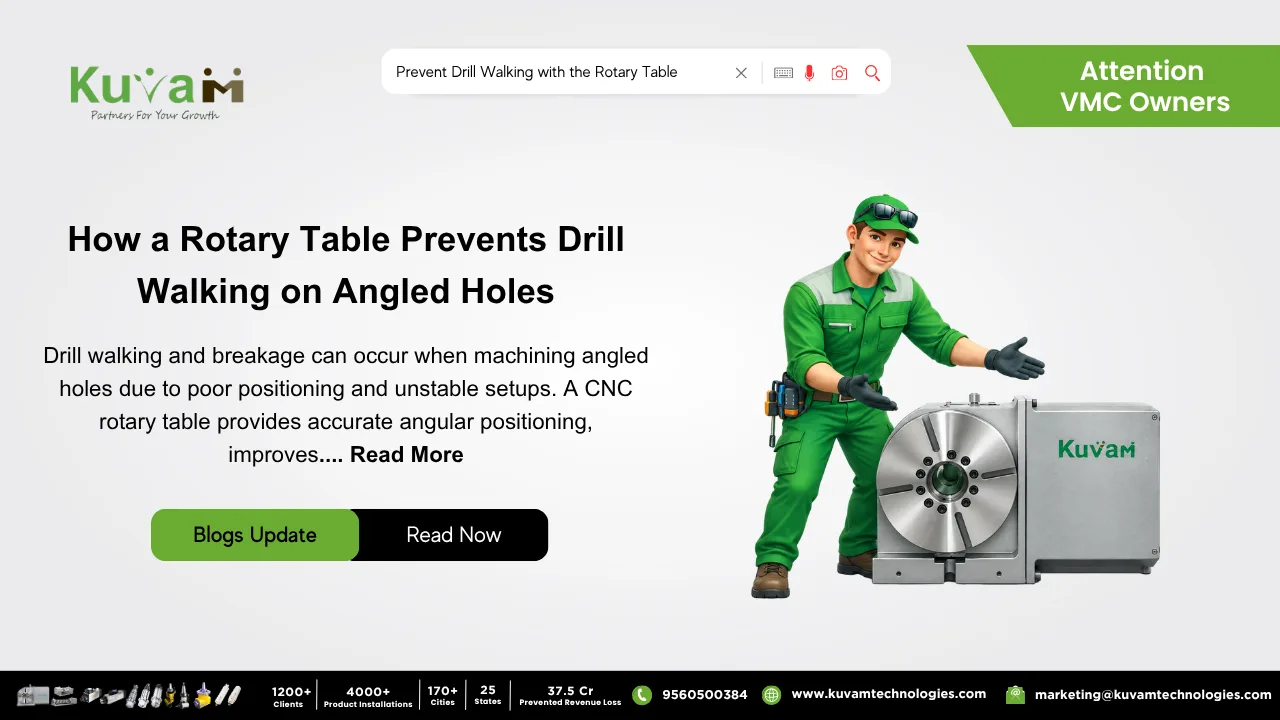
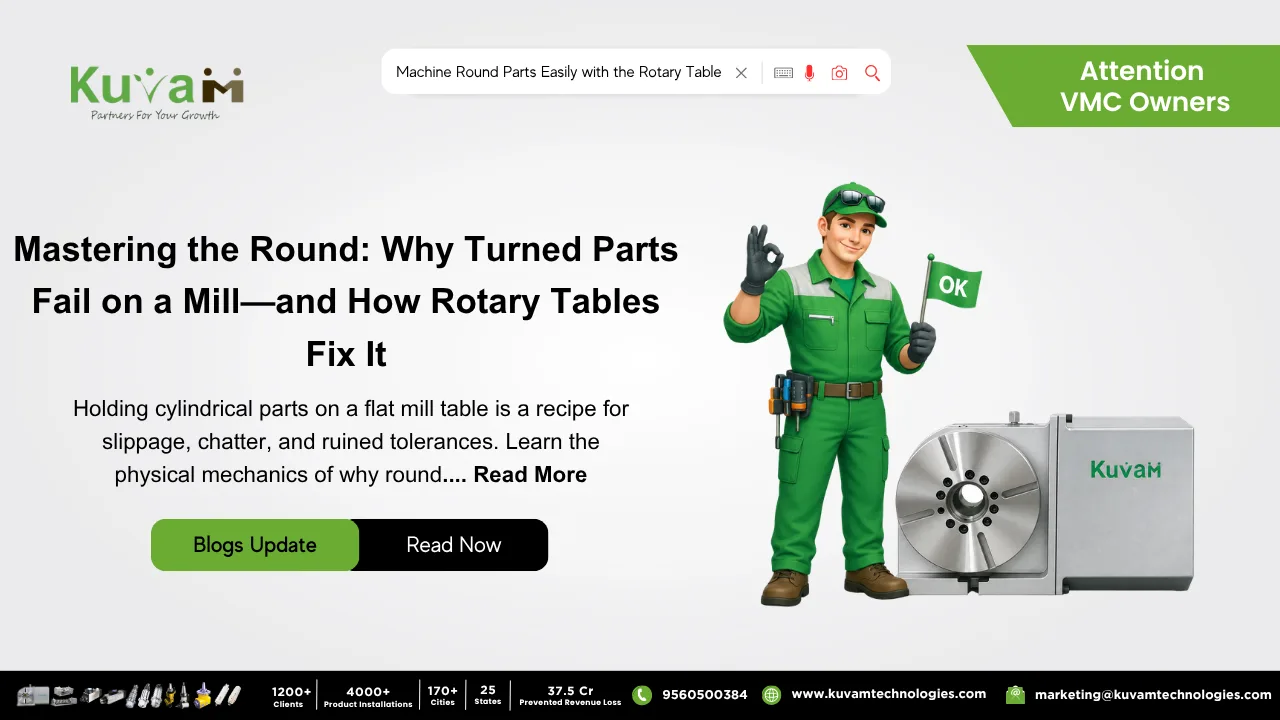
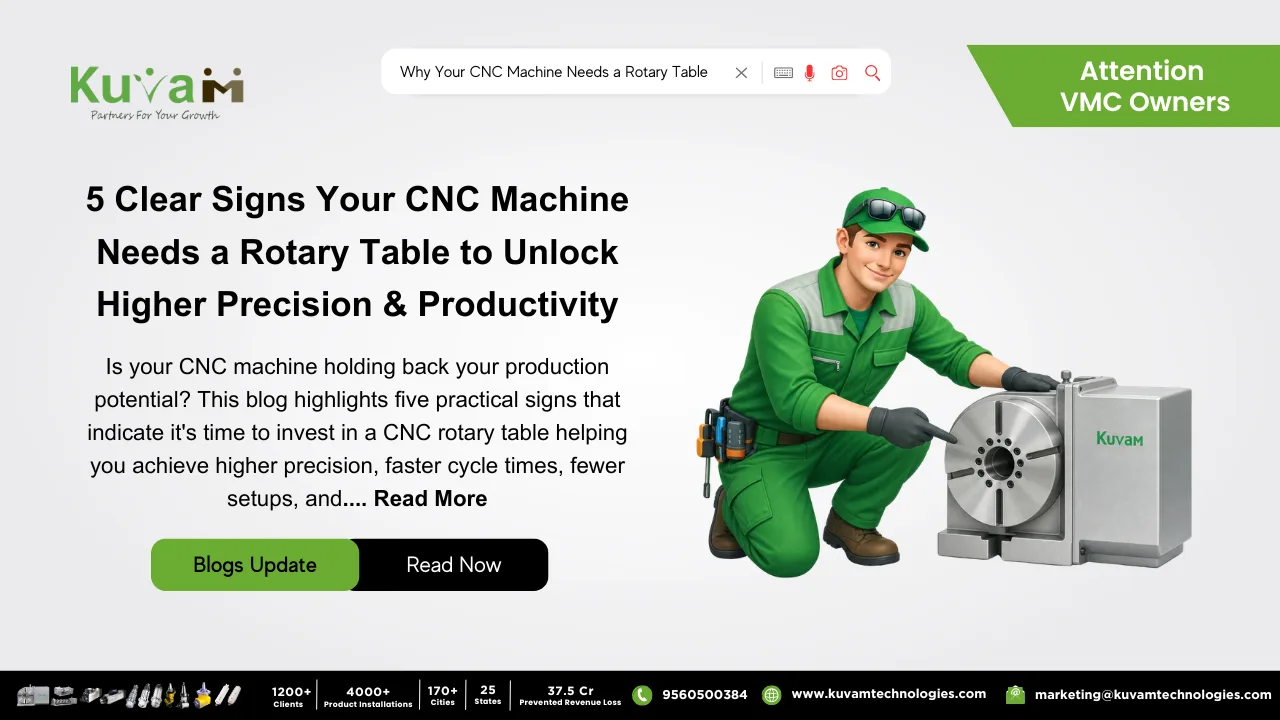
Before getting into the signs, it helps to be clear on what this tool is. A CNC Rotary Table is a precision workholding accessory that mounts to a mill or machining center and rotates the workpiece around a fixed axis, controlled directly by the CNC program rather than a manual handwheel. It effectively adds a new axis of motion to the machine, letting a part be indexed to different angles automatically while it stays clamped in a single fixture. With a tilting version, it adds a second rotational axis, bringing a standard 3-axis mill remarkably close to true 5-axis capability.
With that in mind, here’s how to tell if it’s solving a problem you actually have.
1. You’re Turning Away Jobs With Angled or Multi-Face Features
This is often the clearest sign, and the easiest one to overlook because it doesn’t show up as a cost but it shows up as revenue that quietly never arrives. If your team regularly looks at a print with compound angles, radial hole patterns, or features on multiple faces and decides it’s “not worth the setup,” that’s not a reflection of your team’s skill. It’s a reflection of your current work holding limitations.
A CNC rotary table changes that calculation. Jobs that used to require six manual setups, or a phone call to a shop with a 5-axis machine, can often be run in-house on equipment you already own, plus one accessory.
2. Setup Time Is Eating a Bigger Share of Your Cycle Than Machining Time
Pull up the time logs on a multi-face part and take an honest look at how much of the total cycle is actual cutting versus unclamping, flipping, re-indicating, and re-zeroing. On complex parts, it’s not unusual for repositioning to eat up more time than the machining itself.
That’s a strong signal that a rotary table would pay for itself quickly. Once a part is loaded, a CNC rotary table indexes it automatically as part of the program, and the spindle keeps working through the transition instead of sitting idle while an operator manually resets the fixture.
3. Late-Run Parts Fail Inspection More Often Than Early-Run Parts
If your quality data shows a pattern where the first 20 or 30 parts of a batch pass inspection cleanly but scrap rates creep up later in the run, the usual suspects tool wear, thermal drift don’t always explain it fully. Often, it’s manual repositioning accuracy quietly eroding as operator fatigue sets in over a long shift.
A Rotary Table removes that variable because the machine, not a person, controls the indexing. It returns the part to the exact same reference point on part 500 as it did on part 1, which is precisely the kind of consistency manual fixturing can’t guarantee across a full production run.
4. You’re Subcontracting Work That Should Stay In-House
Many shops quietly outsource the “hard” percentage of a job which the angled bores, the indexed features, the multi-face operations to a shop down the road with more flexible capability, while keeping the simpler roughing or facing work for themselves. It feels like a reasonable compromise, but it slices margin off every job that needs it and puts your delivery schedule at the mercy of someone else’s queue.
If subcontracting rotary or indexing operations has become a routine part of how you quote jobs, that’s a direct sign your own equipment is missing a capability a rotary table could add for a fraction of what a new machining center would cost.
5. Your Most Experienced Machinist Has Become a Bottleneck
If there’s one person on your floor who has to personally run every job involving manual indexing or multi-angle setups because nobody else can hold the tolerance as consistently and that’s not a training problem, it’s a process risk. It means your shop’s capability on complex work is tied to one person’s schedule, health, and availability.
A CNC rotary table shifts the burden of consistency from the operator’s hands to the program. Once the cycle is written and the part is fixtured, any competent operator can run it.
The Bottom Line
None of these five signs require a dramatic production failure to notice. They show up quietly, as declined quotes, longer cycle times, late-run scrap, outsourced margin, and a single overworked machinist holding the whole operation together. If two or more of these sound like your shop, the gap probably isn’t a skills problem or a scheduling problem and it’s a work holding problem, and it’s one a CNC rotary table is specifically built to solve. The question worth asking isn’t whether you can afford to add one. It’s how much longer you can afford to keep running without it.