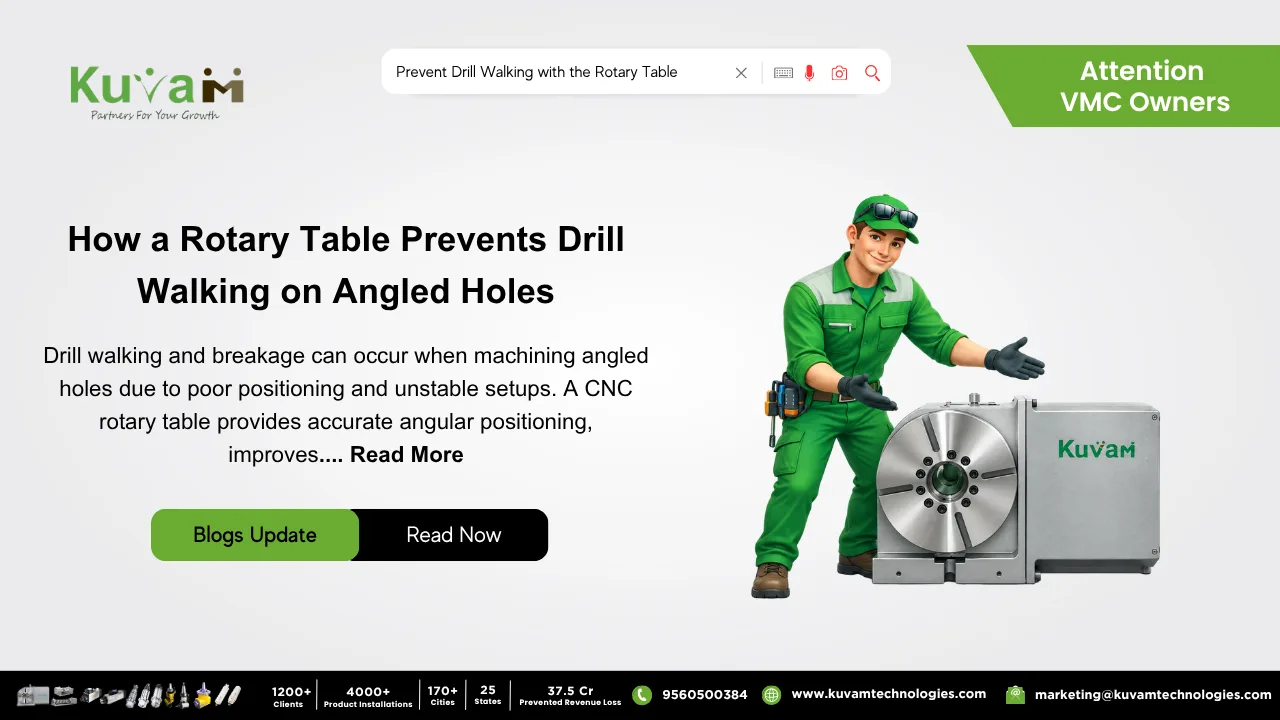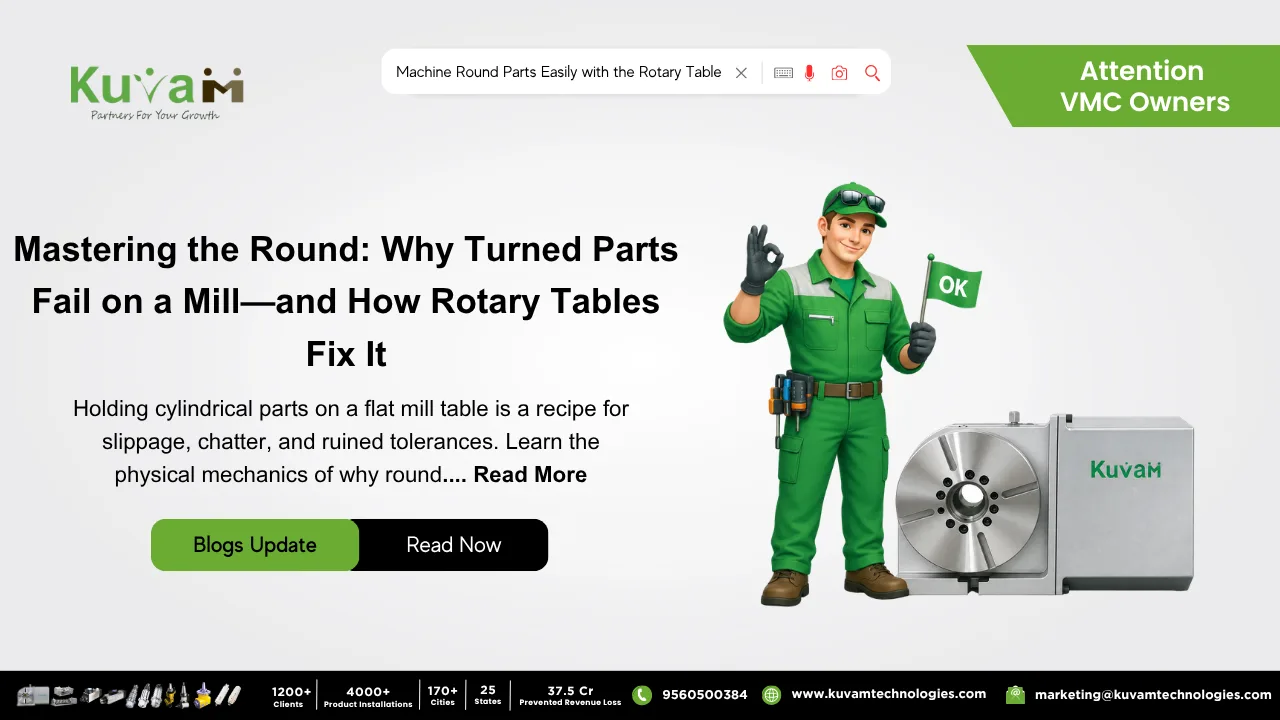

A CNC Rotary Table is considered a really good investment. Capital equipment decisions in a machine shop rarely come down to “nice to have.” Every dollar spent on tooling or accessories has to justify itself against a real production problem otherwise it sits in a corner collecting dust while the shop keeps running the same way it always has. So when a CNC rotary table comes up as a potential purchase, the question shop owners actually need answered isn’t “what does it do,” it’s “what problem does it solve that’s costing me money right now?”
For a lot of manufacturers, the honest answer touches on something they’ve been quietly absorbing as a cost of doing business: skilled labor that’s stretched too thin, cycle times that creep up every time a part needs repositioning, and jobs turned down because the shop couldn’t hold tolerance across multiple angles without a specialist babysitting the setup.
A CNC rotary table is a precision workholding device that mounts to a mill or machining center and rotates the workpiece around a fixed axis, controlled directly by the CNC program rather than a handwheel. It effectively adds a new axis of motion turning a 3-axis machine into something capable of 4-axis, and with a tilting version, near-5-axis work. That capability shift is exactly why it solves more than one production headache at once. Here are five reasons that investment tends to pay off faster than shops expect.
1. It Reduces Your Dependence on Scarce Skilled Labor
Experienced machinists who can manually index a part accurately, repeatedly, and without drifting out of tolerance are getting harder to find and more expensive to keep. Every manual multi-setup job quietly assumes that skill is available on the floor, every shift, without exception.
A CNC Rotary Table shifts that burden from the operator to the program. Once the part is fixtured and the cycle is written, the table indexes to the exact same position automatically, regardless of which operator is running the shift. That means a less experienced hire can run a job that would have previously required your most seasoned machinist freeing up that expertise for the work that actually needs it.
2. It Cuts Cycle Time by Removing Repositioning Delays
Every manual unclamp-and-reclamp cycle costs real minutes: loosening the vise, flipping the part, re-indicating it, tightening it back down, and re-zeroing before the spindle can restart. On a part with four or five faces to machine, that adds up to a significant chunk of the total cycle time that isn’t cutting metal, just moving it around.
With a CNC rotary table, the part is clamped once and the table rotates it into position automatically as part of the program, with the spindle continuing to cut through the transition. Shops that add rotary tables to repetitive multi-face jobs often see cycle times drop meaningfully, simply because the machine stops waiting on manual repositioning between operations.
3. It Opens the Door to Jobs You’d Otherwise Have to Decline
Complex parts compound-angle brackets, radially indexed flanges, contoured cam profiles often get turned away not because a shop lacks the skill, but because it lacks a practical way to hold and rotate the part accurately enough to hit tolerance without buying a full 5-axis machining center.
A tilting CNC Rotary Table adds a second rotational axis on top of the first, bringing a standard mill remarkably close to true 5-axis capability at a fraction of the capital cost. That means quotes that used to get declined or subcontracted out at a thin margin can now be accepted and run in-house, turning previously lost revenue into work your own floor can handle.
4. It Protects Quality and Reduces Scrap Across Long Runs
Manual repositioning is only as consistent as the person doing it, and consistency naturally erodes across a long shift as fatigue sets in. A rotary table doesn’t get tired. It returns the workpiece to the exact same reference point on the first part of the day and the last, because the positioning is governed entirely by the program.
For manufacturers running production batches large enough that late-run scrap is a genuine cost center, that consistency alone can offset a meaningful share of the equipment’s cost within the first several production runs.
5. It Improves Shop Floor Safety by Reducing Manual Handling
This reason gets talked about less, but it matters just as much: every manual repositioning of a heavy or awkwardly shaped part is also a physical handling risk. Operators lifting, flipping, and re-clamping parts repeatedly throughout a shift face real strain and injury exposure, especially with larger castings or fixtures.
A CNC rotary table minimizes how often a part needs to be physically handled mid-job. Once it’s loaded and clamped, the table does the repositioning mechanically reducing the physical wear on your team and the safety incidents that come with repetitive manual handling.
The Bottom Line
None of these five reasons exist in isolation the compound. Less dependence on scarce skilled labor means more consistent output. Shorter cycle times and reduced scrap mean better margins on every job. New capability means new revenue that used to walk out the door to a competitor. And safer handling means fewer disruptions from injury or fatigue-related error.
A CNC rotary table isn’t a flashy upgrade, and it won’t show up in a sales brochure the way a new machining center does. But for manufacturers weighing where the next capital dollar should go, it’s worth asking a simple question: which of these five problems is quietly costing your shop the most right now? Whichever the answer, there’s a good chance a rotary table is the more affordable fix than the one you were originally considering.