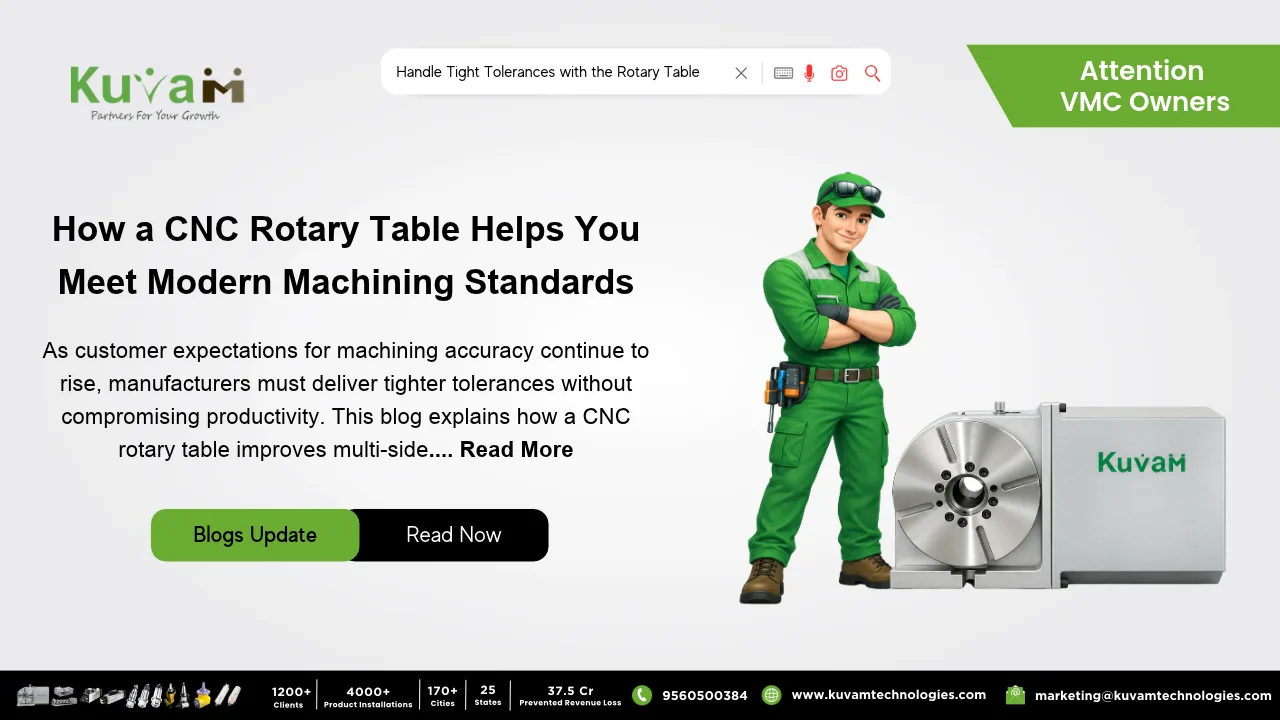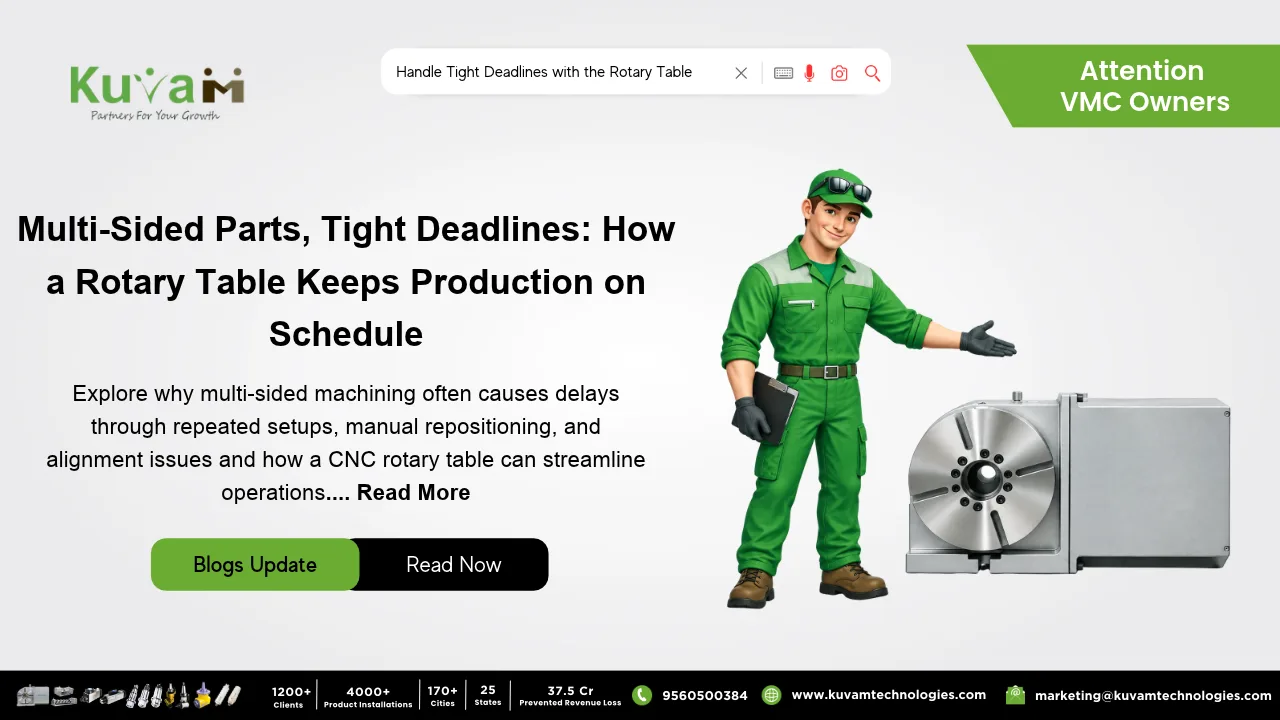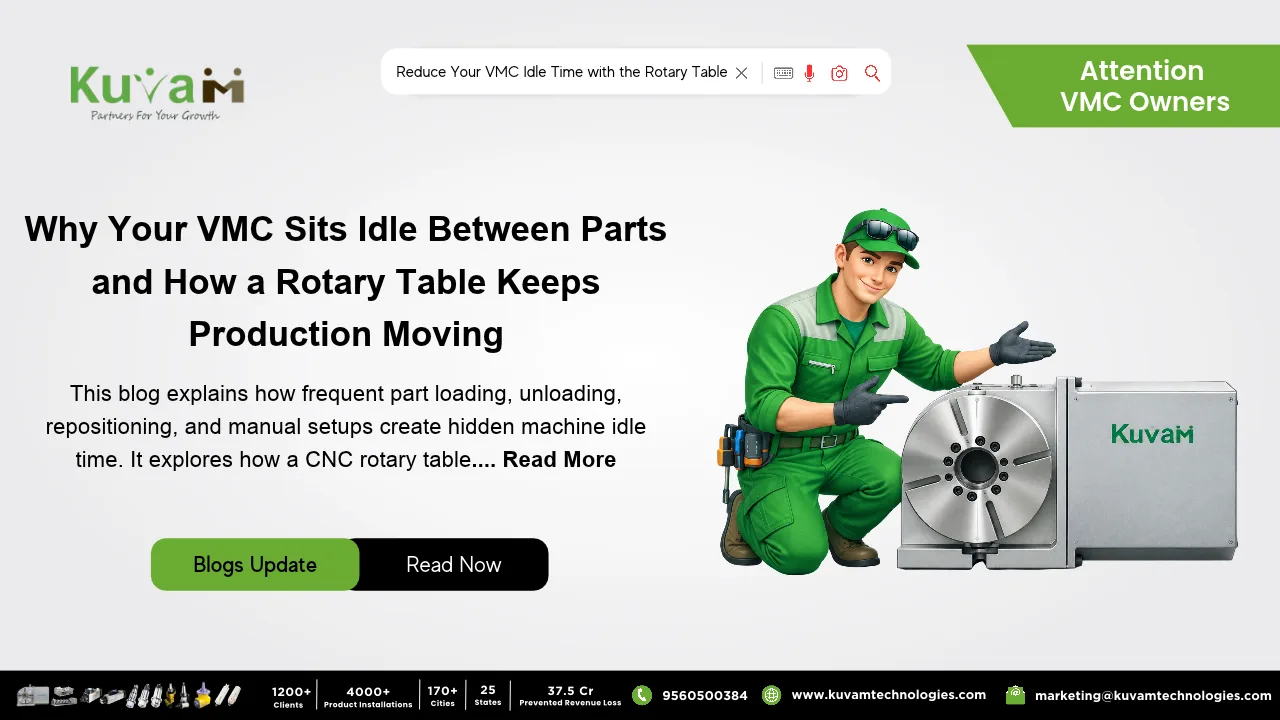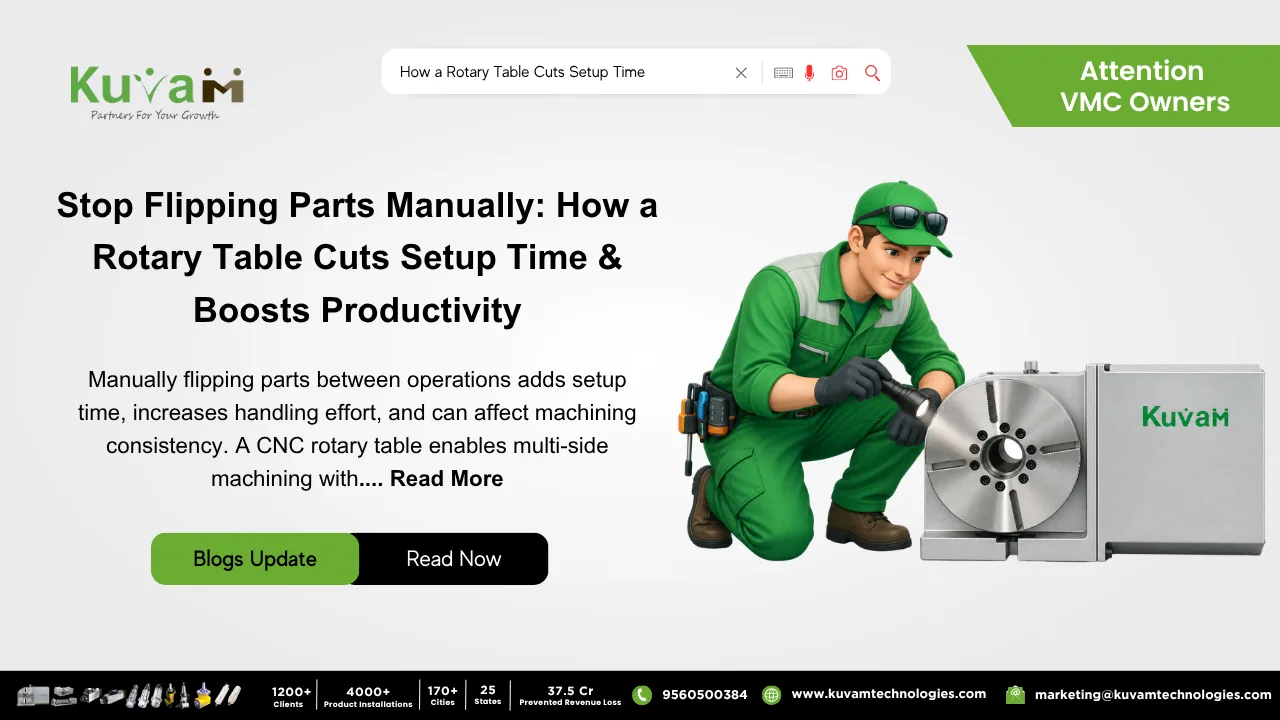

A Rotary Table eliminates the need for manual repositioning. Every machine shop runs into this problem sooner or later: a part needs work done on more than one face. A hole here, an angled cut there, maybe four bolt holes spaced evenly around the edge. The machine can only reach one side at a time, so someone has to stop the job, unclamp the part, turn it by hand, line it back up, and clamp it down again before work can continue.
It’s such a normal part of the job that most shops stopped questioning it years ago. But this one habit is stopping to flip a part by hand and quietly eats up more time, and causes more mistakes, than most shop owners realize until they actually sit down and track it.
Why This Keeps Happening
Most mills and machining centers move in just three directions: side to side, front to back, and up and down. That covers a lot of work, but it can’t reach the far side of a part without the part itself being turned. So that job falls to the operator. Stop the spindle. Loosen the vise. Spin the part. Try to line it up exactly where it was before. Tighten it. Restart the cycle.
That “line it up exactly where it was before” step is where things usually start to slip. A skilled operator can get close almost every time. Getting it exactly right, part after part, hour after hour, is a much harder standard to hold and especially late in a shift, when fatigue starts to creep into even a careful pair of hands. That is why a Rotary Table is a must.
What It’s Actually Costing You
Add up what happens every time a part gets flipped manually, and three costs show up again and again.
Time. Loosening a clamp, turning the part, re-checking its position, and tightening it back down might only take a couple of minutes. But that couple of minutes repeats on every part, every shift, and it adds up to real hours by the end of a production run.
Accuracy. If the part doesn’t sit in exactly the same position as before, the next hole or cut can land slightly off. On some jobs that’s a minor cosmetic issue. On others, it’s a part that fails inspection and has to be scrapped or reworked.
Consistency. A shop’s best machinist might handle this well every time. A newer hire, or anyone running the tenth part of a long shift, might not be quite as precise and the difference doesn’t always show up until quality control catches it later.
How a Rotary Table Solves This
This is exactly the gap a rotary table was built to close. It’s a workholding device that mounts onto a mill or machining center and rotates the part around a fixed point, so the operator never has to unclamp it to reach a new face or angle.
A manual rotary table uses a handwheel and a marked dial, so the operator turns the part to the exact angle needed without ever taking it out of the fixture. A CNC Rotary Table goes a step further and it’s wired directly into the machine’s control, so the machine itself turns the part automatically as part of the program, with no hands involved at all.
Either version solves the same core problem: the part stays clamped in one place, and the table does the turning instead of a person.
Why That One Change Matters So Much
Once the part doesn’t need to be physically removed to reach its next face, most of the issues above start to disappear. And, this can be achieved easily with a Rotary Table.
There’s no repeated stopping and starting to manually reposition the part, so jobs move through the machine faster. The part returns to the exact same reference point every time it’s indexed, so multiple features line up with each other far more reliably than they would with manual flipping. And because the table isn’t a person’s hands and controls the positioning, the result looks the same whether it’s the first part of the morning or the last part before quitting time.
For something like a bracket that needs four holes drilled evenly around its edge, that can mean the difference between four separate stop-and-start setups and one continuous job that never has to pause.
Is This a Problem Worth Fixing?
If your shop still manually unclamps and flips parts to reach a second or third face, it’s worth taking a real look at how much time that’s actually costing across a week and how many of those parts have come back with small inconsistencies that trace right back to that repositioning step.
For most manufacturers, the honest answer is that it’s costing more than they assumed. And that’s usually the point where a rotary table stops looking like an optional accessory and starts looking like the tool that should have been on the machine all along.