
The CNC Rotary Table is really helpful in handling low-volume challenges. Every job shop has one of these somewhere — a back shelf, a beat-up cabinet, maybe a whole corner of the floor nobody talks about. It’s full of fixtures. Not the good kind either. One-off jigs, built for a single part that ran twice, three years ago, and never came back. Except it did come back, six months later, and now someone’s digging through that pile trying to remember which bracket goes with which job.
Nobody plans for this. It just happens. Every small order that comes in a little different from the last one ends up needing its own jig, and the pile grows. What it costs isn’t obvious on a spreadsheet — it’s the storage space nobody accounted for, the twenty minutes an operator spends hunting for the right fixture before a changeover even starts, the first article that fails because that same fixture sat crooked in a drawer for two years and nobody re-checked it before bolting it back down.
Shops rarely put a number on this the way they do scrap rate or cycle time. But ask anyone who’s actually run a high-mix floor, and they’ll tell you: the flexibility that makes this kind of work possible is also exactly what’s quietly draining margin out of it.
So maybe the better question isn’t the usual one.
What if one piece of equipment could replace most of that fixture shelf entirely?
What a CNC Rotary Table Brings to a High-Mix Shop
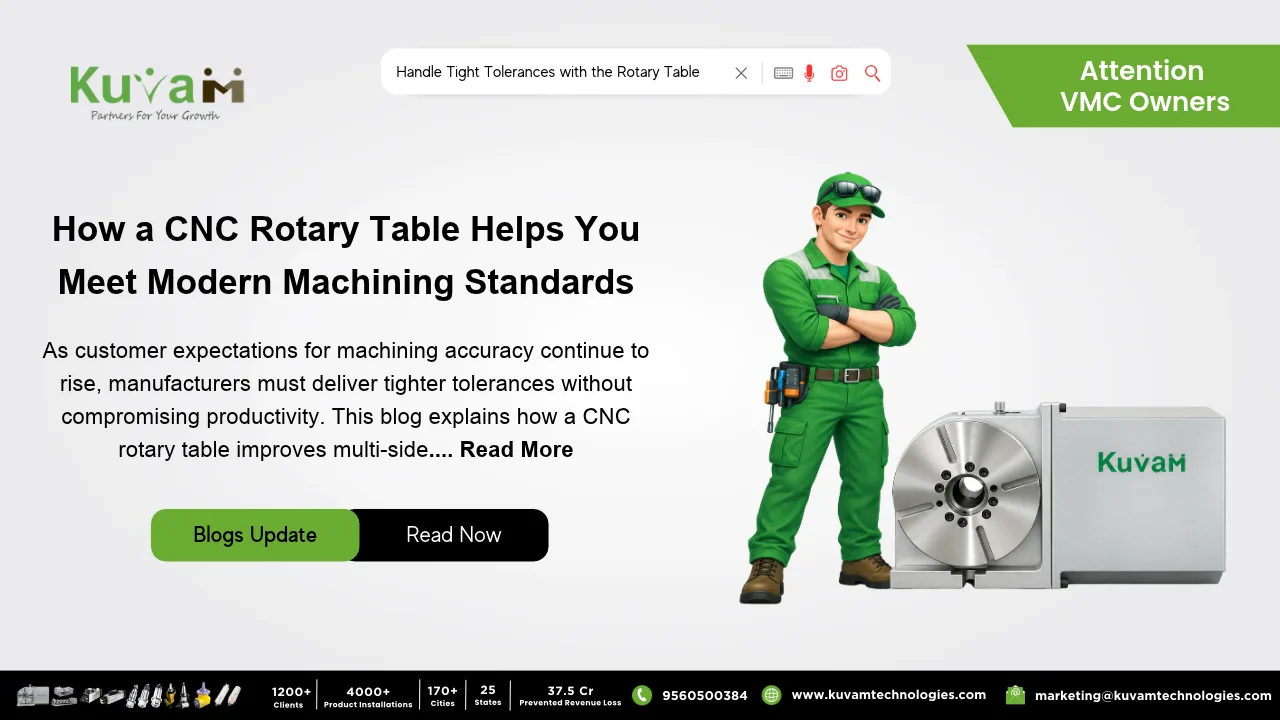
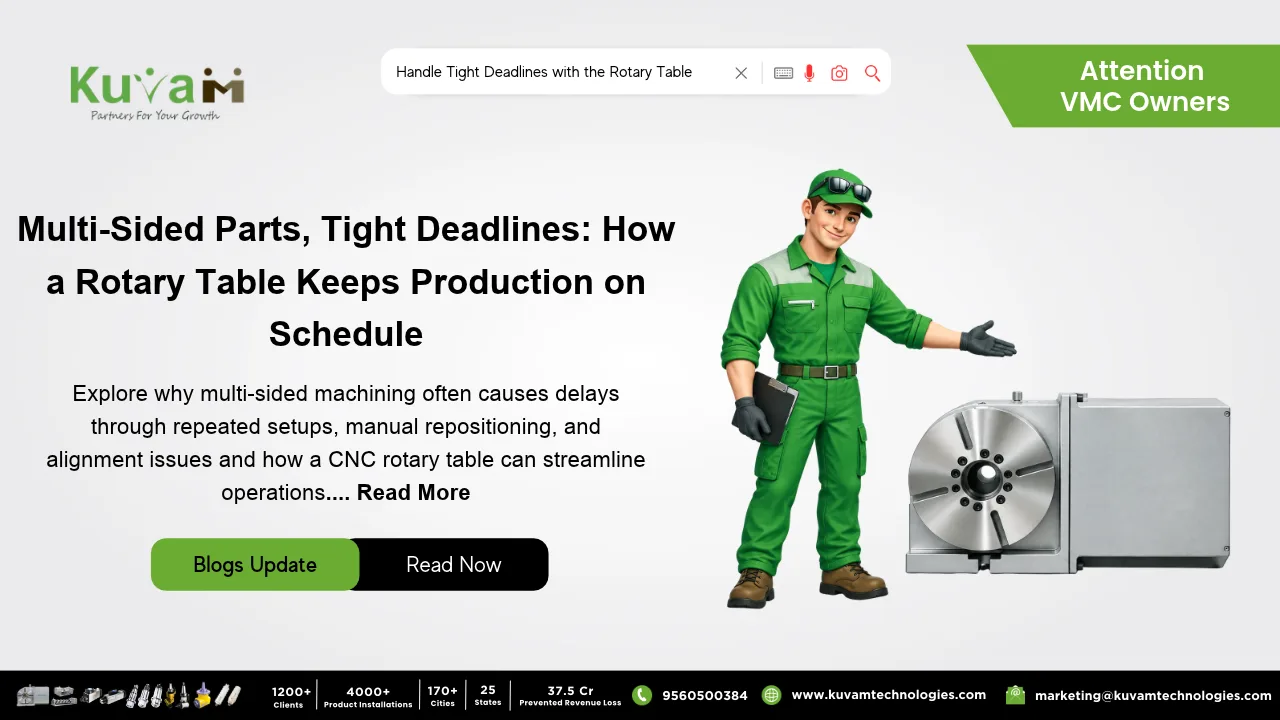
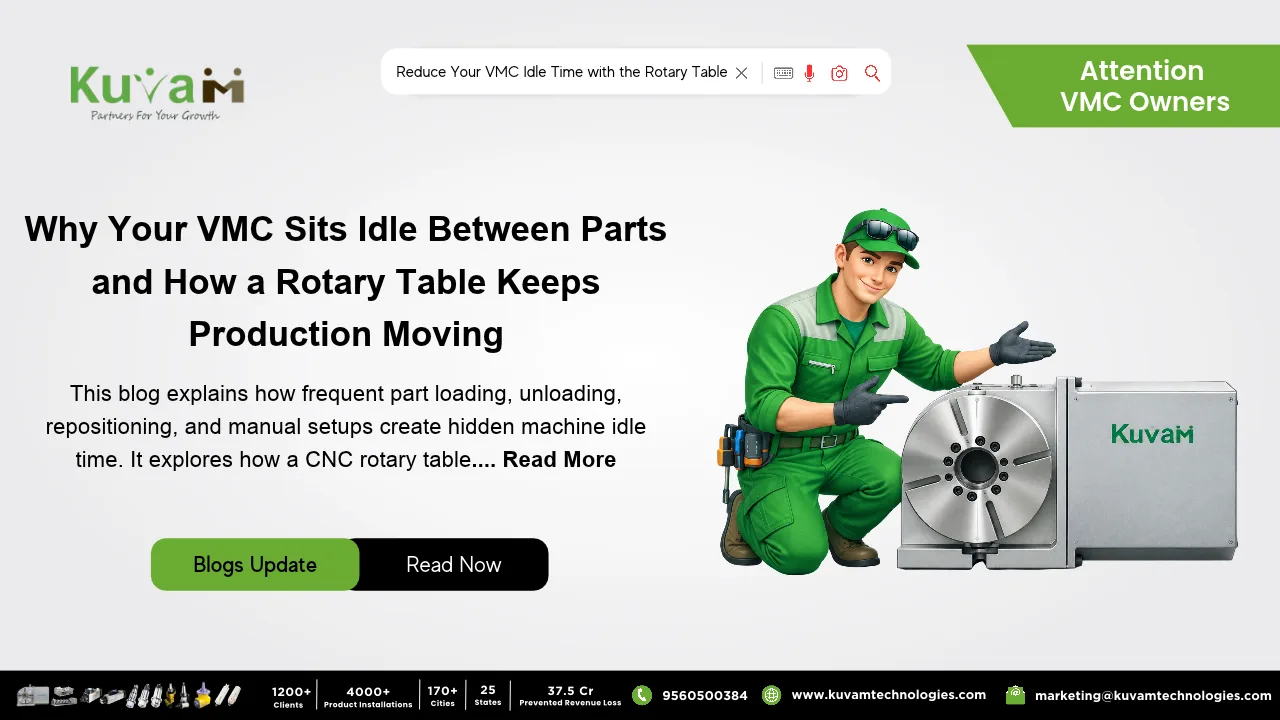
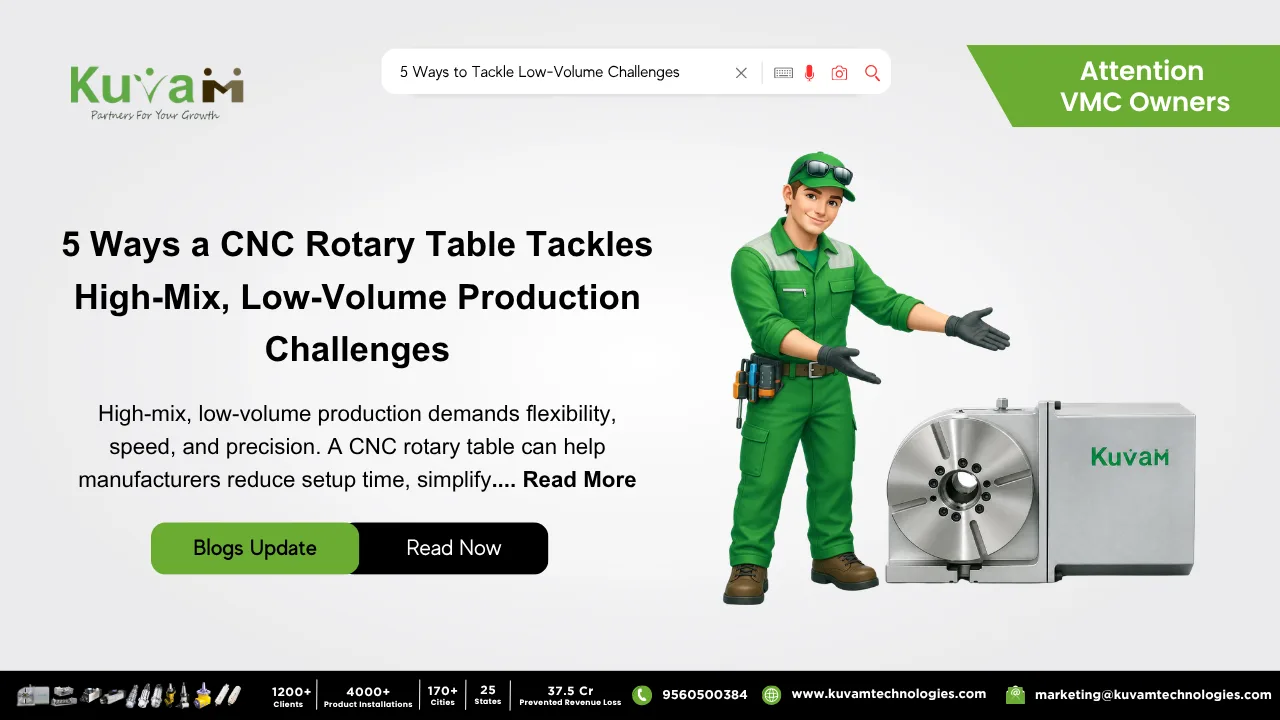
A CNC Rotary Table is a precision workholding accessory that mounts to a mill or machining center and rotates the workpiece around a fixed axis, controlled directly by the CNC program. Rather than building a dedicated fixture for every new part geometry, a shop can mount a chuck, vise, or simple custom jaw to the rotary table itself and reuse that same base setup across dozens of different jobs, simply reprogramming the indexing angles for each new part.
For shops juggling constant variety rather than long production runs, that reusability changes the economics of fixturing entirely.
1. It Reduces the Need for a New Custom Fixture on Every Job
Building a dedicated fixture for a single low-volume order is expensive relative to the job’s total value but sometimes the fixture costs more in labor and material than the parts themselves. A rotary table with a general-purpose chuck or vise mounted to it can hold a wide range of part shapes and sizes across different jobs, with the specific geometry handled in the program rather than in a one-off physical fixture.
That means fewer custom builds, less fixture design time per job, and a lower barrier to accepting small, irregular orders that wouldn’t be worth the dedicated tooling investment otherwise.
2. It Cuts Changeover Time Between Unrelated Jobs
In a high-mix shop, changeover isn’t just about swapping a tool but it’s about swapping the entire fixture, re-establishing datums, and re-proving out a setup that hasn’t run in months. That process eats real production time between every order, especially on a floor running several different jobs a week.
Because a rotary table provides a consistent, known base setup, changeover between different parts becomes a matter of reconfiguring workholding on a familiar platform and updating the program with a faster, more predictable process than starting from scratch with an unfamiliar custom fixture each time.
3. It Reduces First-Article Failures From Inconsistent Fixture Storage
Custom fixtures that only run occasionally have a way of drifting over time and the jaw gets slightly bent, a locating pin wears, or the fixture simply wasn’t stored flat. The result shows up as a failed first-article inspection on a job the shop has technically run before, wasting time re-proving a setup that should have been reliable.
A rotary table stays mounted and calibrated as a permanent part of the machine setup rather than being stored, moved, and reinstalled for each job, which removes a major source of this kind of drift-related failure.
4. It Lets a Small Shop Take On Jobs It Would Normally Decline
Low-volume orders with multiple angled or indexed features are often the first thing a resource-strapped shop turns away, simply because building a dedicated fixture for a five-piece order doesn’t pencil out. A Rotary Table changes that math by making multi-angle capability available on demand, without a new fixture build for every request.
That opens the door to accepting exactly the kind of varied, unpredictable work that defines a high-mix shop’s customer base, instead of quietly filtering it out based on fixturing cost alone.
5. It Simplifies Training Across a Rotating Cast of Operators
High-mix shops often rely on operators handling a wide variety of jobs across a week, which means constantly relearning different custom fixtures. A rotary table standardizes the physical workholding platform across many different parts, so operators are learning one consistent system rather than a new one-off fixture with every job change.
That consistency shortens the learning curve for less experienced staff and reduces the errors that come from unfamiliar setups and a meaningful advantage in shops where the same person might run five different jobs in a single week.
The Bottom Line
High-mix, low-volume production is often treated as an inherent trade-off variety in exchange for inefficiency. But a lot of that inefficiency traces back to a fixture shelf full of one-off jigs rather than the work itself. A CNC rotary table replaces much of that fixture proliferation with one reusable, programmable platform, cutting changeover time, reducing first-article failures, and making it easier to say yes to the next unpredictable order that walks through the door. For shops built around variety, that flexibility is often worth more than any single dedicated fixture ever was.