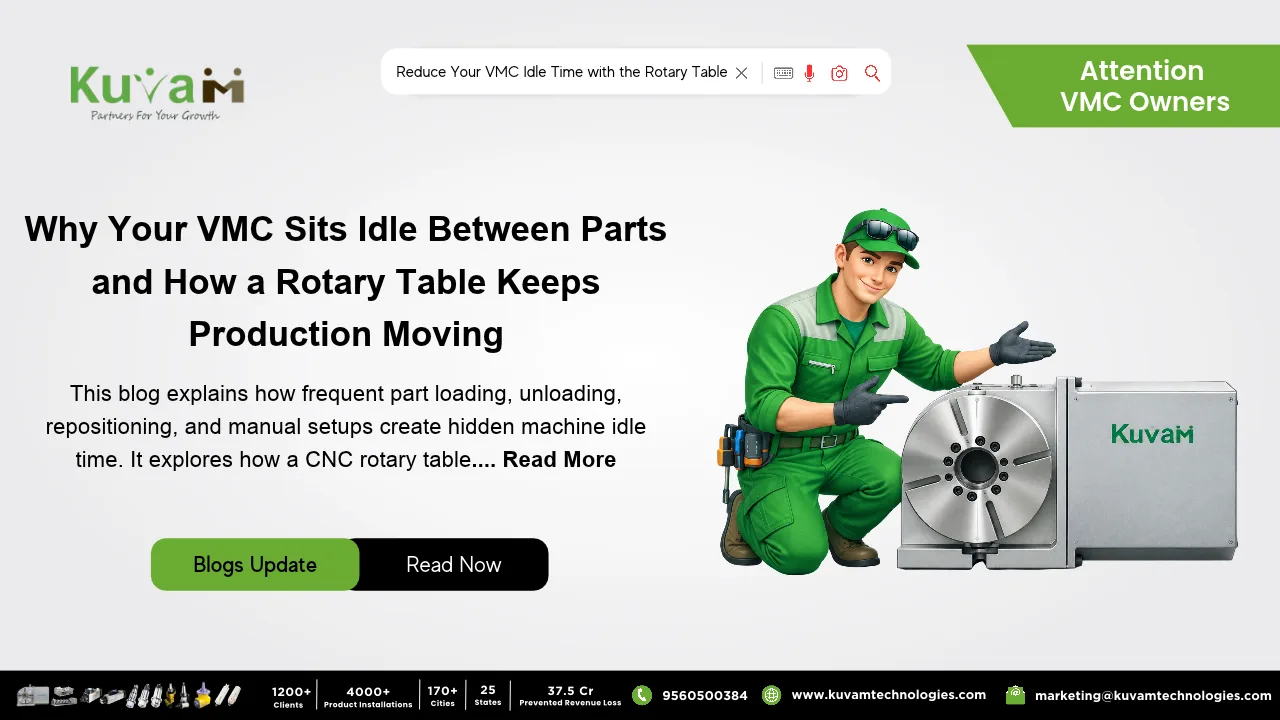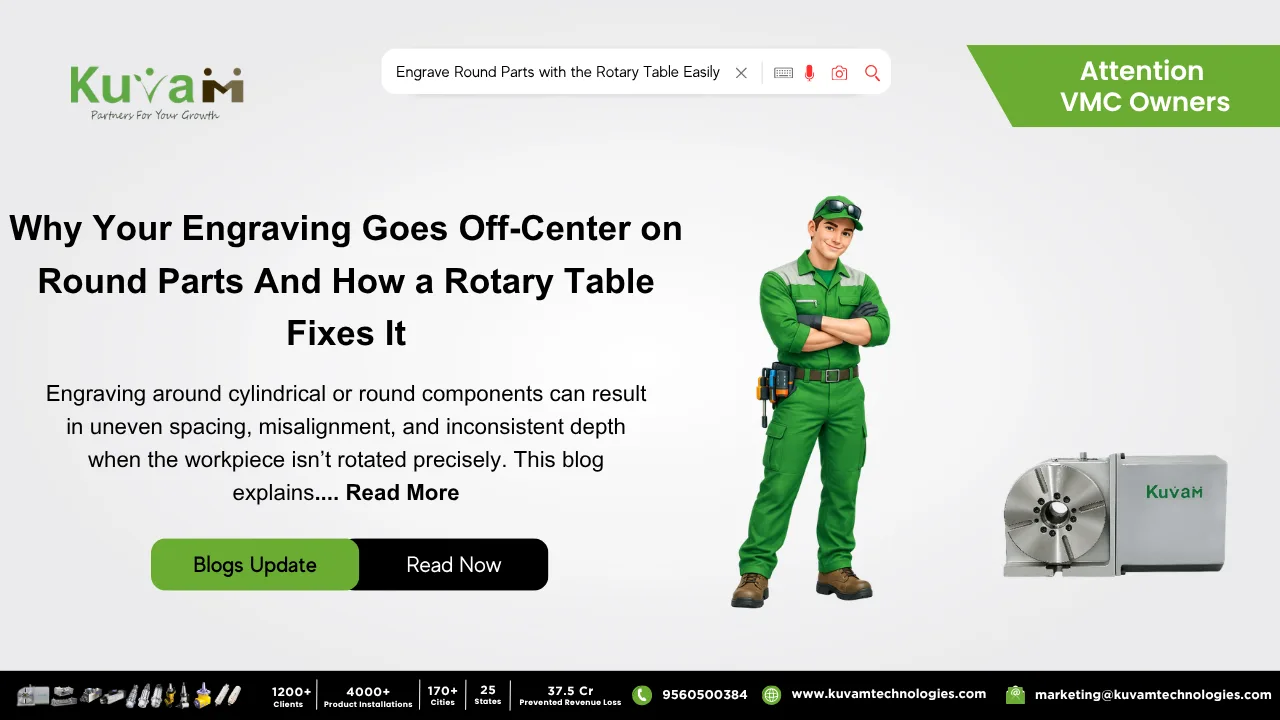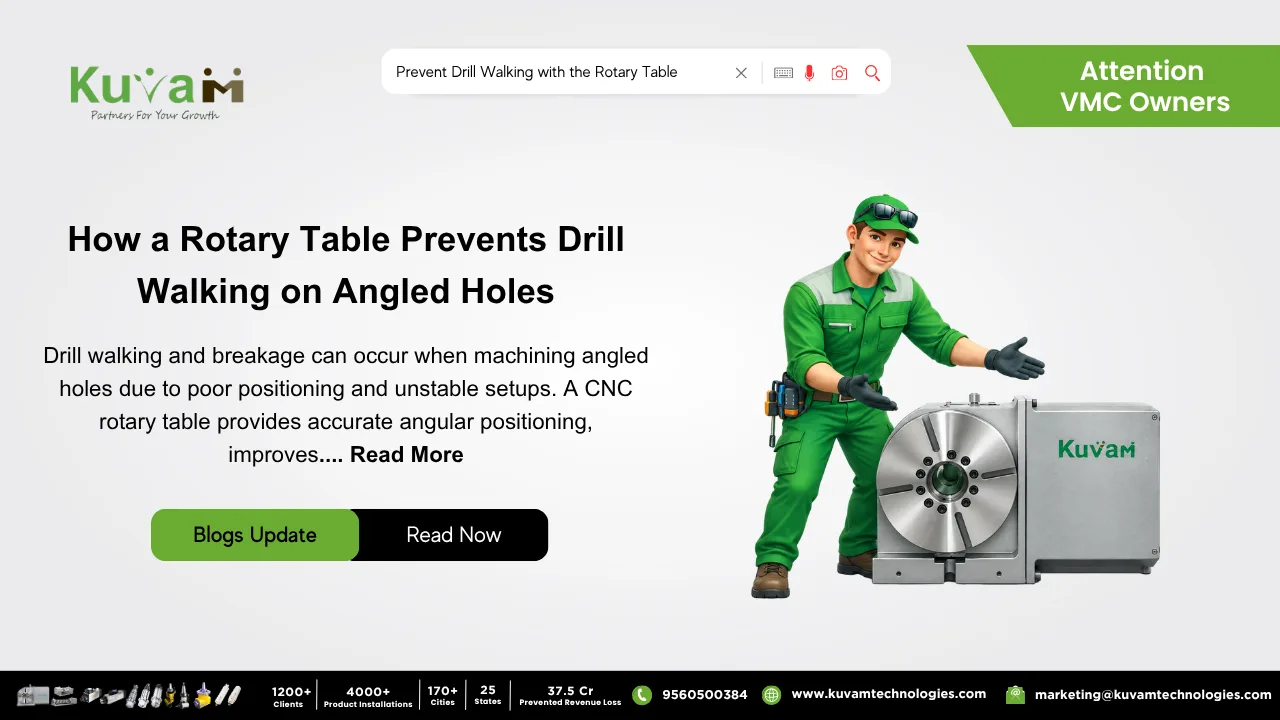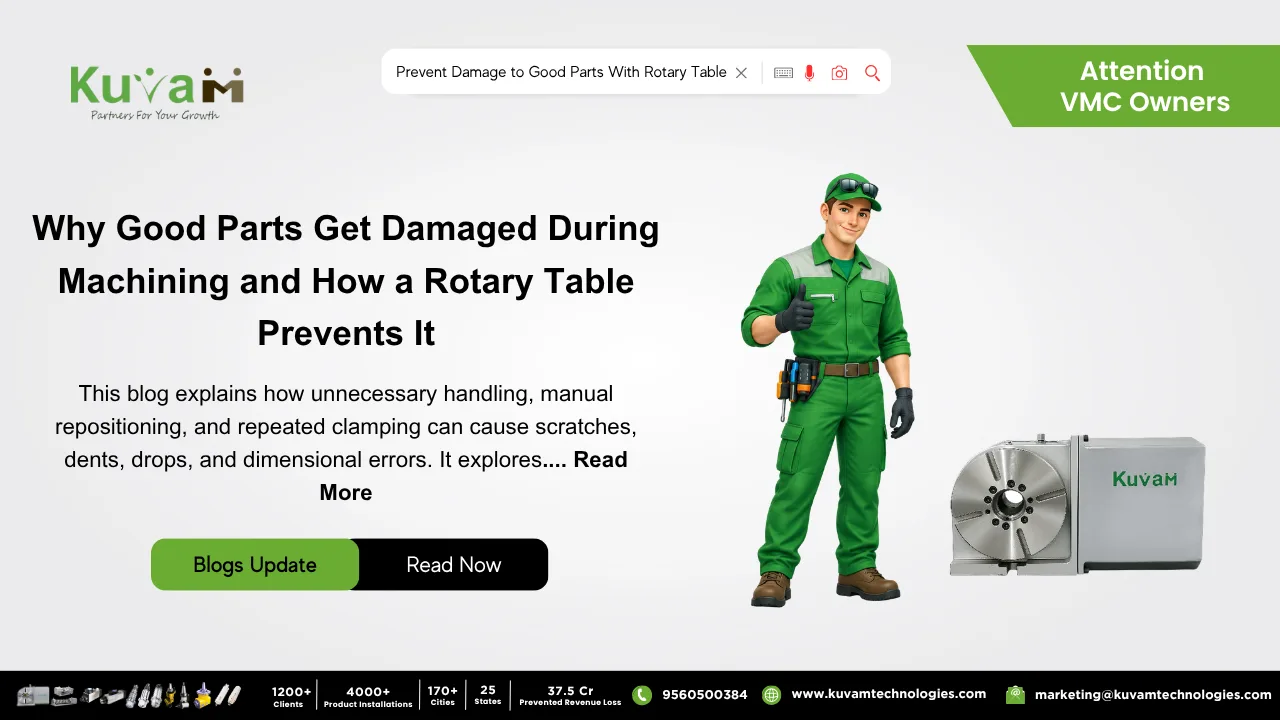

The Rotary Table is one of the best tools to avoid damage to good parts. Here’s something that happens in almost every shop, and it rarely gets talked about: a part comes off the machine looking perfect, and by the time it reaches the next station, it has a small scratch, a tiny dent, or a scuffed corner that wasn’t there before. Nobody did anything careless. The part just got picked up, carried, set down, and picked up again a few too many times, and somewhere in all that handling, something small went wrong.
It’s an easy thing to overlook because no single handling step looks risky on its own. Picking up a part to turn it and reach another side seems harmless. Do that three or four times per part, across every part in a batch, and the odds of a bump, a drop, or a scrape against a hard surface start adding up fast.
Why This Happens More Than Anyone Realizes
A lot of parts need work done on more than one side. Since most machines can only reach one side at a time, someone has to physically pick the part up, turn it, and set it back down to reach the next face. For a small, rugged part, that’s not a big deal. For a larger part, a delicate one, or one with a finished surface that shows every mark, each pickup is a small risk. That is why a Rotary Table is the best pick.
Think about a part with a polished or painted face that needs a hole drilled on the opposite side. To reach that hole, the part has to be lifted, flipped, and set back down, whether onto a bench or into a vise. If it gets set down a little too hard, or brushes against a fixture edge on the way, that finished face can end up with a mark that wasn’t there a minute earlier. Now a part that was done is back in the rework pile, and somebody has to figure out whether it can be cleaned up or has to be scrapped.
Why This Costs More Than It Looks Like It Should
Every time a part changes hands or gets set down and picked back up, three things become possible:
Scratches and scuffs. A finished surface brushing against a bench, a fixture, or another part can leave a mark that ruins an otherwise good part.
Dents and dings. Softer metals especially can pick up small dents just from being set down a bit too firmly, or from bumping into a vise jaw during repositioning.
Drops. The riskiest one. A part that’s heavy, awkward to hold, or slippery from cutting fluid is more likely to get dropped the more times it gets picked up because a drop can mean a scrapped part, or worse, an injury.
None of these happen because someone was careless. They happen because handling a part by hand, over and over, is simply a process with some risk built in because that risk goes up every time the part needs to change position.
How a Rotary Table Cuts Down on This
A Rotary Table solves this the same simple way it solves the time and accuracy problems that come from flipping parts by hand: it turns the part for you, so nobody has to pick it up to do it. The part gets clamped onto the table once, and instead of being lifted out to reach a new face, the table itself rotates the part into position while it stays right where it is.
That means fewer trips in and out of the fixture, fewer chances for a finished surface to brush against something it shouldn’t, and fewer opportunities for a part to get dropped just because it needed to change position one more time. A manual rotary table lets an operator turn the part with a hand crank while it’s still clamped down. A CNC rotary table does the same thing automatically, with no hands involved at all.
What This Looks Like in Practice
Picture a small aluminum housing with a polished outer surface that needs a hole drilled on the back side. Handled the usual way, that means lifting the part out, flipping it by hand, and setting it into a second fixture, creating three separate moments where that polished surface could pick up a scratch. Clamped onto a rotary table instead, the part never has to come out of its fixture at all. The table turns it to the back side, the hole gets drilled, and the polished surface never touches anything it wasn’t supposed to.
Worth Thinking About
If your shop has ever pulled a part off the line because of a scratch or a dent that showed up somewhere between machining stations, it’s worth asking how many times that part actually got picked up and set back down along the way. A rotary table won’t fix every kind of handling damage, but for the marks that come from simply flipping a part to reach its next side, it removes the handling step where most of that damage happens in the first place.