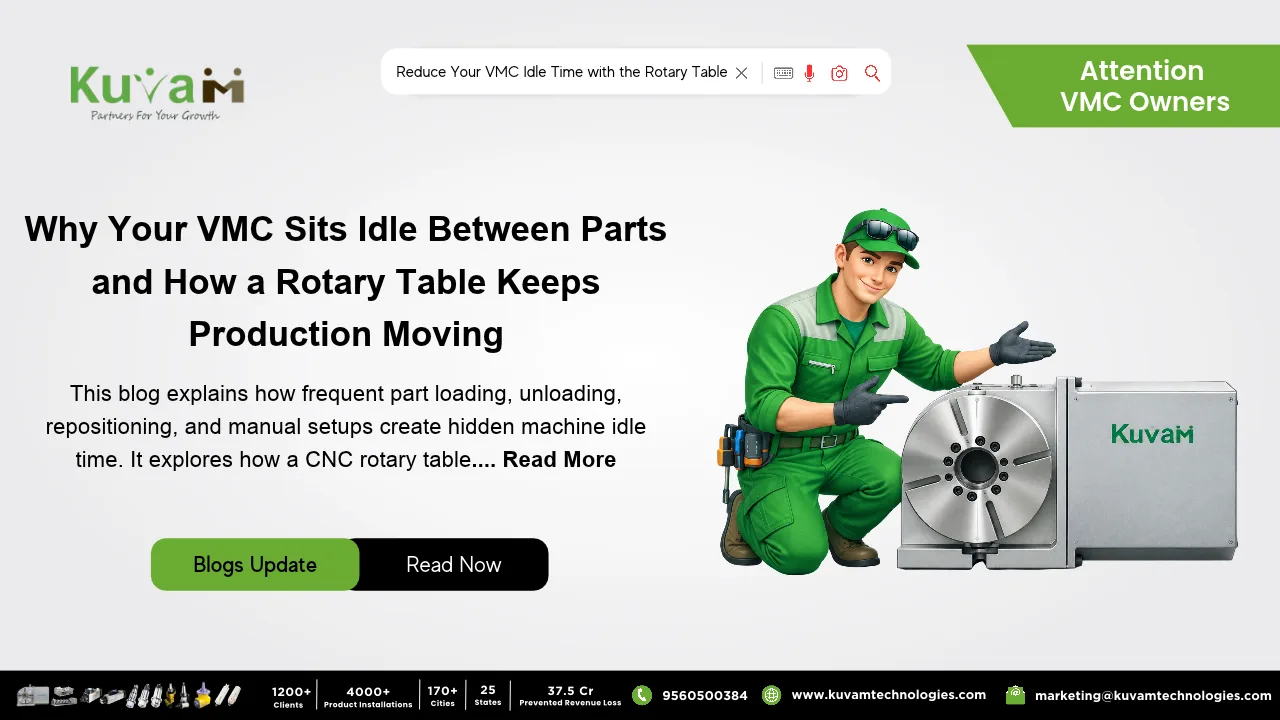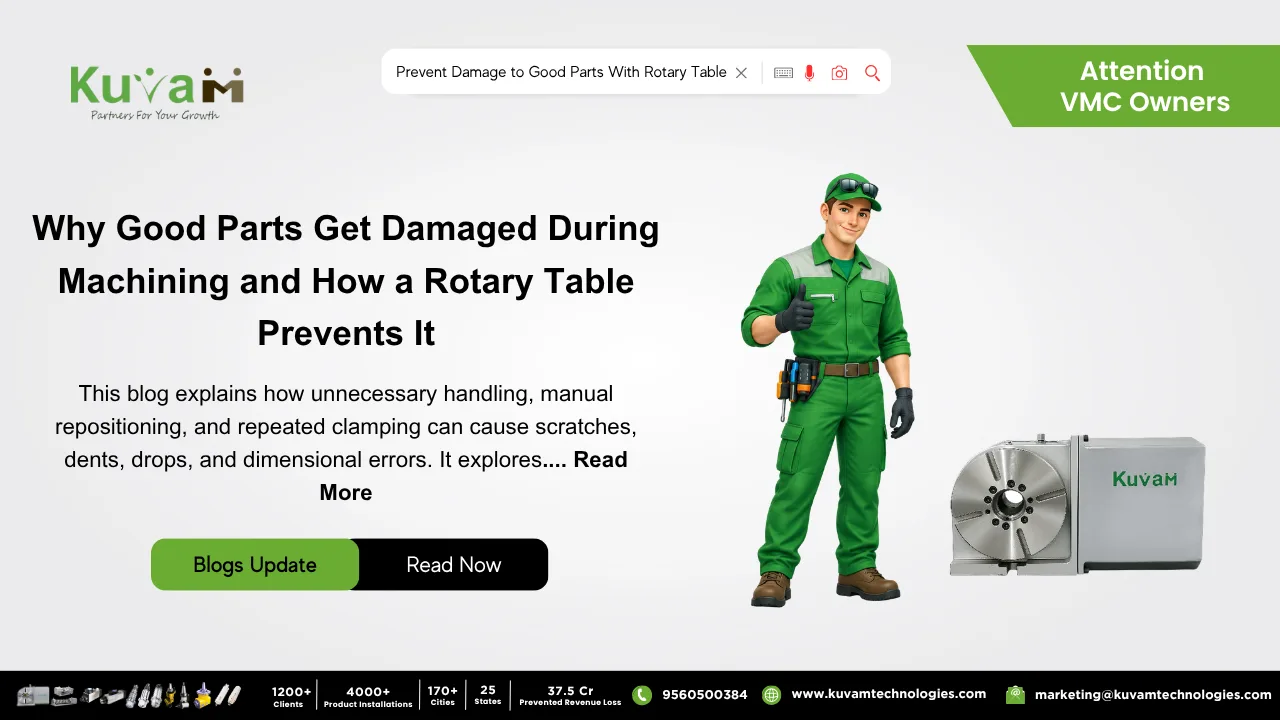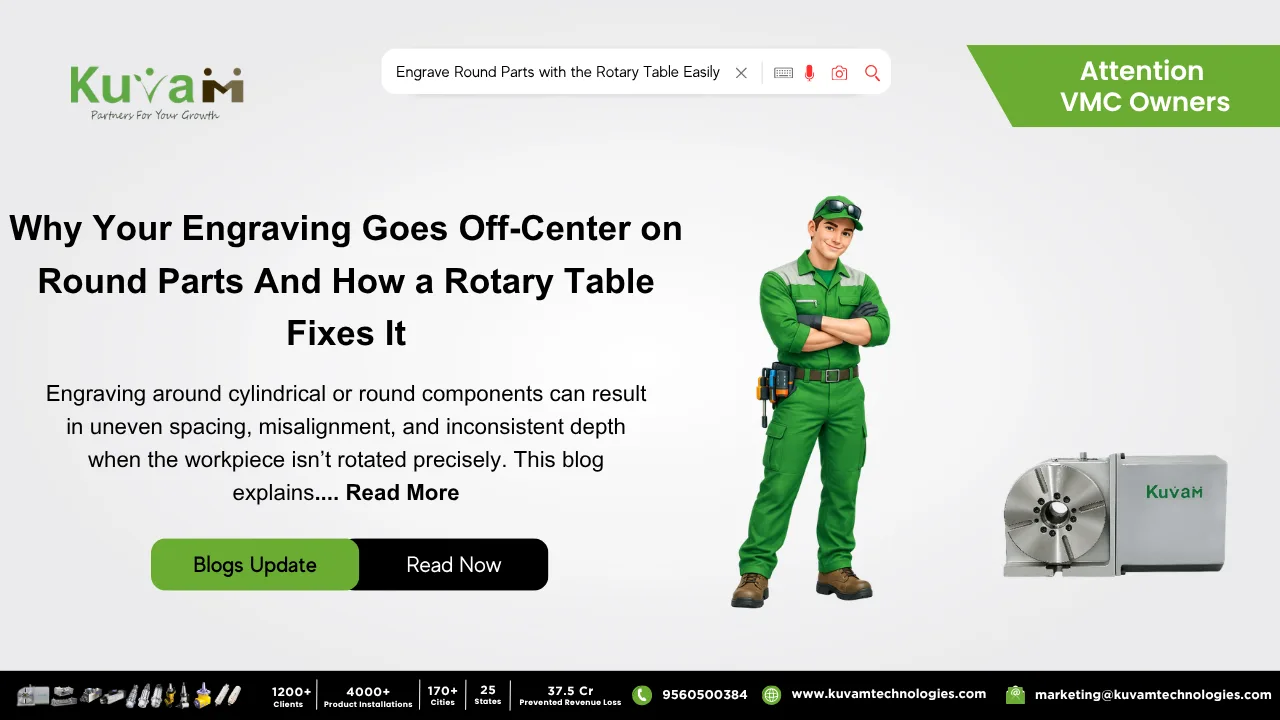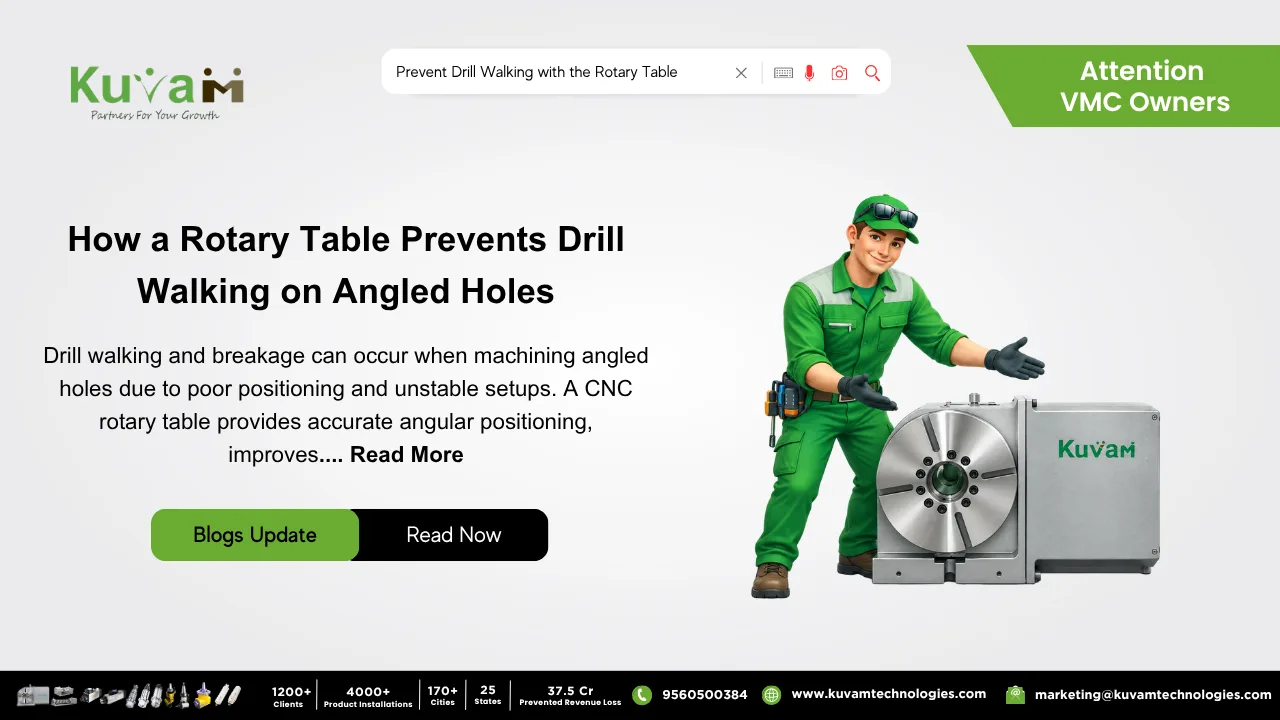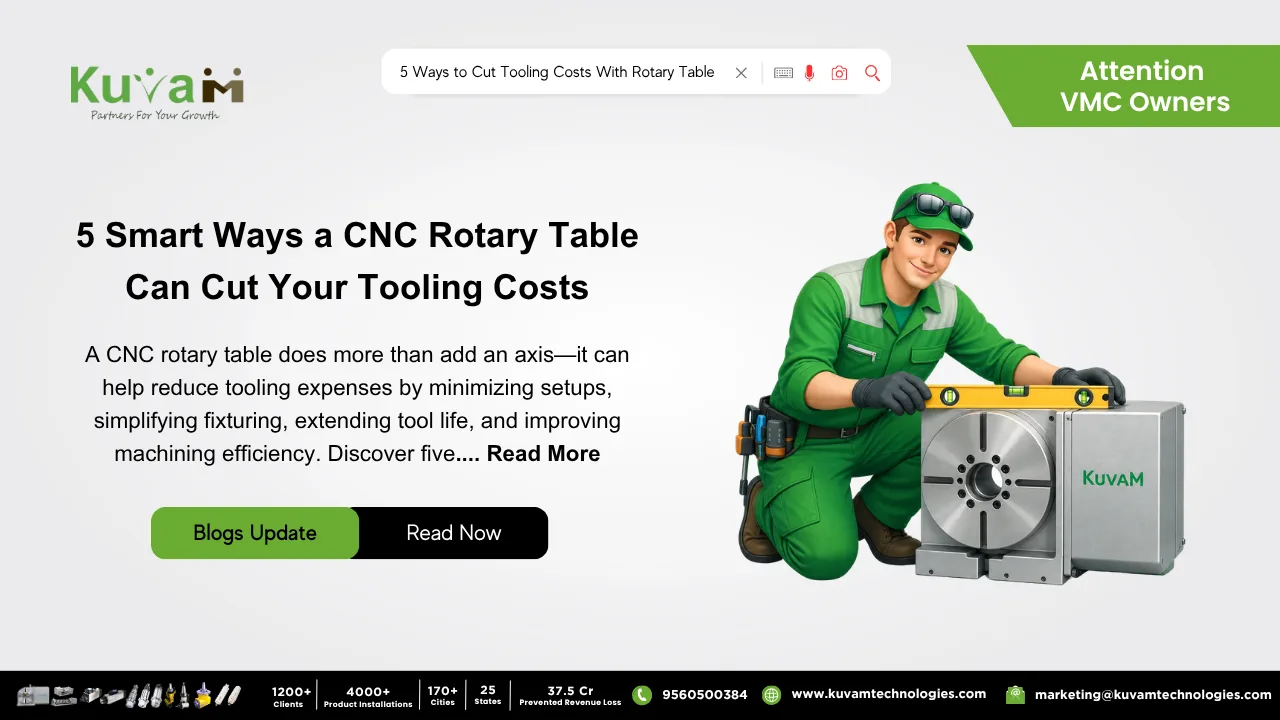

The CNC Rotary Table is one of the best machine tools for cutting unnecessary costs. Tooling budgets rarely get the attention they deserve until someone finally adds up a year’s worth of insert purchases, broken end mills, and re-ground tools and realizes it’s one of the largest recurring expenses on the shop floor. Most shops respond by shopping for cheaper inserts, negotiating harder with suppliers, or pushing operators to stretch tool life a little further. Few stop to ask whether the real problem isn’t the tooling at all but it’s how the part is being held while that tooling cuts it.
Every re-clamp, every re-entry into the material, and every off-balance fixture setup puts extra stress on a cutting tool that a more stable, continuous machining process wouldn’t. That’s a connection most shops never make, and it’s exactly where a CNC rotary table quietly earns back more than its purchase price.
A Quick Refresher on What a CNC Rotary Table Does
A CNC Rotary Table is a precision work holding accessory that mounts to a mill or machining centre and rotates the workpiece around a fixed axis, controlled directly by the machine’s program. Instead of manually unclamping and repositioning a part to reach a new face or angle, the table indexes it automatically while the spindle keeps working. It effectively adds a new axis to a standard 3-axis machine, and with a tilting version, brings it close to true 5-axis capability.
That continuous, controlled motion is exactly why it has a bigger impact on tool life than most shops expect. Here are five ways it happens.
1. It Eliminates Repeated Tool Entry and Exit Into the Material
Every time a tool re-enters a workpiece after a manual repositioning, it experiences a small shock load to the initial engagement is rarely as smooth as a continuous cut, and that repeated impact accelerates edge wear and chipping, especially on harder materials. Multiply that across every manual setup on a multi-face part, and a tool that should last a full shift starts showing wear well before it should.
With a CNC rotary table, the part rotates into position while the spindle continues cutting, minimizing the number of hard re-entries a tool has to absorb. Fewer entry shocks translate directly into longer, more predictable tool life.
2. It Keeps Cutting Forces More Consistent Across the Job
Manual fixturing often results in slightly inconsistent clamping pressure and part positioning from setup to setup, even with a careful operator. That inconsistency shows up as variable cutting forces, which cause uneven wear patterns on inserts and end mills to some edges dulling faster than others because the tool is engaging the material at slightly different angles or depths each time.
A rotary table holds the part in a single, rigid fixture throughout the entire operation, delivering a far more consistent engagement angle and depth of cut. Tools wear more evenly, which means more predictable tool-change intervals and less scrapped work from an edge that failed earlier than expected.
3. It Reduces Vibration and Chatter From Repeated Re-Fixturing
Every manual re-clamp introduces a small risk that the part isn’t seated with the same rigidity as before and a slightly loose vies jaw, an uneven seating surface, a bit of debris under the part. Any of these can introduce vibration during the cut, and vibration is one of the fastest ways to chip an insert or shorten an end mill’s usable life.
Because a rotary table keeps the part fixed and rigidly supported through the entire multi-angle operation, it removes this recurring risk. The part doesn’t get re-seated with slightly different rigidity each time, so the tool isn’t fighting unexpected chatter introduced by an inconsistent fixture.
4. It Allows for More Efficient, Continuous Toolpaths
Manual repositioning forces a program to essentially treat each face of a part as a separate job, often requiring the tool to fully retract, the machine to pause, and a new approach to be planned once the part is re clamped. That means more air-cutting moves, more starts and stops, and more opportunities for a tool to dwell in the cut longer than necessary.
A CNC Rotary Table allows the program to treat multi-face machining as one continuous operation, with smoother, more efficient toolpaths planned around the part’s full geometry rather than isolated setups. Smoother paths mean less unnecessary tool engagement time, which adds up to meaningfully longer tool life over a production run.
5. It Cuts Down on Scrapped Tools From Setup Errors
A less obvious cost: every manual repositioning is a chance for a tool to crash into a fixture, clamp, or misaligned part because the new setup wasn’t indicated as carefully as it should have been. A single crash can destroy an expensive tool in an instant and the cost that never shows up in a “tool wear” report because it looks like a one-off accident rather than a systemic issue.
By minimizing how often a part is manually repositioned, a rotary table directly reduces the number of setup transitions where this kind of costly mistake can happen in the first place.
The Bottom Line
Tooling costs rarely get traced back to work holding, but the connection is real and often larger than shops realize. Fewer hard re-entries, more consistent cutting forces, less vibration, smoother toolpaths, and fewer setup-related crashes all add up to tools that last longer and perform more predictably. A CNC rotary table isn’t marketed as a tooling-cost solution, but for shops watching that line item creep upward every year, it’s worth looking at the fixturing on the floor before assuming the next fix is simply a different brand of insert.