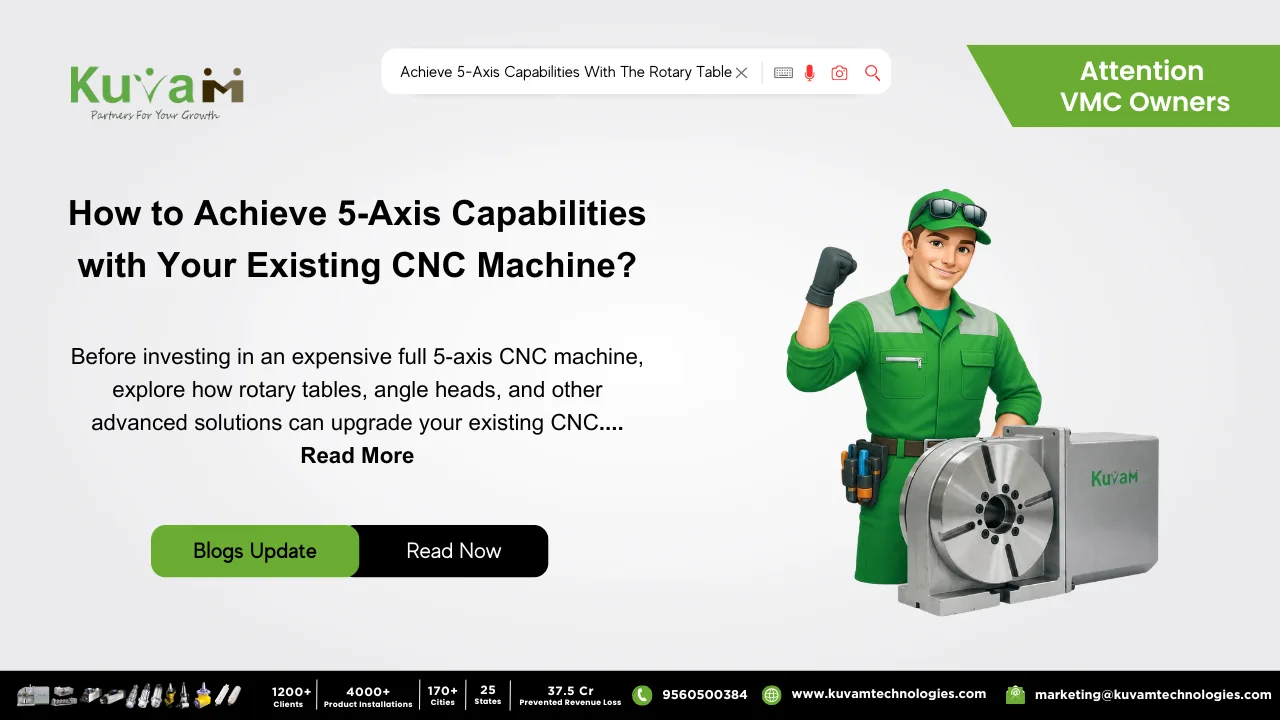

The Rotary Table is capable of converting a 3-axis machine into a 5-axis machine. Every machine shop owner has had this conversation at some point, usually right after losing a bid: a customer needs a part with compound angles, angled bores, or features on multiple faces, and the quote comes back requiring 5-axis capability. The shop doesn’t have one. Buying one means a six or seven-figure investment, new floor space, new programming skills, and a payback period measured in years, not months.
So the job goes to a competitor. Or worse, it gets attempted on a 3-axis mill with a string of manual setups that eat into the margin before the first chip is even cut.
Here’s the question more shops should be asking before they write off that job or write a very large check:
What if the missing capability isn’t a new machine at all, but an accessory sitting quietly in a tooling catalogue for a fraction of the cost?
That’s the case for the rotary table, and it’s a case worth making properly.
What a Rotary Table Actually Does
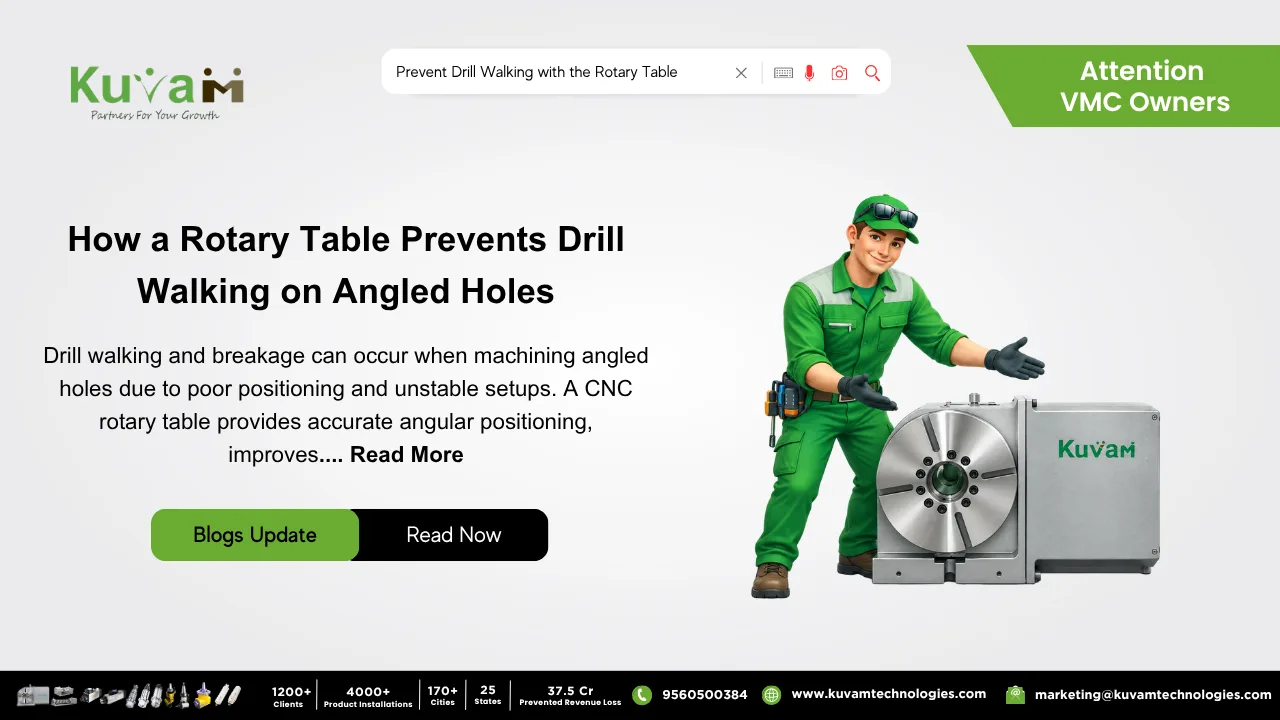
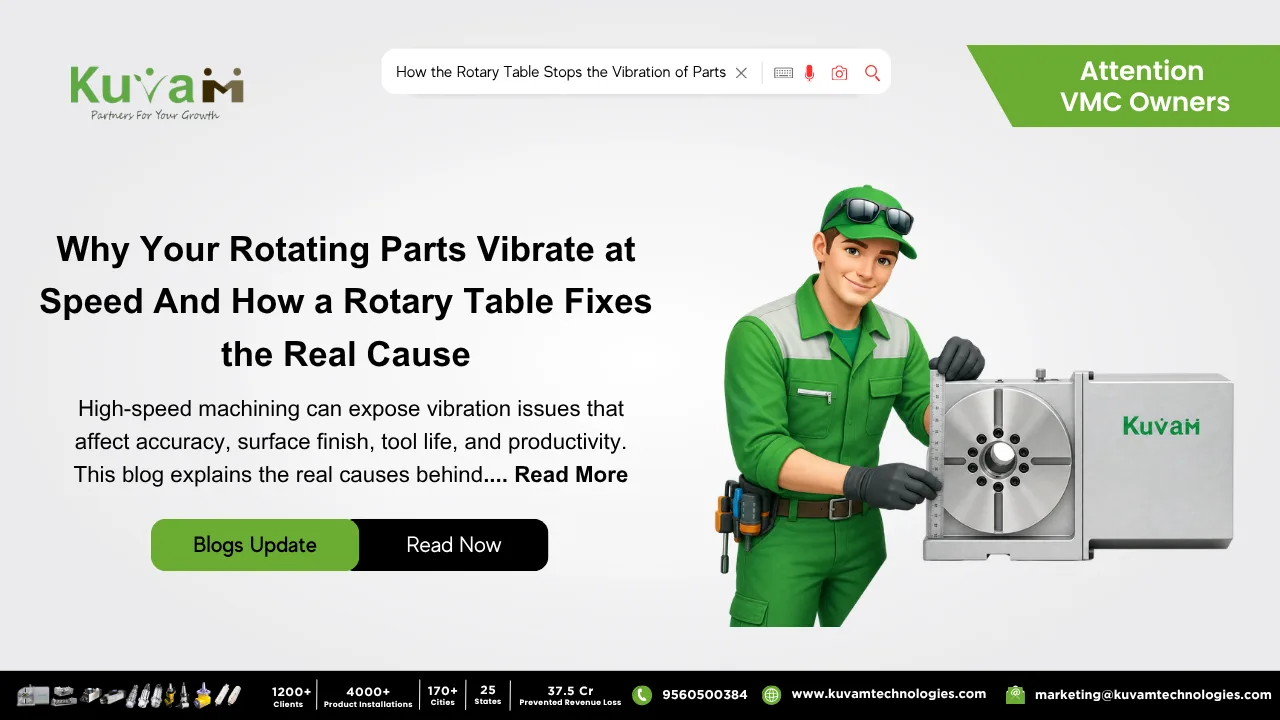
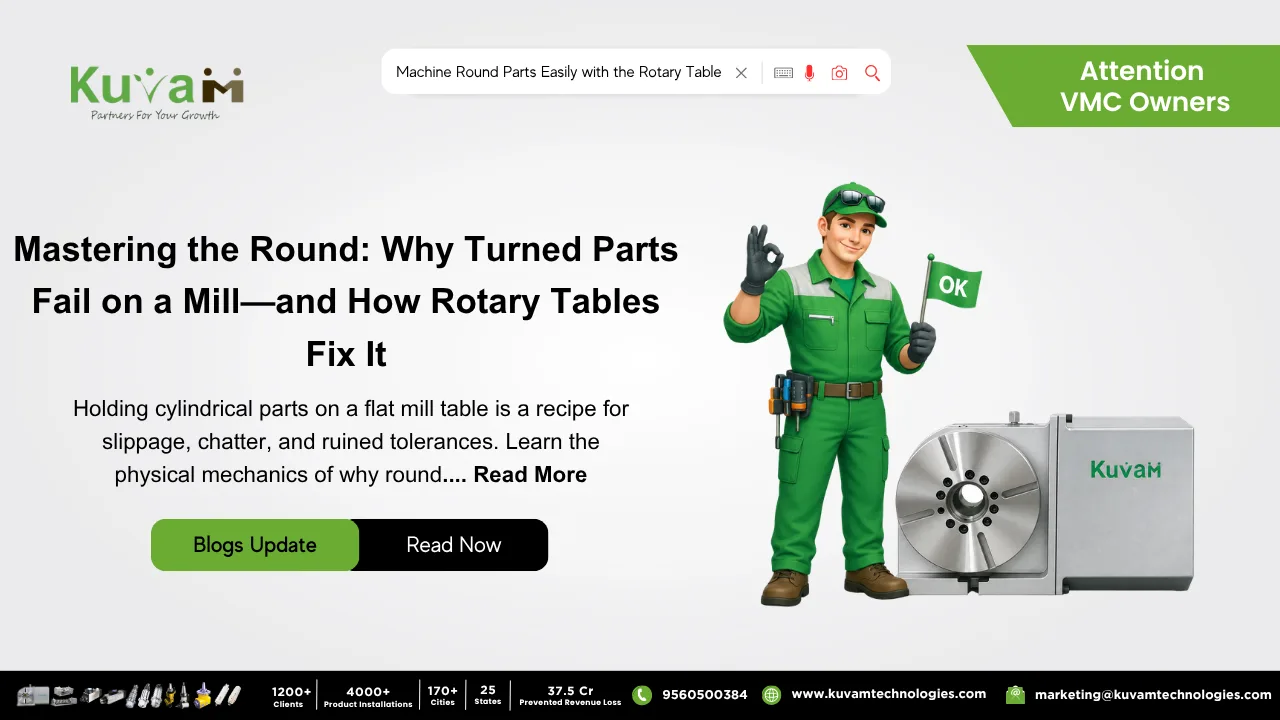
A Rotary Table is a precision fixture that bolts onto the bed of a milling machine, CNC centre, or grinder and rotates the workpiece around a fixed axis in controlled, repeatable steps. It can be operated manually with a handwheel and graduated dial, or driven automatically as a programmable axis on a CNC control.
In practical terms, it takes a standard 3-axis machine one that only moves in X, Y, and Z and gives it rotational motion around a new axis, commonly called the “A” axis. Pair it with a tilting rotary table, and you introduce a second rotational axis, edging a conventional mill much closer to true 5-axis behaviour without the price tag of a genuine 5-axis machining centre.
It sounds almost too simple. But the impact on what a shop can actually quote and win is significant.
The Hidden Cost of Saying No to Complex Work
Manufacturers rarely talk about the jobs they turn away, but it’s one of the biggest silent costs in the industry. Complex parts indexed bolt patterns, radial features, angled brackets, contoured cams often get declined not because a shop lacks skill, but because it lacks a practical way to hold and rotate the part accurately enough to hit tolerance.
The alternative, attempting it with manual repositioning, brings its own price:
- Lost bids to shops with more flexible machining capability
- Longer cycle times from repeated manual setups on a single part
- Higher scrap rates from cumulative alignment error across multiple clamping’s
- Operator dependency, where only the most experienced hands can be trusted with the repositioning
A rotary table changes the math on all of it, because it turns a job that would need multiple fixtures and setups into one continuous, indexed operation.
Where This Actually Plays Out on the Shop Floor
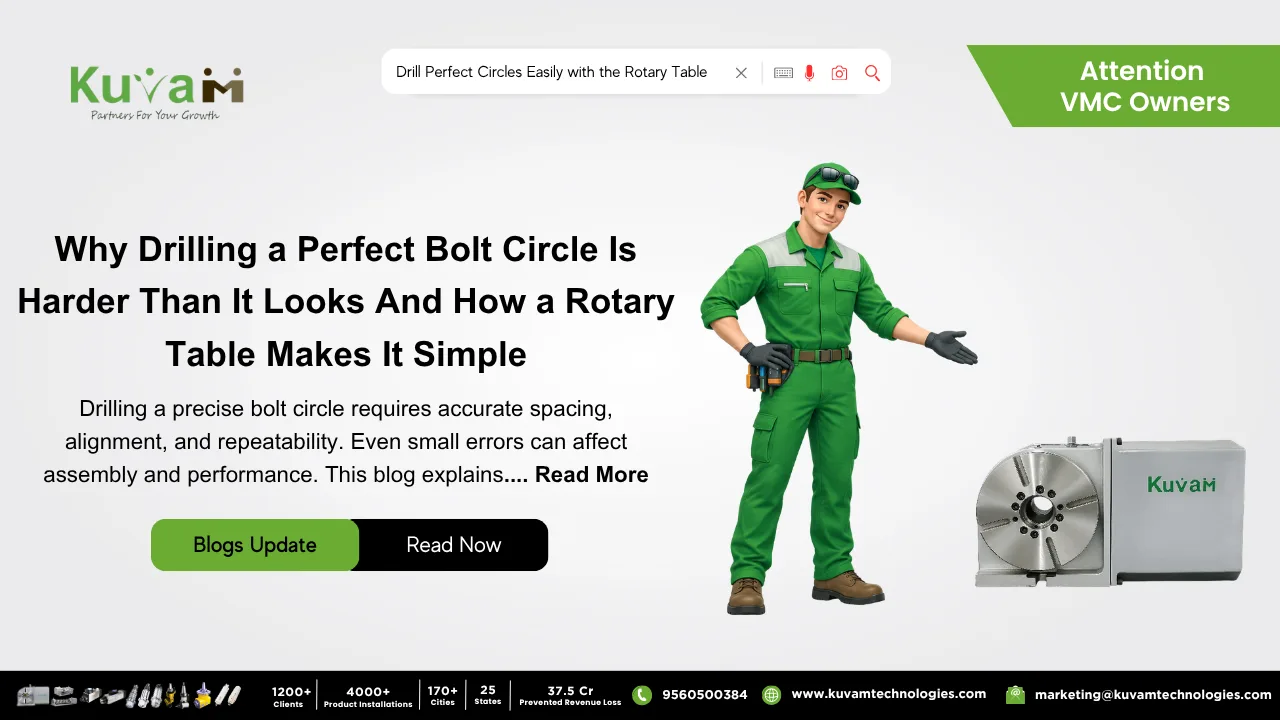
Consider a part with eight equally spaced mounting holes around a circular flange. On a standard mill, that’s eight separate clamping’s unless the operator gets creative and creative usually means slower and riskier. Mount the same flange on a rotary table, and the part is indexed 45 degrees at a time automatically, with the spindle never stopping to wait on a human.
The same logic extends across a wide range of parts shops encounter regularly:
- Valve bodies and manifolds needing ports machined at multiple angles around a central axis
- Gear blanks and cam profiles that require precise, repeatable angular positioning
- Turbine and impeller components with helical or radial feature patterns
- Indexing plates and rotary fixtures used in downstream assembly processes
- Short-run prototype parts where buying dedicated 5-axis time isn’t cost-justified
In each case, the part stays clamped once, and the rotary table does the repositioning that would otherwise require a much more expensive machine or a much more patient operator.
Manual, CNC, or Tilting Matching the Table to the Job
Not every shop needs the same version of this tool, and picking the wrong one can undersell what a Rotary Table can actually do:
Manual rotary tables suit lower-volume or prototype work, where an operator can afford to dial in each position by hand. They’re the lowest-cost entry point and a smart choice for shops testing whether added rotational capability is worth expanding further.
CNC rotary tables integrate directly into the machine’s control program, indexing automatically without operator input mid-cycle. These earn their keep fastest in production environments where the same rotational sequence repeats across hundreds or thousands of parts.
Tilting rotary tables add a second rotational axis on top of the first, letting the workpiece both spin and tilt. This is the closest a mill can get to genuine 5-axis behaviour without becoming one ideal for compound-angle parts that would otherwise force a shop to outsource or decline the job.
So, Is It a Real Alternative to Buying a 5-Axis Machine?
For a lot of the work that actually comes across a shop’s desk, yes. A dedicated 5-axis machining centre still wins for continuous simultaneous 5-axis contouring on very complex geometries. But a large share of “5-axis-sounding” jobs are really just multi-face, multi-angle parts that need accurate indexing exactly what a rotary table, especially a tilting one, is built to deliver at a fraction of the capital cost.
The Bottom Line
Before writing off the next complex job or writing a check for a machine you may only need for a handful of features it’s worth asking the question this piece started with: is the real gap a missing machine, or a missing axis of motion? For a surprising number of shops, a rotary table quietly closes that gap, turning declined bids into won ones without touching the capital budget at all.