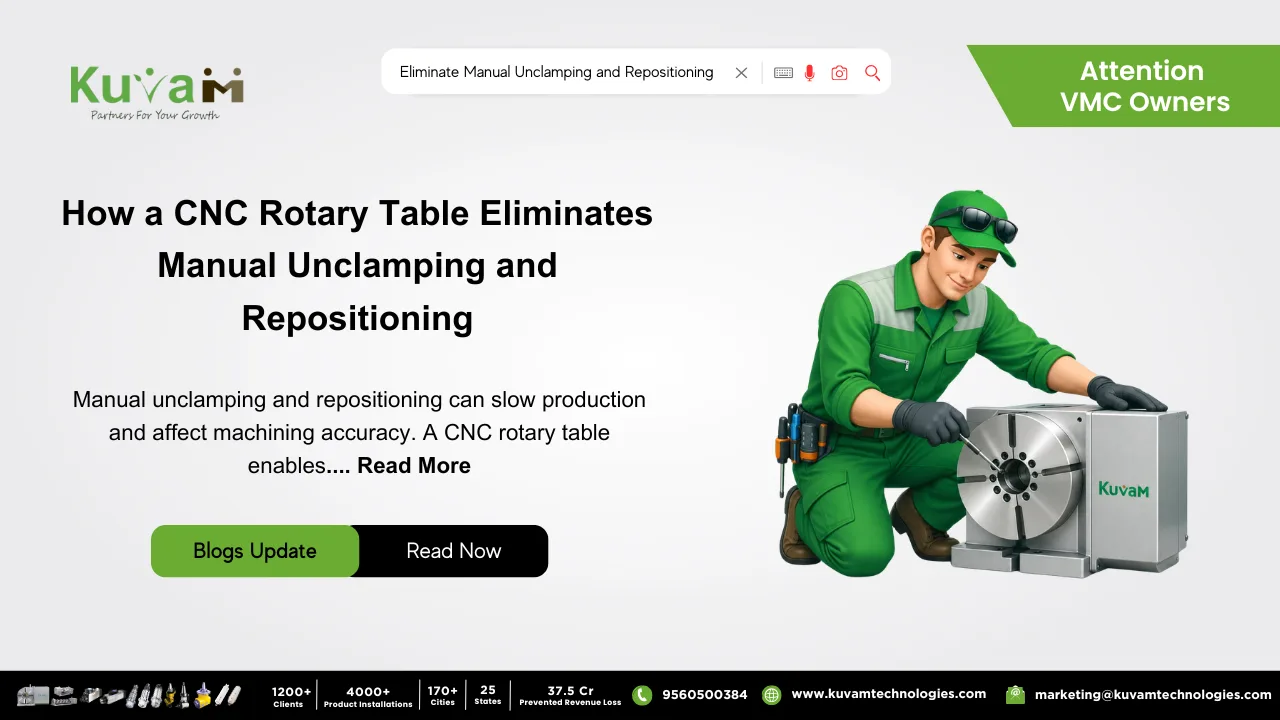

The Rotary Table is the best option for manufacturers who are struggling with manual repositioning. Walk onto almost any machine shop floor and you’ll see the same quiet time-thief at work: an operator stops the spindle, loosens the vise, flips the workpiece, re-indicates it, tightens everything back down, and only then hits cycle-start again. Multiply that by every angled hole, every fifth face, every part in the batch and you’ve got a production schedule bleeding hours it never needed to lose.
If that scene sounds familiar, you’re not alone. Multi-sided machining is one of the most common bottlenecks in manufacturing today, and most shops just accept it as “the cost of doing business.” But here’s the real question worth asking:
What if your machine could turn the part for you accurately, repeatably, and without ever breaking the cutting cycle?
That’s exactly the problem a rotary table was built to solve.
First, What Actually Is a Rotary Table?
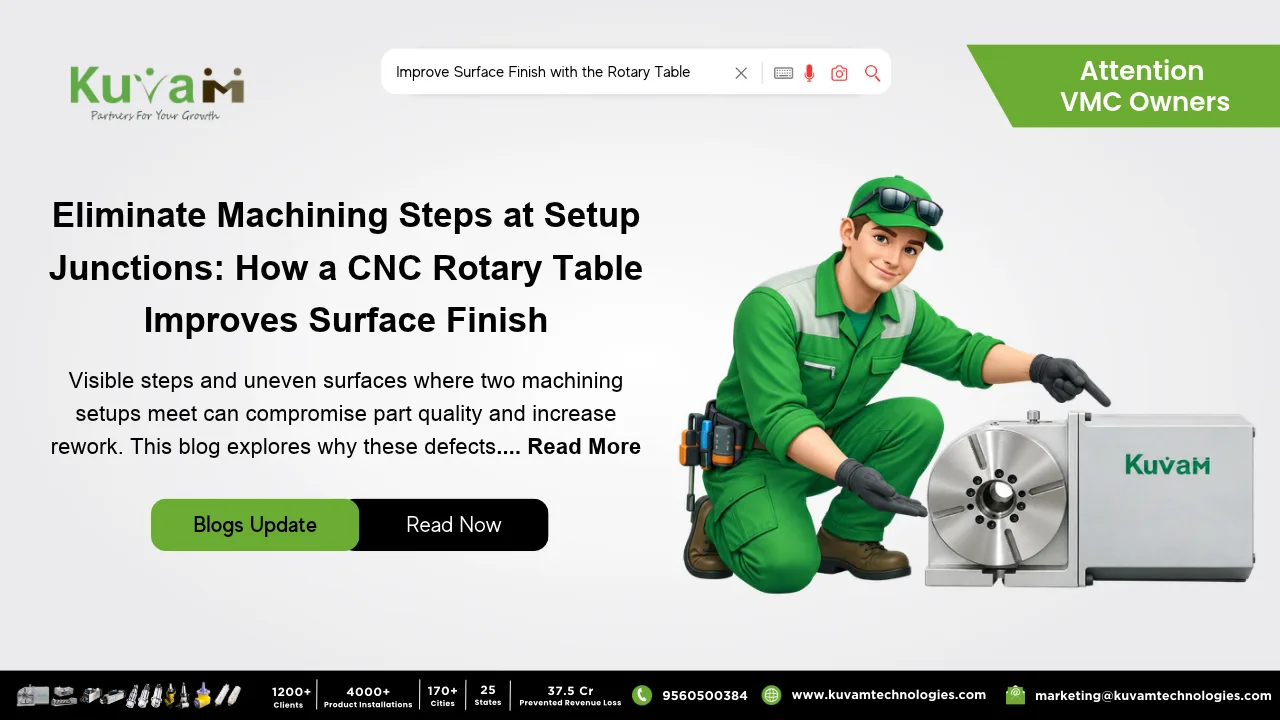
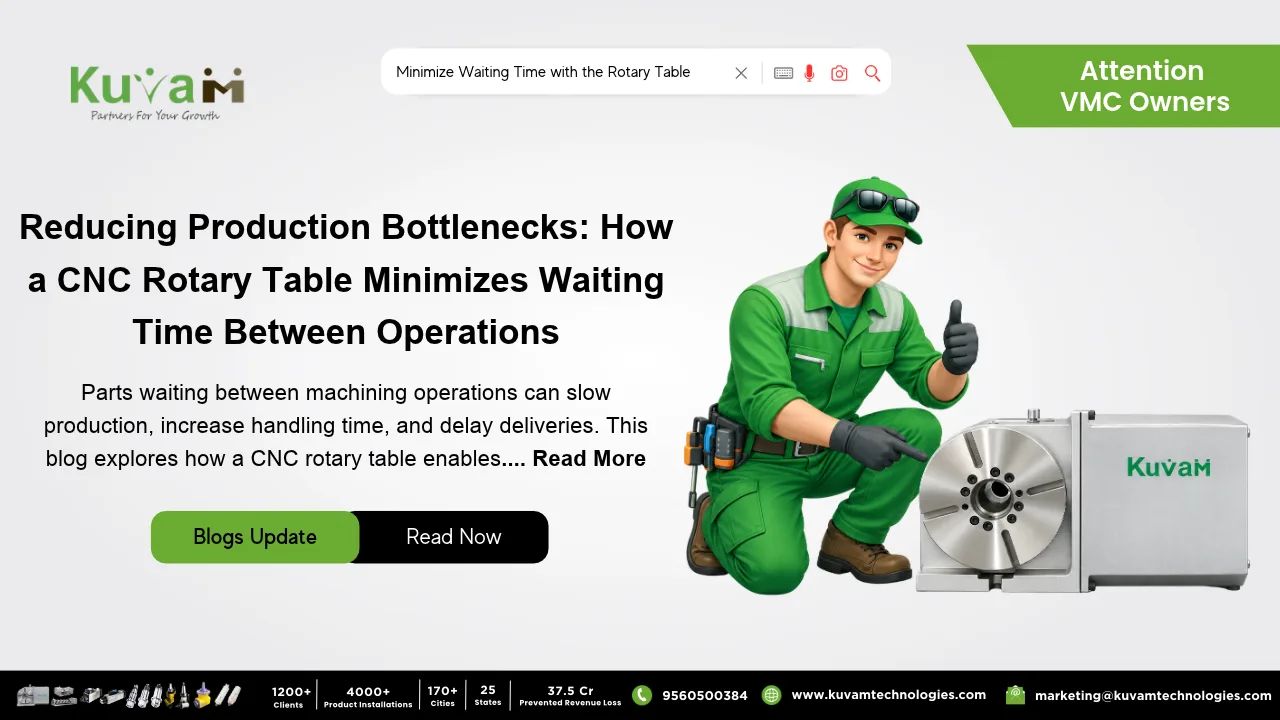
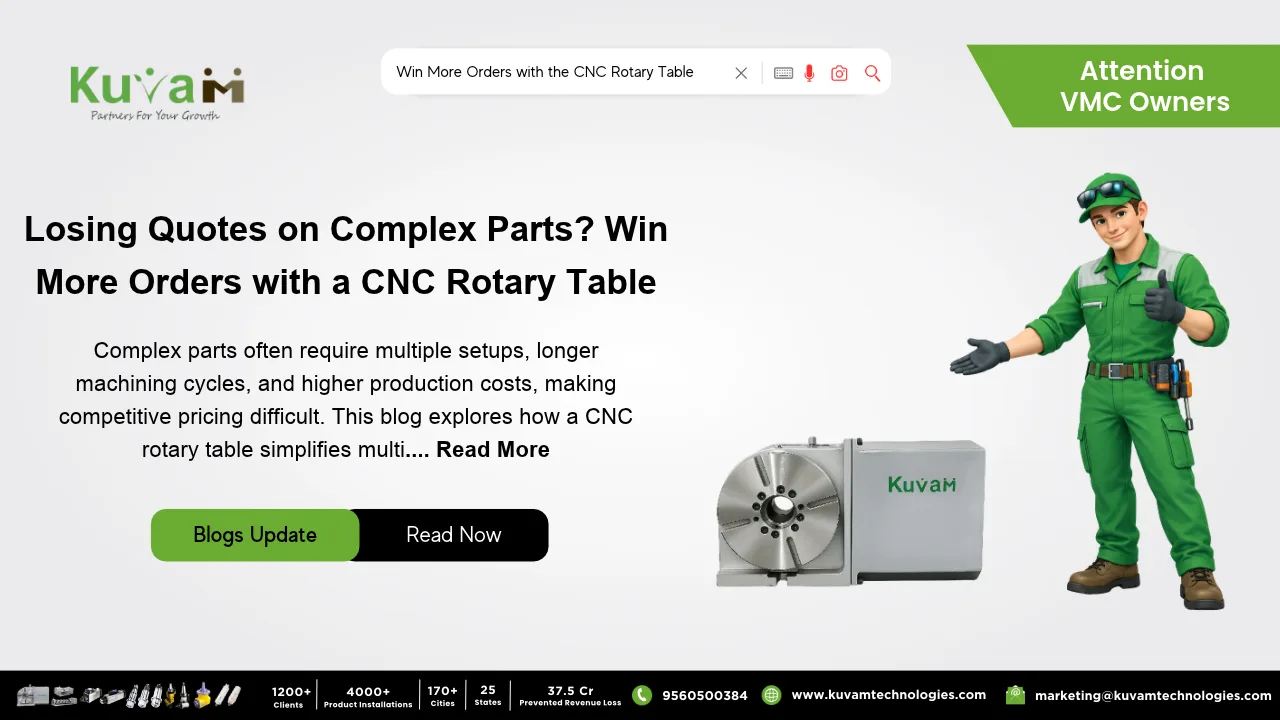
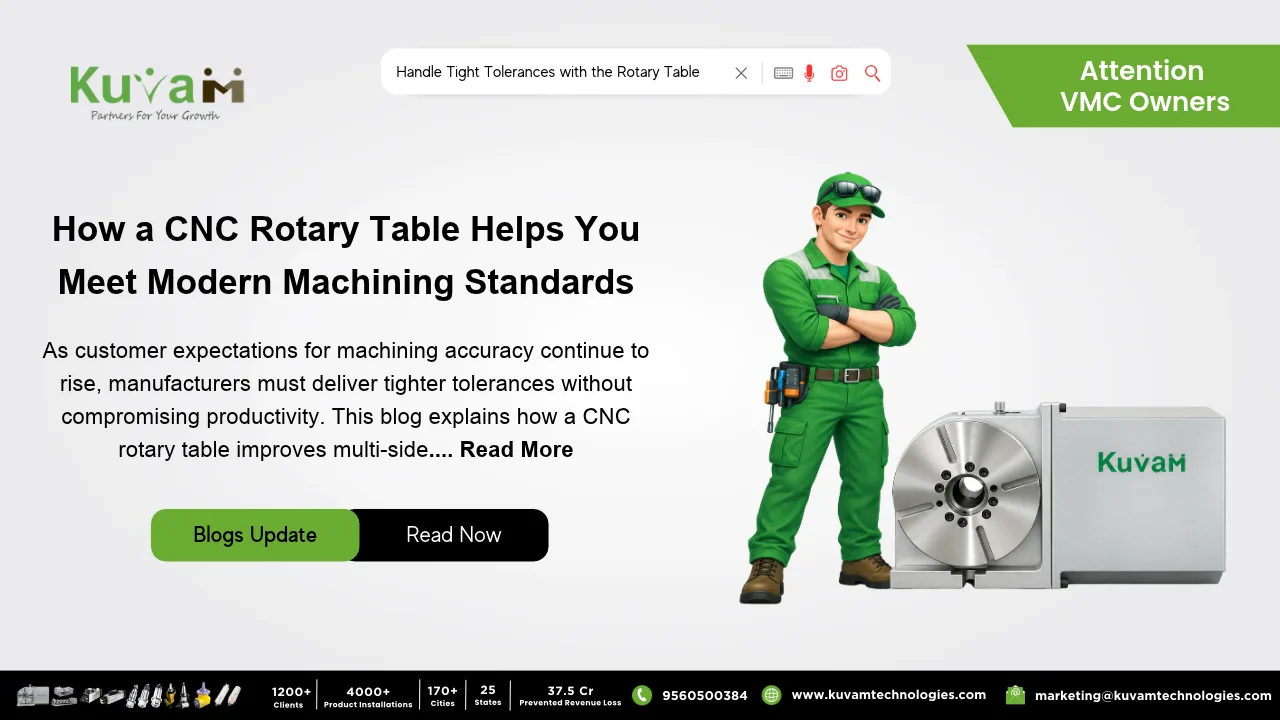
A Rotary Table is a precision workholding device that mounts onto a milling machine, CNC machining center, or grinder and rotates a workpiece around a fixed axis usually in exact, repeatable degree increments. Think of it as a turntable with engineering-grade accuracy, controlled either manually with a handwheel or automatically through a CNC’s fourth axis.
Instead of removing a part to reposition it, the rotary table simply spins it into the next required angle while it stays clamped in place. Depending on the setup, this can add a 4th (and with a tilting rotary table, even a 5th) axis of motion to a 3-axis machine, opening the door to complex geometries, angled drilling, indexing, and contour milling all in a single setup.
The Real Problem: It’s Not Just Time, It’s Accuracy Too
Manufacturers often think of repositioning as purely a time issue. It is but it’s also a quality issue, and that’s the part that quietly costs even more money.
Every time a part is unclamped and reclamped manually, you introduce the possibility of misalignment. Even a fraction of a degree off can throw a hole pattern out of tolerance, especially on parts with multiple angled features that need to line up with each other. Operators end up re-indicating with dial gauges, double-checking datums, and sometimes scrapping parts that simply weren’t seated the same way twice.
So the real cost isn’t just the minutes lost to repositioning it’s:
- Setup time eaten up by manual re-clamping and re-zeroing
- Scrap and rework from human error in alignment
- Inconsistent quality across a production run, especially with less experienced operators
- Machine downtime while the spindle sits idle during manual adjustments
A rotary table attacks all four at once, because the part never has to leave its fixture.
How a Rotary Table Solves This, Practically Speaking
Picture a bracket that needs six holes drilled around its circumference, each 60 degrees apart. Without a rotary table, that’s six separate setups six chances for error, six interruptions to your cycle time.
With a Rotary Table, you clamp the bracket once. The table indexes it 60 degrees at a time, either by hand or automatically via CNC program, and the spindle simply keeps cutting. One setup. One reference point. Zero repositioning error.
This is exactly why rotary tables have become a staple in industries producing:
- Circular flanges and manifolds that need evenly spaced holes or slots
- Gears and sprockets requiring precise angular indexing
- Aerospace brackets and turbine components with compound angles
- Mold and die work, where contour milling around a curved surface is common
- Prototype and job-shop parts, where flexibility matters as much as accuracy
Even outside of pure rotation tasks, rotary tables are widely used for simple circular milling cutting perfect arcs, radii, and full circles that would otherwise require complex programming or a specialized tool.
Manual vs. CNC Rotary Tables: Which One Do You Need?
Not every shop needs the same solution, and that’s worth addressing directly:
- Manual rotary tables are ideal for lower-volume work, prototyping, or shops where an operator dials in angles by hand using a graduated scale and handwheel. They’re affordable and dependable for less repetitive tasks.
- CNC (motorized) rotary tables integrate directly with a machine’s control system, indexing automatically as part of the programmed cycle. These are the go-to for high-volume production where consistency and speed matter most.
- Tilting rotary tables add a second axis of movement, letting the workpiece tilt as well as rotate essential for true 5-axis-style machining of complex, multi-plane parts.
Choosing the right type comes down to your production volume, part complexity, and how much of the process you want automated versus manually controlled.
Is a Rotary Table Worth the Investment?
For any shop still manually flipping parts mid-job, the honest answer is almost always yes. A rotary table doesn’t just save time and it protects tolerance, reduces scrap, and lets a single operator run jobs that would otherwise require multiple setups and constant supervision. Over a production run of hundreds or thousands of parts, that adds up to real, measurable savings in both labor and material.
The Bottom Line
The next time you catch yourself or your team stopping mid-cycle to unclamp, flip, and re-align a part, ask the question that started this whole piece: what if the part could just turn itself? A rotary table isn’t a flashy upgrade. It’s a quiet, practical fix for one of manufacturing’s oldest and most overlooked inefficiencies and once you’ve run a job with one, going back to manual repositioning feels like a step backward.